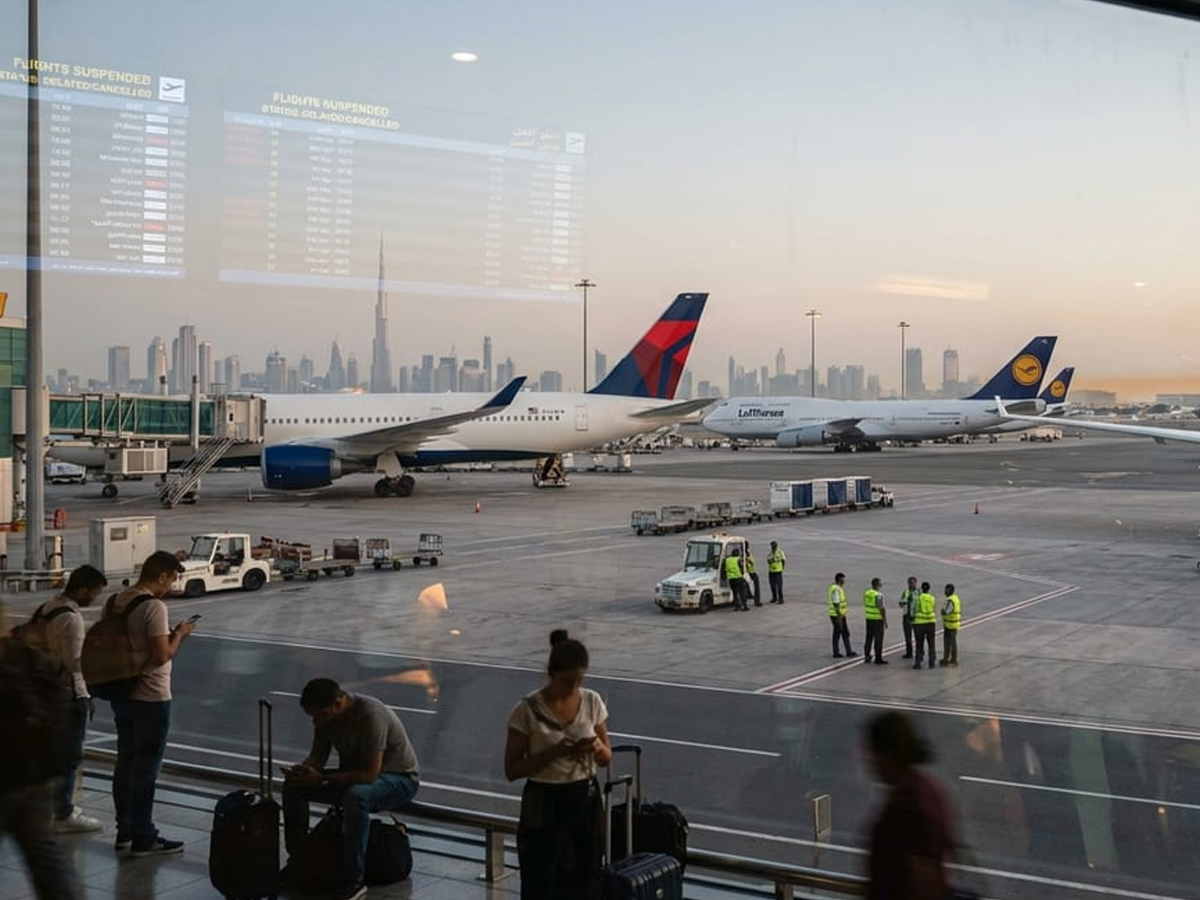
New Delhi: International air travel has been thrown into chaos as the intensifying conflict between the United States, Israel and Iran triggers widespread airspace closures and flight cancellations, leaving thousands of passengers stranded across India, the Gulf and beyond.
The sharp escalation of hostilities, including joint US–Israeli strikes inside Iran and reported retaliatory actions, has forced aviation regulators and airlines to shun airspace over much of West Asia, one of the world’s busiest east-west flight corridors, over safety concerns.
Government and industry data show that around 1,600 to nearly 2,000 flights have been cancelled globally over the past 48 hours as airlines reroute or suspend services that normally criss-cross the Gulf. Major carriers, including Indian airlines as well as Gulf and European operators, have been affected.
At Indira Gandhi International Airport in New Delhi, more than 100 international departures and arrivals were scrapped on Sunday alone, while Chhatrapati Shivaji Maharaj International Airport in Mumbai saw approximately 125 cancellations, disrupting links to Europe, the Middle East and North America. Other airports including Kochi and Chennai have also reported cancellations and delays.
India’s largest carriers have responded with sweeping operational changes. IndiGo announced the cancellation of over 190 international flights on March 1–2, citing evolving security risks and the closure of key airspaces. The airline has offered full refunds or rescheduling options with fee waivers for affected travellers. Air India has extended suspension of flights to the UAE, Saudi Arabia, Qatar and Israel through March 2, while disrupting long-haul services to Europe and North America as well.
The Ministry of Civil Aviation in India has placed airports on operational alert and is in ongoing coordination with airlines and regulators as the situation evolves. The Directorate General of Civil Aviation has flagged multiple West Asian airspace sectors as “high-risk” and advised carriers to monitor Notices to Airmen (NOTAMs) and avoid affected routes.
Stranded passengers at major Indian airports have described confusion and long delays, with many unable to board flights or secure onward connections amid sudden schedule changes. Reports from Dubai, Abu Dhabi and Doha indicate similar scenes of chaos as Gulf hubs contend with suspended operations and overcrowded terminals.
The wider impact of the Middle East crisis is also being felt economically. Indian stock markets opened sharply lower on Monday, driven by rising crude oil prices and risk aversion tied to the conflict; the Indian rupee weakened, and major indices slid as investors absorbed potential inflationary and supply-chain risks linked to the region.
Authorities globally continue to warn that flight plans remain subject to sudden changes as military operations and diplomatic tensions persist, underscoring the far-reaching effects of the conflict on civil aviation and international travel.
BI Bureau