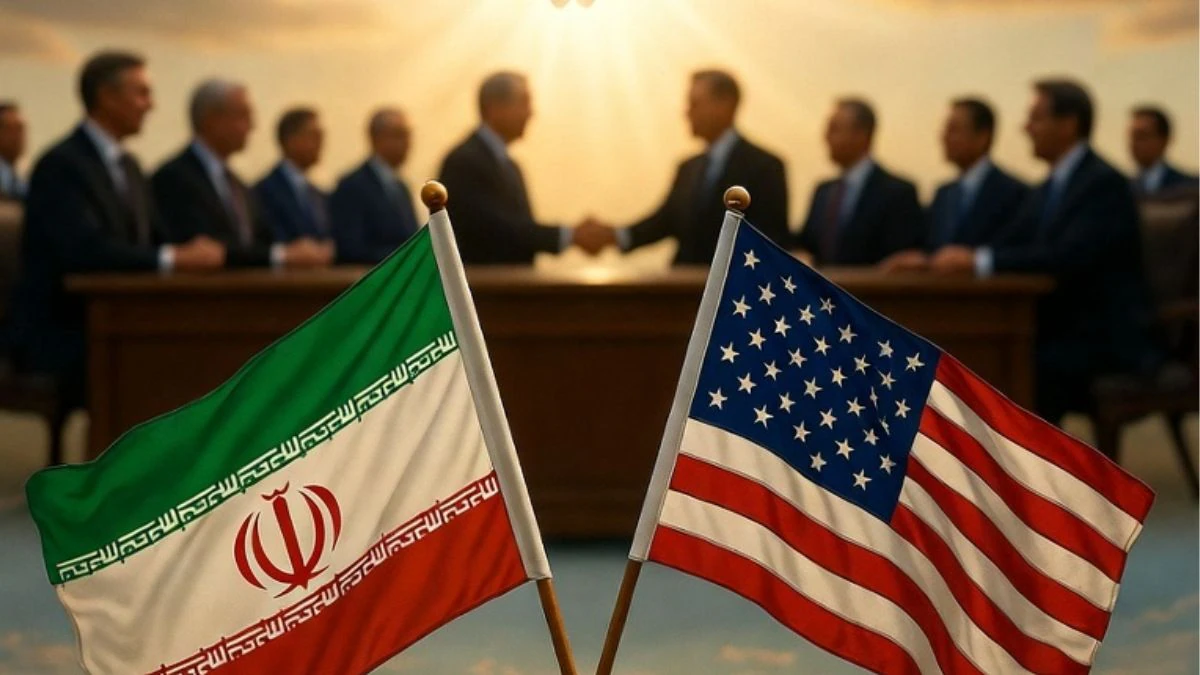
New Delhi: A fragile but significant de-escalation in West Asia has emerged with the United States and Iran agreeing to a two-week ceasefire, raising hopes of restoring stability in a region rocked by weeks of intense conflict and disruption to global energy supplies.
The provisional truce, announced just hours before a potential escalation deadline, includes a key assurance from Iran to reopen and ensure safe passage through the Strait of Hormuz — a vital global oil transit chokepoint through which nearly a fifth of the world’s petroleum flows.
The ceasefire follows nearly 40 days of hostilities triggered by US-Israeli strikes and subsequent Iranian retaliation, which had brought shipping in the Gulf region to a near halt and sent shockwaves across global markets.
The agreement, reportedly facilitated through diplomatic efforts involving Pakistan, is being seen as a temporary pause that could pave the way for broader negotiations.
Iran, however, has laid down a series of conditions for any long-term peace deal, including guarantees against future attacks, compensation for damages, and the lifting of sanctions. It has also signalled intent to retain strategic leverage over the Strait of Hormuz, including the possibility of regulating or even charging for maritime transit.
Despite the ceasefire, uncertainties remain. Global shipping firms have adopted a cautious stance, noting that the truce does not yet provide “full maritime certainty,” with operations expected to resume gradually based on evolving risk assessments.
India on Wednesday welcomed the ceasefire, expressing hope that it would lead to “lasting peace in West Asia” while underlining the importance of diplomacy and dialogue.
The Ministry of External Affairs said the conflict had caused “immense suffering” and disrupted global energy supply chains and trade networks.
New Delhi also emphasised the need for “unimpeded freedom of navigation” through the Strait of Hormuz, reflecting India’s strategic dependence on the route for energy imports and trade.
The ceasefire has already had an immediate impact on global markets, with oil prices easing and investor sentiment improving. However, analysts caution that the situation remains fluid, with the two-week window seen as a test of intent rather than a definitive resolution.
With talks expected to continue and multiple geopolitical interests at play, the coming days will determine whether this pause in hostilities can translate into a durable peace or merely a brief respite in an ongoing conflict.
BI Bureau