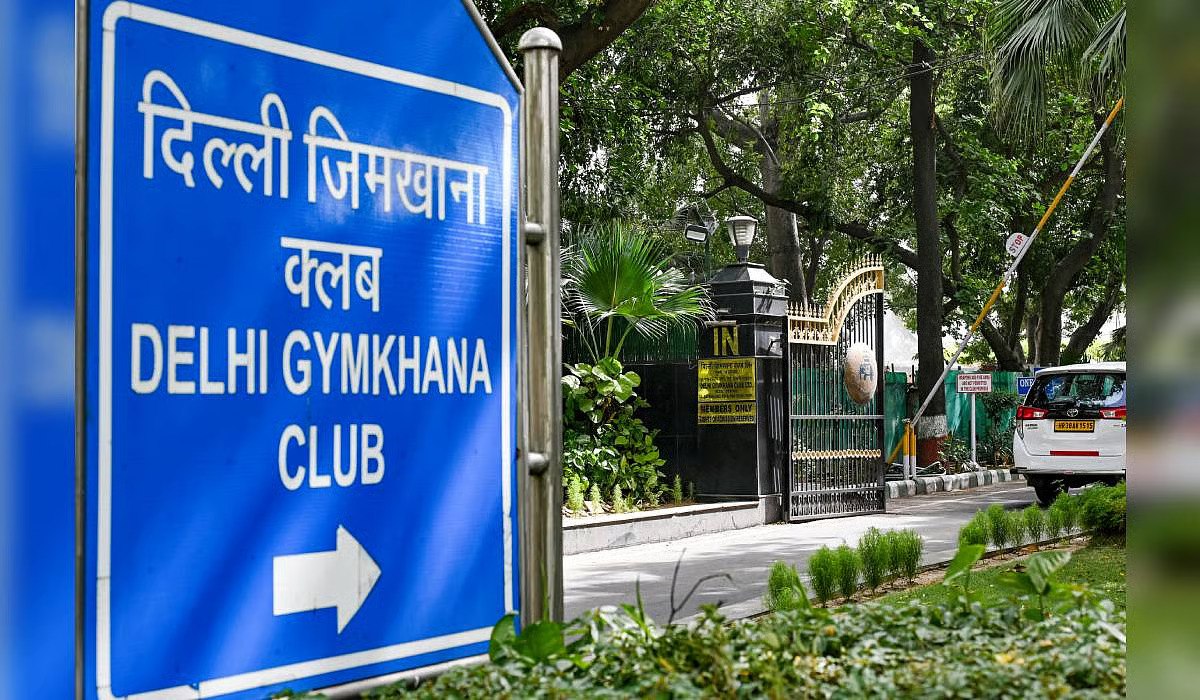
New Delhi: For over a century, Delhi Gymkhana Club has stood as one of the capital’s most exclusive institutions, a colonial-era enclave where diplomats, generals, bureaucrats, judges and business elites gathered over drinks, dinners and quiet power conversations. Now, the iconic club is heading towards a historic transition, with the Centre preparing to take over the property on June 5.
The Union government has ordered the resumption of the 27.3-acre Delhi Gymkhana Club premises at 2, Safdarjung Road, saying the land is urgently required for “strategic and public purposes”, including defence infrastructure, governance facilities and public security needs.
The order, issued on May 22 by the Ministry of Housing and Urban Affairs through the Land & Development Office (L&DO), directs the club to hand over possession by June 5, failing which the government said it would proceed according to law.
Founded in 1913 as the 'Imperial Delhi Gymkhana Club', the institution was originally created as a recreational and networking space for British administrators and military officers in the newly emerging imperial capital of New Delhi.
Even its name carries traces of colonial India.
The term 'Gymkhana', widely used across British India, is believed to have originated from the Hindi-Urdu expression 'gend-khana', loosely meaning a place for ball games, though some historians link it to the Persian-Urdu phrase 'jamaat-khana', or assembly place. Over time, the British adopted the word to describe elite sporting and social clubs centred around polo, horse riding, cricket, tennis and social gatherings.
Ironically, the Gymkhana was never really a 'gym' in the modern sense. It functioned more like an elite country club, with sprawling lawns, billiards rooms, bars, horse riding facilities and private social circuits.
The naming tradition survived long after Independence. Across India, colonial-era institutions such as the Bangalore Gymkhana, Madras Gymkhana and Poona Club continued to retain their British-era identities. In Delhi too, while the word 'Imperial' disappeared after 1947, the Gymkhana remained deeply associated with the capital’s old power structure.
Over decades, gaining membership at Delhi Gymkhana became synonymous with influence and access. Long waiting lists, legacy memberships and strict codes of conduct only reinforced its aura. In Lutyens’ Delhi, it was often joked that policy gossip travelled faster inside Gymkhana’s dining halls than through government corridors.
The Centre has invoked Clause 4 of the original lease deed, which permits the government to re-enter the premises if the land is required for a public purpose.
The official order states that the entire property, including buildings, structures and lawns, will vest with the President of India through the L&DO.
Government sources said the location’s strategic importance, situated within the capital’s sensitive administrative zone, was a key factor behind the move.
The development has also triggered anxiety among club employees and staff over their future once the takeover takes effect.
Beyond the legal battle, however, the takeover carries unmistakable symbolism. For many in Delhi, the Gymkhana represented the last surviving redoubt of colonial-era elitism, a place where lineage, networking and proximity to power mattered as much as membership itself.
With June 5 approaching, the future of the club remains uncertain. But one thing is clear: the story of Delhi Gymkhana is no longer just about land. It is about the possible end of a century-old culture that quietly shaped the social and political rhythms of Lutyens’ Delhi.
BI Bureau