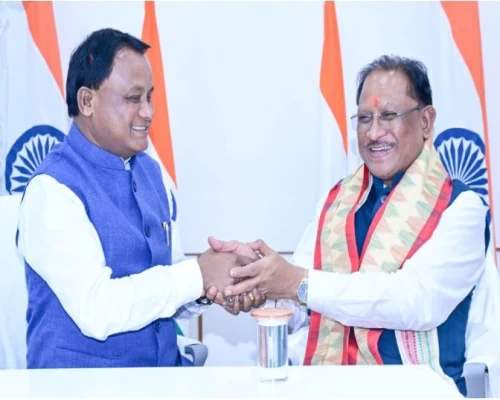
.jpg "BPSC revamps interview process, brings serving IAS and IPS officers on panels to mirror UPSC standards")
New Delhi: In a significant shift in Bihar’s civil services recruitment process, the Bihar Public Service Commission (BPSC) has introduced serving IAS and IPS officers into interview panels, marking a move aimed at aligning the state’s selection standards more closely with those of the Union Public Service Commission (UPSC).
The reform, already implemented in the ongoing 70th Combined Competitive Examination (CCE) interview cycle, signals a departure from the earlier system where panels largely comprised academicians, commission members, and retired officials.
Now, at least one senior IAS or IPS officer is being included in each board, bringing real-time administrative experience into the evaluation process.
Officials say the decision is part of a broader set of structural reforms undertaken between 2023 and 2026 to make the recruitment process more transparent, rigorous, and merit-driven. The inclusion of serving bureaucrats is expected to help assess candidates beyond theoretical knowledge, focusing instead on practical decision-making, crisis handling, ethical grounding, and administrative aptitude.
The change effectively transforms the nature of the interview from a conventional academic-style viva to a more dynamic assessment resembling UPSC standards. Candidates will now face scenario-based questions and real-life administrative situations, with panelists evaluating personality traits such as stress management, body language, and leadership qualities.
Sources indicate that the move is designed to ensure that those selected are better suited for field-level governance. Serving IAS officers are expected to gauge administrative temperament, while IPS officers can assess policing aptitude for roles linked to law enforcement.
The reform comes alongside several other recent changes in the BPSC examination pattern. These include the introduction of negative marking in prelims, a 300-mark essay paper in the mains to test analytical ability, and making optional subjects qualifying in nature so that final merit is determined largely by general studies and essay scores.
The commission has also streamlined its examination calendar, with recent results declared on time and future exams scheduled in a more predictable cycle, indicating a push towards efficiency and consistency in recruitment.
With these changes, BPSC appears to be attempting a structural overhaul of its recruitment system, aiming to reduce subjectivity, curb external influence, and ensure that the next generation of civil servants is selected through a more robust and field-oriented evaluation process.
BI Bureau