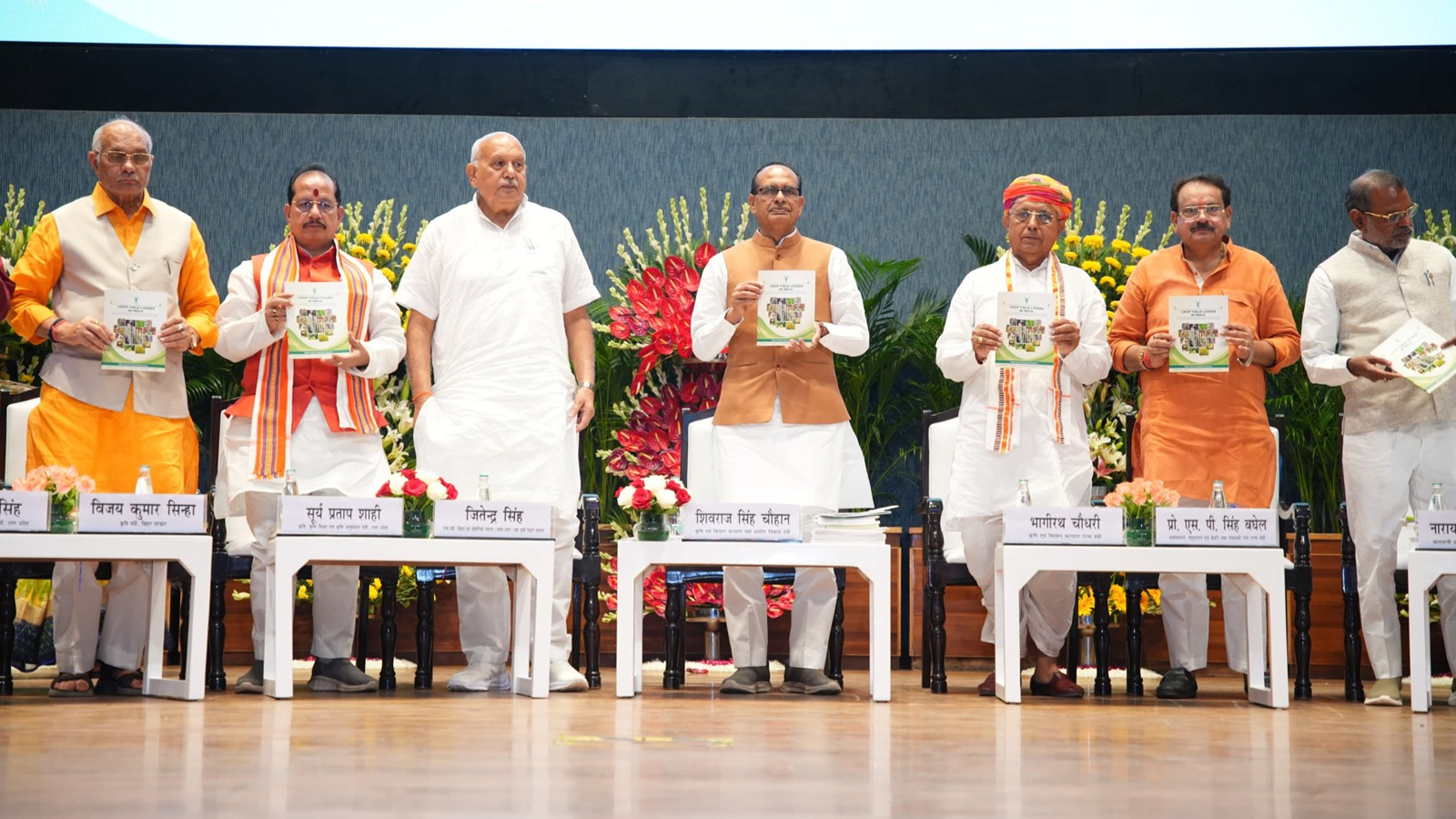
The 97th Annual General Meeting (AGM) of the Indian Council of Agricultural Research (ICAR) Society was held on 18 August 2026 at the National Agricultural Science Complex (NASC), New Delhi.
The meeting was chaired by Shivraj Singh Chouhan, Union Minister for Agriculture and Farmers' Welfare and Rural Development.
A key message from the meeting was that agricultural research should not remain limited to laboratories. It must respond to the needs of farmers, markets and consumers and reach the field quickly.
What is ICAR?
The Indian Council of Agricultural Research (ICAR) is India's premier organisation for agricultural research and education.
It works across areas such as:
- Crop science
- Horticulture
- Animal husbandry and dairy
- Fisheries
- Soil and natural resource management
- Agricultural technology
- Food and nutrition
ICAR works through its network of research institutes and Krishi Vigyan Kendras (KVKs) to take scientific knowledge and technologies to farmers.
Key Focus: Demand-Driven Agricultural Research
Chouhan called for a shift towards demand-driven research.
This means agricultural research should be based on:
Farmers' needs + Market demand + Consumer requirements
The objective is to ensure that research produces practical solutions that can improve farm incomes and strengthen India's position in global agricultural markets.
He also stressed that research should focus on the right problem, at the right time, and reach farmers quickly.
Integrated Farming for Higher Farmer Incomes
The meeting highlighted integrated farming systems as an important way to diversify the incomes of small and marginal farmers.
Integrated farming can bring together activities such as:
- Crop cultivation
- Livestock
- Dairy
- Fisheries
- Poultry
The idea is to reduce dependence on a single source of income and make farm households more resilient.
The government also stressed the importance of quality seeds and planting material, balanced fertiliser use, soil health and sustainable agricultural practices.
From Laboratory to Market
Another major focus was strengthening ICAR-industry partnerships.
The objective is to ensure that technologies developed through agricultural research are:
Research → Technology → Commercialisation → Farmer adoption
Stronger industry partnerships can help speed up technology transfer, commercialisation and wider adoption of agricultural innovations.
The meeting also highlighted the need to improve India's agricultural export potential through:
- Better quality
- Nutrition
- Processing
- Packaging
- Longer shelf life
- Compliance with global standards
Key Achievements of ICAR
According to the presentation made by M.L. Jat, Secretary, DARE and Director General, ICAR, the Council recorded several important achievements during the past year.
Foodgrain production increased by around 19 million tonnes, while horticulture, milk and fisheries also recorded significant growth.
ICAR released 386 new crop varieties, of which 94% were climate-resilient varieties and 29 were biofortified varieties.
Research advances were also reported in areas such as:
- Genomics
- Genome editing
- Livestock health
- Fisheries
- Soil health
- Natural farming
The development of an indigenous African Swine Fever vaccine was highlighted as an important scientific breakthrough for pig health and farmers' livelihoods.
From Research to Innovation
ICAR also reported progress in converting research into technologies and market opportunities.
Around 805 Intellectual Property (IP) applications were filed during the past year, while technology commercialisation was strengthened across 36 institutions.
The National Gender Platform for Agri-Food Systems now connects more than 9,000 establishments, supporting greater participation of women in agriculture and food systems.
Agriculture and Self-Reliance
Union Minister of State Bhagirath Choudhary stressed the need to strengthen India's self-reliance in agriculture.
Key areas identified include:
- Pulses
- Oilseeds
- Seeds
- Livestock
- Value-added processing
He also called for stronger Farmer Producer Organisations (FPOs) and better market linkages to improve farmers' incomes.
Climate-resilient agriculture, soil health and sustainable resource management were also highlighted.
Agriculture and Allied Sectors
Union Minister of State S.P. Singh Baghel highlighted the importance of integrating agriculture with allied sectors such as:
Agriculture + Livestock + Dairy + Fisheries + Poultry
Such integration can help diversify rural incomes and strengthen the rural economy.
The meeting also highlighted India's progress in dairy and fisheries, including India's position as the world's largest milk producer.
Why is this Important for UPSC?
The ICAR AGM connects with several areas of the UPSC syllabus:
Agriculture: Agricultural research, productivity, crop diversification and farmer incomes.
Science & Technology: Genomics, genome editing, agricultural biotechnology and technology transfer.
Environment: Climate-resilient agriculture, soil health and sustainable resource management.
Economy: Agricultural exports, processing, value addition and market linkages.
Social Issues: Women in agriculture and the role of FPOs.
Governance: Centre-State cooperation and collaboration between government, scientists, farmers and industry.
UPSC Prelims Facts
ICAR
- Full form: Indian Council of Agricultural Research
- It is India's premier agricultural research organisation.
- It works under the Department of Agricultural Research and Education (DARE).
- ICAR works through a network of agricultural research institutions and Krishi Vigyan Kendras (KVKs).
DARE
Department of Agricultural Research and Education (DARE) functions under the Ministry of Agriculture and Farmers' Welfare.
Biofortified Crops
Biofortification aims to increase the nutritional value of crops, for example by increasing levels of important micronutrients.
Climate-Resilient Agriculture
It refers to agricultural practices and technologies that help farming systems adapt to climate-related risks while maintaining productivity and sustainability.
FPOs
Farmer Producer Organisations bring farmers together to improve their collective bargaining power, access to inputs, technology, markets and better prices.
#Possible UPSC Mains Question
Q. Agricultural research can play a major role in improving farm incomes and making Indian agriculture climate-resilient. Discuss the importance of demand-driven research and stronger industry-farmer linkages in this context.
How to approach the answer
- Begin with the changing challenges facing Indian agriculture: climate change, fragmented holdings, market requirements and rising input costs.
- Explain the importance of demand-driven agricultural research.
- Discuss the role of ICAR and KVKs in taking technology to farmers.
- Highlight integrated farming and diversification of farm incomes.
- Discuss the importance of industry partnerships for technology transfer and commercialisation.
- Mention climate-resilient and biofortified crop varieties.
- Conclude by linking agricultural innovation with farmer prosperity, food and nutrition security and Viksit Bharat 2047.