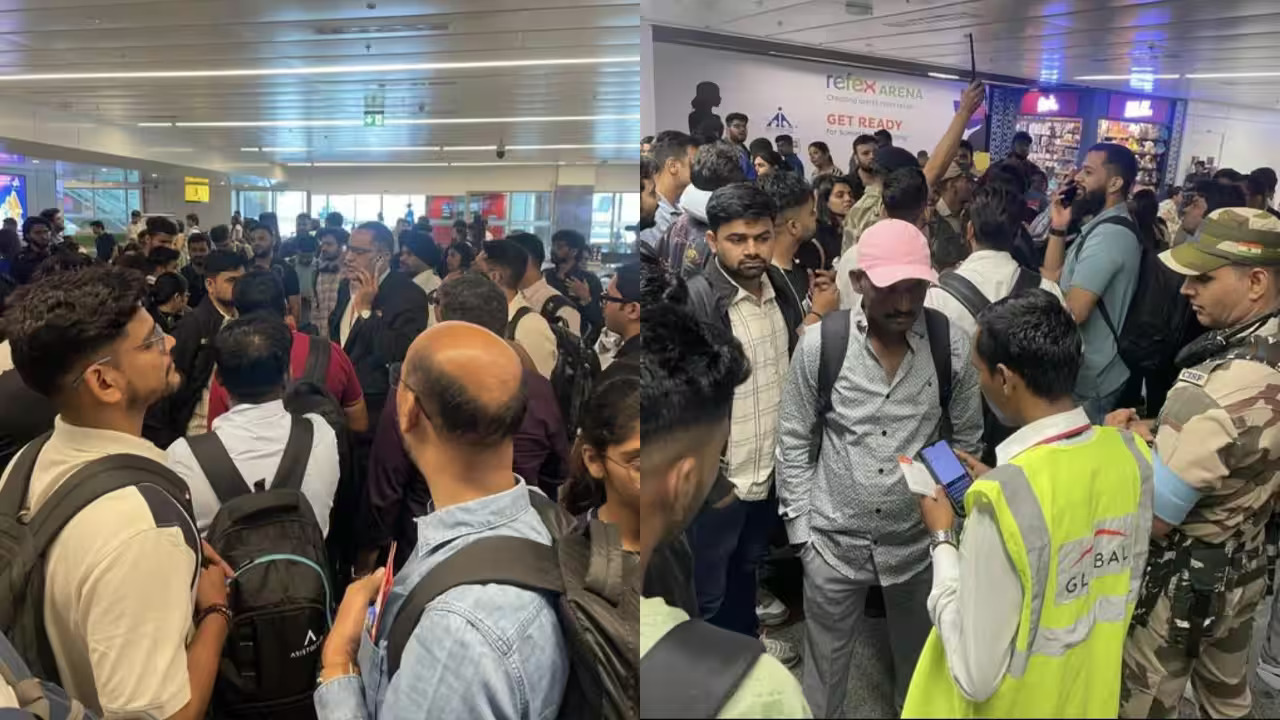
New Delhi: Passengers on a Delhi-Pune SpiceJet flight on August 11 expected to reach Pune in a little over two hours. Instead, they spent most of the night at Delhi airport after an air-conditioning problem forced the aircraft to be taken out of service.
The aircraft had already been boarded when the cabin became increasingly hot. Passengers objected to taking off in those conditions and were deboarded while the aircraft was examined. An alternate aircraft was eventually arranged and passengers reached Pune early the next morning. SpiceJet later confirmed that the flight had encountered a technical issue and that an alternate aircraft had been arranged. Passengers, meanwhile, alleged that they were not provided food or refreshments during the prolonged wait.
The incident illustrates a familiar gap in air travel: while passengers understand that a technical problem can delay or cancel a flight, many are less clear about what the airline is required to provide once that happens.
That is where passenger rights and consumer protection come in.
What Indian passengers are entitled to
India's passenger-rights framework already provides protections for travellers affected by delays and cancellations. The Ministry of Civil Aviation's Passenger Charter, read with applicable DGCA rules, provides for different forms of assistance depending on the circumstances, including meals and refreshments during qualifying delays, alternate flights or refunds in specified cases, and hotel accommodation where the applicable conditions are met.
Airlines are also required to communicate relevant information to affected passengers and provide the options available under the applicable rules.
The distinction is important because a flight being delayed does not automatically mean an airline has violated a passenger's rights. Technical problems, bad weather, air traffic restrictions and safety concerns can make disruptions unavoidable. An airline should never operate an aircraft simply to avoid a delay.
The consumer-rights question is what happens after the disruption occurs. If passengers are entitled to meals, accommodation, an alternative flight or a refund under the applicable rules, those obligations do not disappear because the original disruption was caused by a technical problem.
The Consumer Protection Act, 2019 provides another layer of protection. Air transport falls within the definition of a service, while deficiency in service includes a fault, imperfection, shortcoming or inadequacy in the quality or manner of performance of a service.
This does not make every delayed flight a case of deficiency. Consumer liability depends on the circumstances and whether the airline has failed to meet its contractual, regulatory or statutory obligations.
A wider passenger-management problem
The SpiceJet incident is not the first time an operational problem has raised questions about how passengers are treated during a disruption.
In May, passengers on an IndiGo flight from Vadodara to Delhi were reportedly left inside the aircraft for around 30 minutes without cabin lights and air-conditioning after a ground power unit malfunctioned. The problem was eventually resolved.
Air India has faced similar complaints. In June 2025, passengers on a Delhi-Bhubaneswar flight were reportedly left at Delhi airport overnight after the aircraft was grounded because of a technical problem while alternative arrangements were being worked out.
The December 2025 IndiGo disruption demonstrated the issue on a much larger scale. Between December 3 and 5, the airline cancelled 2,507 flights and delayed another 1,852, affecting more than three lakh passengers. A government inquiry subsequently examined issues including network planning and operational control, while the airline was later fined ₹22.20 crore and directed to undertake corrective measures.
These incidents were different in cause and scale and should not be treated as identical failures. But they point to the same consumer concern: an airline's responsibility does not stop at dealing with the aircraft. It also has to deal with the consequences for the passenger.
For travellers, that means more than compensation. It means knowing what happens to their booking, baggage and onward journey, whether they can seek a refund or alternative flight, and what basic assistance they are entitled to while they wait.
How other countries put passenger rights into practice
Several aviation markets have built more explicit systems around these principles.
In the European Union, passenger rights are laid out in a single framework covering cancellations, long delays and denied boarding. Depending on the circumstances, passengers can be entitled to meals and refreshments, accommodation and transport to a hotel, as well as reimbursement or rerouting. Airlines must also inform passengers about their rights.
The EU model is significant not because every provision can be transplanted to India, but because it makes the passenger's position relatively clear: when an airline disruption creates a need for assistance, the responsibility for meeting that need is defined in advance.
The United States follows a somewhat different model. Its Department of Transportation requires airlines to provide automatic refunds when passengers are legally entitled to them after cancellations or significant changes. It also maintains an Airline Customer Service Dashboard that allows passengers to see what individual airlines have committed to providing during controllable disruptions, including rebooking, meals and hotel accommodation.
The UK's framework similarly provides defined rights around cancellations and delays, including food, refreshments and accommodation in qualifying circumstances, while compensation may also apply depending on the cause and circumstances of the disruption.
The common thread across these systems is not that airlines are expected to prevent every disruption. It is that passenger obligations are made clearer when disruption occurs, reducing the uncertainty faced by travellers at the airport.
Passenger protection must keep pace with growth
India's domestic aviation market carried about 16.69 crore passengers in 2025, and the number of people relying on air travel continues to grow. At this scale, disruption is inevitable. Passenger protection therefore has to evolve alongside the industry's expansion.
A six- or eight-hour wait can mean a missed connecting flight, hotel booking, business meeting or medical appointment. For families with children and elderly passengers, a prolonged airport wait can be particularly difficult.
Airlines cannot eliminate every technical fault, weather disruption or operational problem. They can, however, make the passenger experience more predictable when something goes wrong.
That means timely communication, appropriate assistance and clear choices on refunds or alternative travel. Safety must remain non-negotiable, but passenger care cannot become secondary once a disruption has occurred.
India already has a framework covering many of these situations. The larger challenge is making those rights visible and consistently enforceable at the point of disruption, so that a passenger waiting for hours at an airport knows what assistance is due, what choices are available and where to seek redress if those obligations are not met.