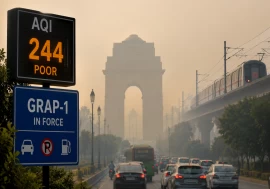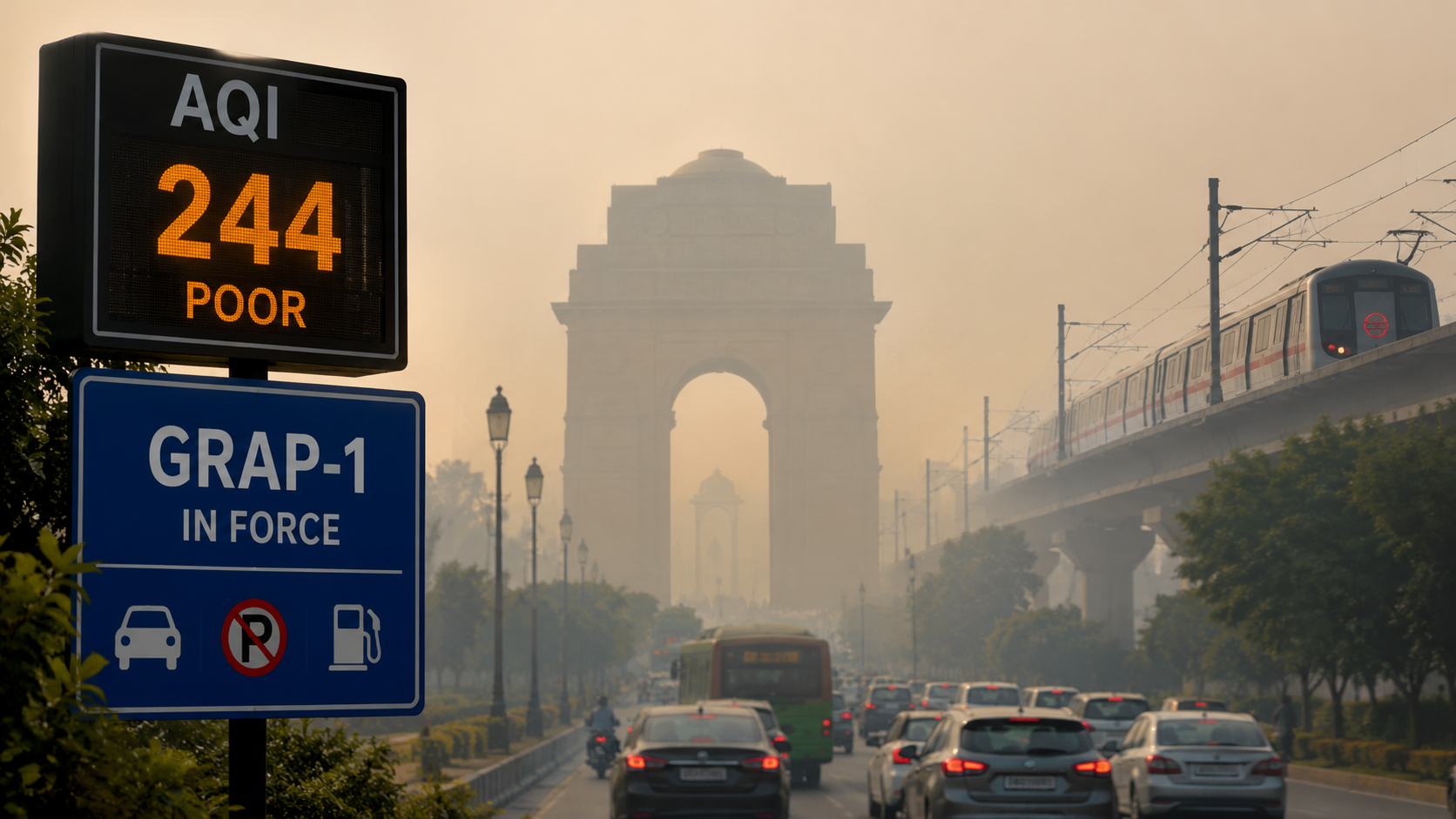
New Delhi: Delhi’s pollution season has arrived with a warning for commuters, motorists and construction operators. With the capital’s air quality slipping from the ‘Moderate’ to the ‘Poor’ category in just a day, authorities have imposed the first stage of the Graded Response Action Plan (GRAP), bringing tighter pollution checks, doubled parking charges and restrictions on dust-generating activities into focus.
The Commission for Air Quality Management (CAQM) said Delhi’s Air Quality Index (AQI) rose from 179 on October 20 to 244 at 2 pm on October 21. Forecasts by the India Meteorological Department (IMD) and the Indian Institute of Tropical Meteorology (IITM) indicate that air quality is likely to remain in the ‘Poor’ category over the coming days.
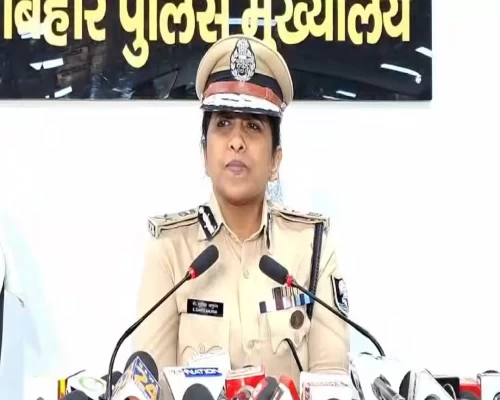
Under GRAP-1, parking charges across Delhi will be doubled, except at Metro parking facilities, while vehicles without a valid Pollution Under Control (PUC) certificate will be denied fuel, according to Delhi Environment Minister Manjinder Singh Sirsa. The measures are aimed at reducing vehicular emissions and curbing dust pollution as the capital enters the winter pollution period.
Sirsa said the government was implementing an 11-point action plan with support from the Centre, focusing on dust mitigation, electric mobility, vehicular emissions and the identification of local pollution sources. He also claimed that GRAP had been implemented later in the season than in previous years.
The Delhi Metro Rail Corporation (DMRC) will increase train trips on weekdays from October 22 to encourage public transport use. It will also intensify anti-pollution drives at construction sites and surrounding areas across the capital.
Staggered working hours and work-from-home arrangements will be introduced for Municipal Corporation of Delhi and government offices to reduce the number of vehicles on the roads, Sirsa said. Outdoor construction and demolition activities will face restrictions, while open burning remains strictly prohibited.
To tackle dust pollution, the government has deployed 608 anti-smog guns and 1,150 mist-spray units across Delhi. An Integrated Command and Control Centre has also been established to monitor pollution linked to construction activities, while an artificial intelligence-based traffic management system is being used to help reduce vehicular emissions.
GRAP-1 also calls for periodic mechanised road sweeping, water sprinkling, dust control at construction sites, improved waste management and stricter checks on polluting vehicles. Traffic management and emission controls at industries, power plants and brick kilns are also part of the measures.
GRAP restrictions are triggered by the severity of air pollution. Stage I applies when the AQI is between 201 and 300, classified as ‘Poor’. Stage II comes into force at 301 to 400, or ‘Very Poor’, while Stage III applies at 401 to 450, classified as ‘Severe’. Stage IV is triggered when the AQI exceeds 450, placing air quality in the ‘Severe Plus’ category.
With Delhi’s AQI already at 244 and forecasts pointing to continued poor air quality, the effectiveness of the initial curbs will be closely watched as pollution levels typically worsen during the winter months.
BI Bureau