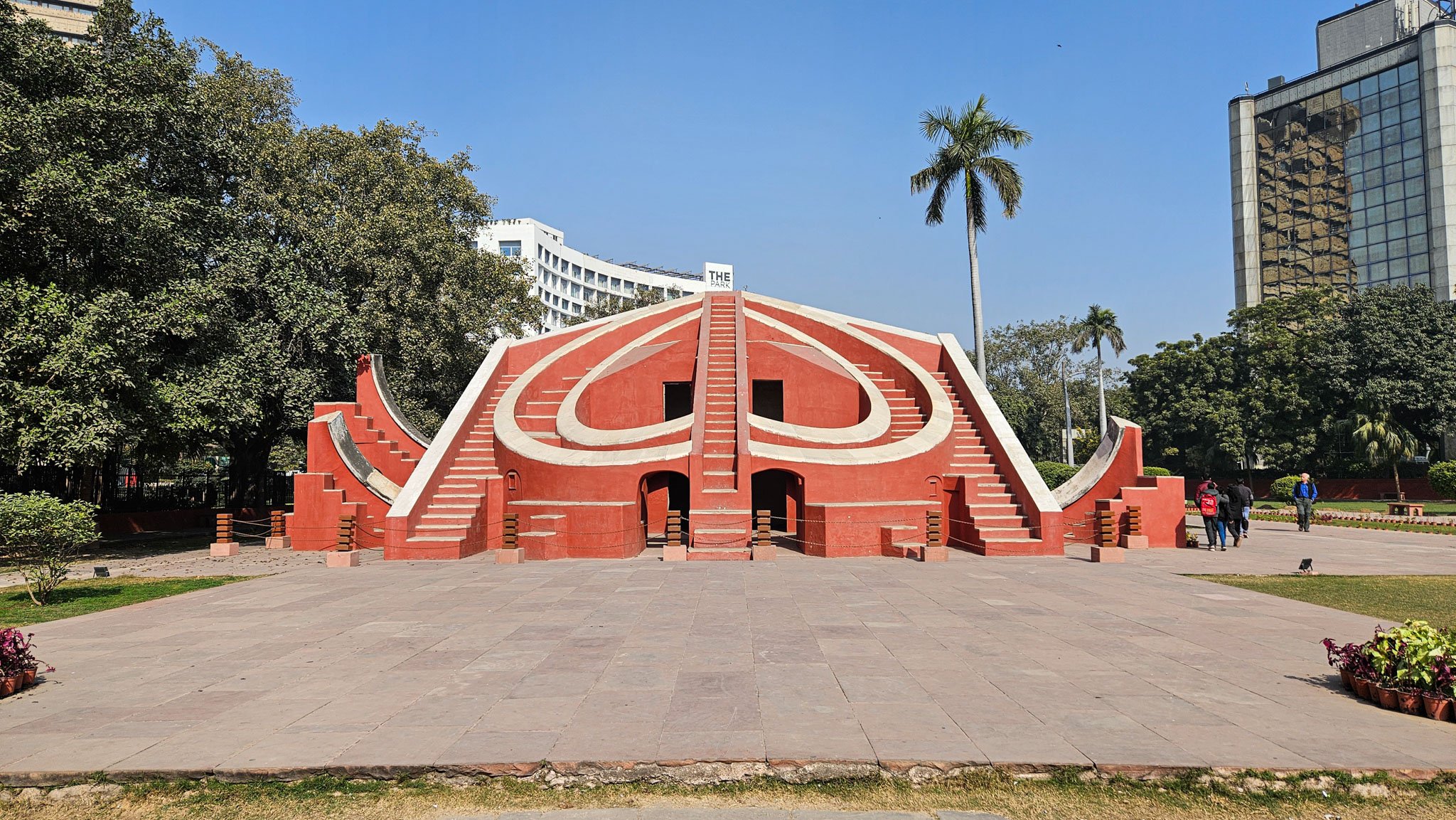
New Delhi: Cockroaches can cause many upsets, and this is one that many old-timers would rue. While historically known for its iconic Jantar Mantar monument, this place in the heart of the capital has, over the years, come to symbolise public dissent. For decades, this tiny stretch, surrounded by residential units, political party offices and, not to miss, the famous South Indian idli-dosa shop, has stood witness to demonstrations of varied kinds, at times running into months and even years.
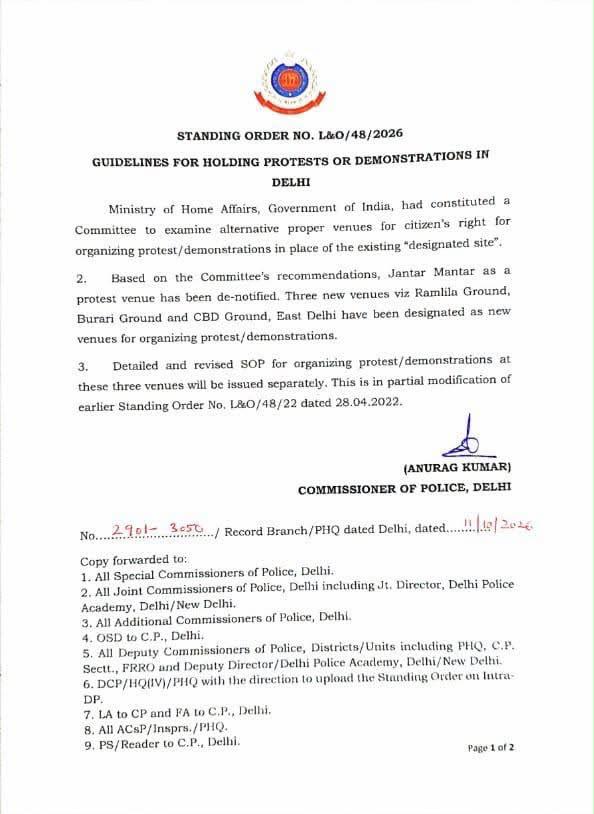
That familiar scene, however, has now changed. In a circular issued on Monday, Delhi Police announced that Jantar Mantar has been de-notified as a designated venue for protests and demonstrations. Ramlila Ground, Burari Ground and CBD Ground in East Delhi have been designated as alternative venues.
The Ministry of Home Affairs had constituted a committee to examine alternative venues for citizens to organise protests and demonstrations. The decision follows the committee’s recommendations and shifts the designated venues away from Jantar Mantar, which has served as a familiar address for dissent for decades.
One incident that brought the site into sharp focus recently was the July 20, 2026, gathering by the Cockroach Janata Party (CJP). The demonstration turned violent, with Delhi Police reporting that 118 personnel, including women personnel and senior officers, were injured. Around 60 demonstrators were also reported injured. Police alleged that participants attacked personnel and damaged public property.
The significance of Jantar Mantar, however, goes beyond the gatherings held there. Its location in central Delhi, close to Parliament and key government offices, has made it an important address for those seeking to put their demands before the political establishment. The same location also places gatherings close to busy roads and critical traffic routes. Security cordons and barricades in this part of the capital can affect commuters travelling between different parts of Delhi.
The traffic implications were visible again on October 10, when extensive security arrangements were put in place for a CJP event. Restrictions and barricades disrupted movement across parts of central Delhi. With Jantar Mantar situated in a heavily used part of the city, restrictions in the area can affect traffic well beyond the immediate site. Its role in the capital’s public life has therefore involved a difficult balance between providing space for dissent and managing the impact on the city around it.
Jantar Mantar became a designated venue in the 1990s after restrictions were imposed on demonstrations at Boat Club near India Gate. Since then, it has hosted movements on a wide range of political and social issues. Its compact setting, proximity to the seat of power and visibility made it a natural gathering point for groups seeking public attention. At the same time, concerns over noise, congestion and the impact on nearby residents have repeatedly shaped debates over its use.
Under the latest decision, Ramlila Ground, Burari Ground and CBD Ground in East Delhi will serve as designated venues for demonstrations. Delhi Police has said a detailed, revised standard operating procedure (SOP) governing gatherings at these locations will be issued separately. The order partially modifies the earlier standing order dated April 28, 2022, meaning the provisions not altered by the latest decision will continue to apply.
The decision marks a significant change for a site that has been part of Delhi’s public life for decades. The practical question now is whether the new venues can accommodate demonstrators while remaining accessible to citizens seeking to exercise their right to peaceful assembly, and whether relocating gatherings will ease the pressure on central Delhi’s roads. For old-timers, Jantar Mantar’s removal from the list of designated sites will mean the loss of a familiar address for dissent.
BI Bureau