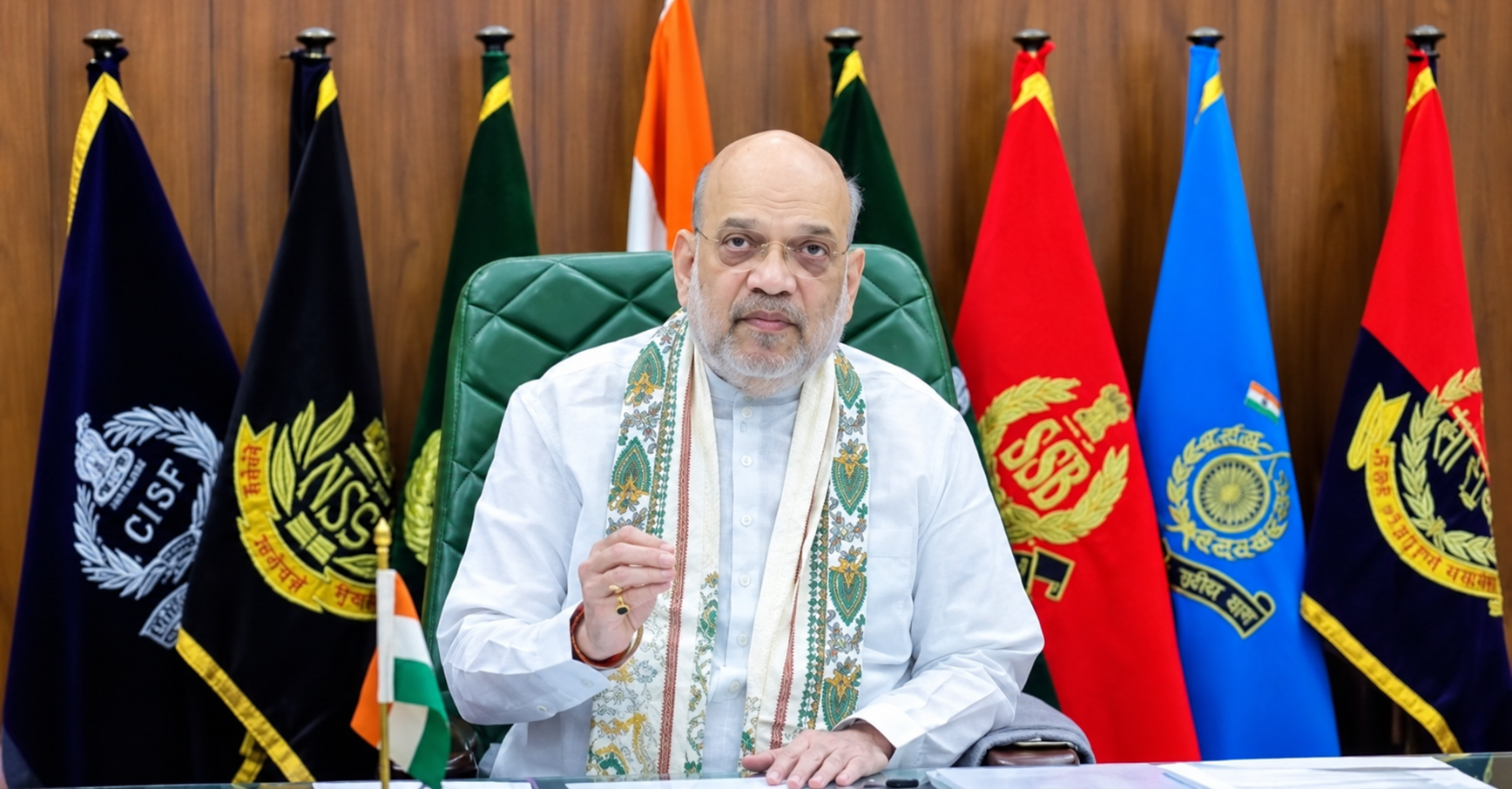
New Delhi/Raipur: Union Home Minister Amit Shah has reiterated the Centre’s commitment to rehabilitating victims of Naxal violence and ensuring that persons with disabilities in Chhattisgarh can live with dignity, independence and respect. Addressing an assistive devices distribution ceremony virtually on October 15 under the Seva Sankalp Abhiyan, Shah stressed that ending Naxalism must be followed by sustained efforts to heal the wounds inflicted on tribal communities over five decades.
The programme marked the launch of the second phase of the Divyang Seva Camp initiative, aimed at providing assistive and prosthetic devices to persons with disabilities, including those affected by Naxal violence.
The first phase of the programme, held in Jagdalpur from October 5 to 7, benefited more than 3,600 persons with disabilities, including over 1,570 beneficiaries from Bastar alone. The initiative provides assistive devices such as artificial limbs, wheelchairs, tricycles, crutches, hearing aids and smart walking sticks to help beneficiaries regain mobility and improve their quality of life.
Shah observed that innocent civilians had suffered life-altering injuries in improvised explosive device (IED) blasts carried out by Naxals. He described such attacks as a grave violation of human rights and emphasised that the government’s responsibility extends beyond restoring security to rehabilitating those whose lives have been permanently affected by violence.
The Union Home Minister reaffirmed that the Centre would work closely with the Chhattisgarh government to ensure rehabilitation opportunities for every person with a disability and every victim of Naxalism.
Chief Minister Vishnu Deo Sai has placed the transformation of Bastar at the centre of the state government’s development agenda, with a focus on improving public services, strengthening connectivity, promoting livelihoods and restoring confidence among communities affected by decades of conflict.
Shah highlighted several state government initiatives, including the Bastar Olympics, Bastar Pandum, the Niyad Nellanar scheme and the Chief Minister’s Samuhik Bus Yojana, as important instruments of this transformation.
The Bastar Olympics has encouraged young people to participate in sports, while Bastar Pandum provides a platform for celebrating and reviving the region’s rich tribal art, cultural traditions and heritage. These initiatives seek to strengthen community participation and create opportunities for youth beyond the shadow of conflict.
Through Niyad Nellanar, the state government is extending basic infrastructure and essential services to remote and previously underserved villages. The Samuhik Bus Yojana is another component of efforts to improve mobility and access to public services.
The rehabilitation initiative also involves the state administration, the Social Welfare Department, Bhagwan Mahaveer Viklang Sahayata Samiti of Jaipur, Bharatiya Jain Sanghatana and other organisations.
A key announcement by Shah was the proposed conversion of more than 200 of the over 500 security camps established in the region into Shaheed Veer Gundadhur Seva Dera centres.
These centres are envisioned as platforms for government officials to deliver services and address local needs relating to healthcare, education, employment and other essential facilities. The move signals a shift towards making public administration more accessible to communities in remote areas.
Shah also outlined the progress of rehabilitation and reintegration measures for former Naxalites. According to figures shared by him, approximately 8,526 Naxalites have surrendered. The government has opened bank accounts for 7,328 people who previously lacked them, provided incentive payments to 7,882 people, disbursed reward money to 1,620 and provided jobs to 455. A further 129 people have been allotted land.
Other measures include housing assistance, skill development, new ration cards, household electricity connections and road and bridge projects intended to improve living conditions in affected areas.
The government’s approach to Bastar increasingly places rehabilitation, access to public services and economic opportunity alongside security measures. For communities affected by Naxal violence, the availability of assistive devices and rehabilitation support can be a crucial step towards restoring mobility, independence and social participation.
BI Bureau