New Delhi: For the first time in 47 years, the Central Reserve Police Force (CRPF) has completed 12 consecutive months without losing a personnel in operational duties anywhere in the country. The milestone, recorded on October 30, 2026, comes after decades in which the force sustained casualties across multiple internal security theatres, particularly areas affected by Left Wing Extremism (LWE).
The development reflects the sharp decline in Maoist violence, which accounted for a substantial share of CRPF operational fatalities in recent years. It also comes at a time when the force is recalibrating its deployment, with greater attention being directed towards ethnic violence and security challenges in Manipur.
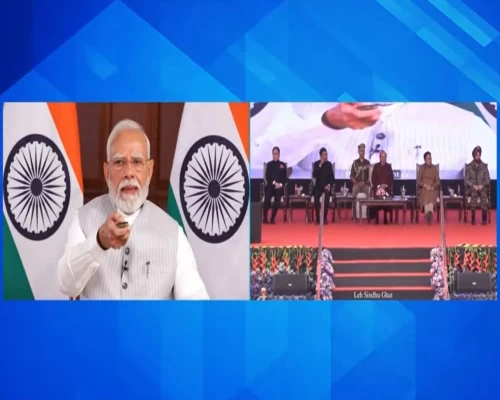
Prime Minister Narendra Modi acknowledged the achievement, describing it as a milestone that reflects the force's operational progress. In a social media post, he said, "A zero that speaks volumes."
A ZERO that speaks volumes. @crpfindia https://t.co/A7PQrAD5Nu
— Narendra Modi (@narendramodi) November 3, 2026
CRPF Director General Gyanendra Pratap Singh said the force had gone 12 consecutive months without an operational fatality, with the last such death reported on October 30, 2025. He described it as a significant achievement, particularly because the force continues to remain deployed across major operational theatres.
Singh attributed the milestone to improvements in equipment, training, strategic planning and deployment, along with stronger post-incident response mechanisms. He particularly highlighted the importance of rapid evacuation of injured personnel to secondary and tertiary medical facilities. Round-the-clock helicopter and air ambulance support during high-intensity operations, he said, has been a game-changer.
The figures mark a notable change from the preceding years. In 2025, eight CRPF personnel were killed in action in LWE-affected areas of Jharkhand, Chhattisgarh and Odisha. One additional personnel died during field firing practice. In 2024, the force reported 12 deaths across Chhattisgarh, Jammu and Kashmir and Manipur.
The last operational fatalities occurred in a blast during an area domination exercise in Jharkhand's West Singhbhum district on October 30, 2025. Inspector Kousal Kumar Mishra succumbed to his injuries, while Head Constable Mahendra Lashkar was killed in the same incident.
The decline in operational fatalities coincides with the Centre's intensified campaign against Left Wing Extremism. India had more than 100 LWE-affected districts at the peak of Maoist activity in the mid-2000s. Following sustained security operations, arrests and surrenders, the government announced on March 30, 2026, that the country had achieved its target of eliminating Maoist violence by the March 31 deadline. The arrest of Maoist Central Committee member Misir Besra in Jharkhand on July 28 was another significant development in the campaign.
The changing security landscape has also altered the CRPF's deployment priorities. At the peak of Maoist activity, nearly 50,000 personnel were deployed in LWE-affected areas, including around 40,000 in Chhattisgarh's Bastar region, the insurgency's principal stronghold.
With Maoist activity having declined considerably, the force's attention is increasingly turning towards Manipur, where ethnic tensions, particularly between Naga and Kuki groups, continue to pose security challenges. Several CRPF battalions have been moved from Bastar to the northeastern state, where the force has also taken over security responsibilities at locations previously guarded by the Assam Rifles.
A Manipur-based officer described the state as an increasingly important operational theatre for the CRPF. "Maoist areas only need monitoring... in Manipur, there is a rising challenge," the officer said, pointing to recent incidents in which CRPF personnel were injured in an explosive attack in Imphal.
The officer also referred to the heightened security responsibilities following the CRPF's takeover of a camp of cadres belonging to a group under the Suspension of Operations (SoO) arrangement.
The CRPF, with a strength of over 300,000 personnel, remains the country's largest central armed police force. Its operational responsibilities continue to span counter-insurgency, internal security, election duties and law-and-order deployments.
The 12-month period without an operational fatality marks a significant change in the force's casualty record. However, the evolving situation in Manipur indicates that the reduction in Maoist-related operations does not mean a corresponding reduction in the CRPF's internal security responsibilities. Its deployment priorities may be changing, but the demands on the force remain substantial.
BI Bureau


_500_x_400.webp "Narayanpur's old security camps are now schools")