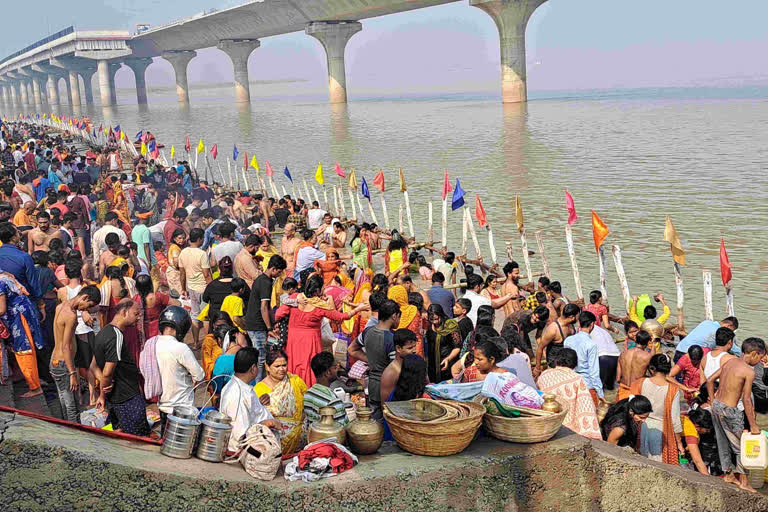
Patna: For a festival that draws thousands of devotees to the banks of the Ganga, the challenge is not just reaching the ghats but ensuring that the roads leading to them do not turn into bottlenecks. Patna is preparing for that rush with a detailed traffic management plan that puts designated parking, pedestrian movement and route diversions at the centre of its Chhath arrangements.
Under the district administration led by District Magistrate Kundan Kumar, the city has mapped out how devotees and other commuters will move across key stretches, including Ashok Rajpath, Digha, Gai Ghat and JP Setu, during the festival. The plan, issued by the Patna Traffic Police, reflects the scale of coordination required to keep a busy city moving while thousands make their way towards the river for the rituals.
The idea is straightforward: keep vehicles away from crowded stretches, create designated parking points and let devotees cover the final stretch to the ghats on foot.
Ashok Rajpath, one of the most important routes during Chhath, will see extensive traffic restrictions. General vehicle movement from Kargil Chowk towards Digha Raj Bhavan will not be permitted, with exemptions for emergency and administrative vehicles. Vehicles carrying devotees will, however, be allowed on specified routes, including access to Patna College and Science College for parking. Further west, vehicles carrying devotees will be allowed to move towards Shahpur.
The administration has also identified parking locations across different neighbourhoods so that devotees do not have to navigate congested roads all the way to the river. Those approaching from Kangan Ghat and Chowk Thana Mor will be directed to parking spaces near City School and Mangal Talab. Devotees coming from the old or new bypass towards Dhanuki Mor and Sheetla Mata Mandir will have designated parking options near Hathiya Bagan, Loha Godam and Medaz Hospital.
Similar arrangements have been made for Shikarpur, Didarganj and localities such as Marufganj, Munger Ganj, Karmali Chowk, Jalla and Malasalami. Vehicles will be parked at identified locations, including designated spaces near the Ganga Path approach road, from where devotees can proceed towards the ghats on foot.
The arrangements extend beyond the roads leading directly to the river. Commercial vehicles using the Gai Ghat Bridge will face restrictions from noon on November 15 until 10 am on November 16. Alternative routes have been specified for vehicles approaching from different directions, allowing them to use the old bypass and other connecting roads.
JP Setu will also have regulated movement. Vehicles travelling from Sonpur and Chhapra towards Patna will not be allowed during specified hours on November 15 and 16. Heavy vehicles, including buses, trucks and trailers, will remain barred. Commuters travelling towards Sonpur, Chhapra and Hajipur have been advised to use Mahatma Gandhi Setu during these periods.
The traffic plan also provides for emergency movement. Ambulances, fire tenders, vehicles carrying patients and vehicles transporting deceased persons will be exempted from the restrictions.
The arrangements will come into effect in phases, with normal traffic movement scheduled to continue outside the specified restriction periods. For the administration, the exercise involves more than putting up barricades or diverting vehicles. It requires anticipating where crowds will gather, deciding where vehicles can be parked and ensuring that the final approach to the ghats remains manageable.
During Chhath, when the city moves towards the river in large numbers, good traffic management can make a significant difference to the experience of devotees. Patna’s plan attempts to do just that: organise the roads, regulate the vehicles and leave the way to the ghats open for the people.
छठ महापर्व 2026 के अवसर पर पटना में यातायात व्यवस्था..... #SamratChoudhary #CMSamrat @IPRDBihar @patna_traffic @PatnaPolice24x7 @cityofpatna @UDHDBIHAR https://t.co/XCEBgP69N3
— District Administration Patna (@dm_patna) November 14, 2026
BI Bureau



_500_x_400.webp "Narayanpur's old security camps are now schools")