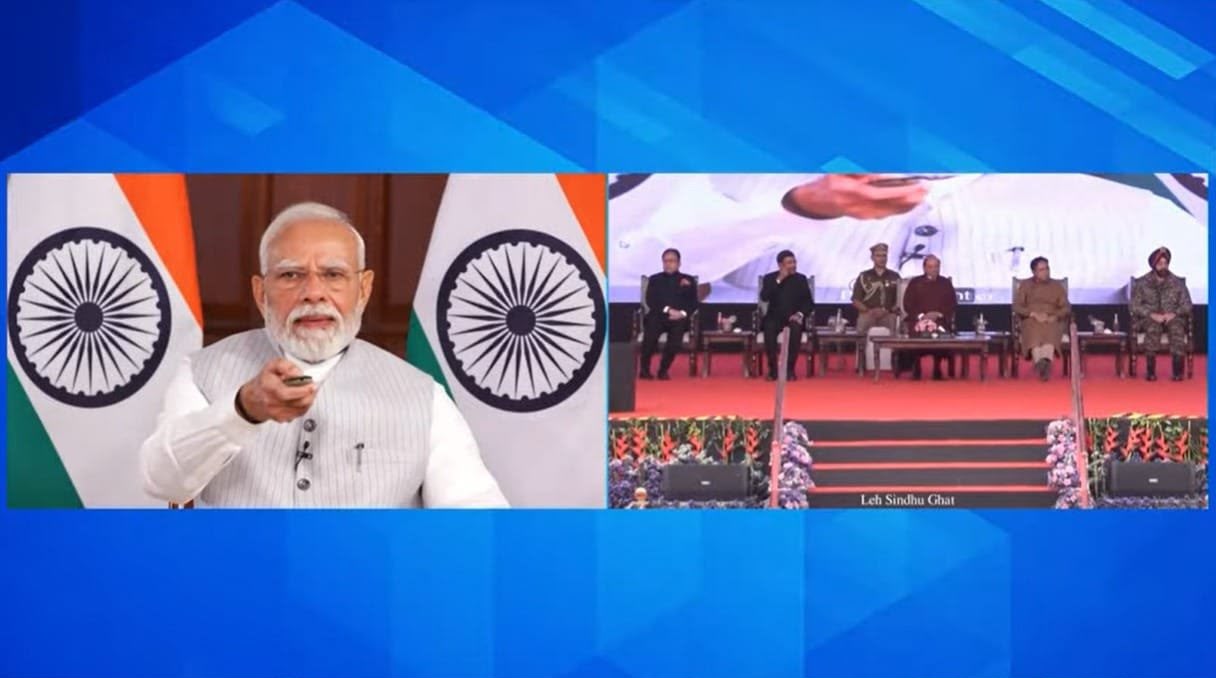
Leh: For Ladakh, the distance to opportunity is often measured in hours of travel, access to education and the availability of essential services. A new set of development projects inaugurated by Prime Minister Narendra Modi on Thursday seeks to address several of these challenges, combining faster road connectivity with airport infrastructure, power, water security and heritage conservation.
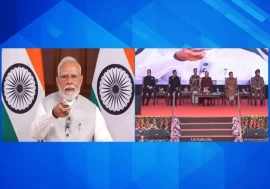
Virtually inaugurating and dedicating projects worth around Rs 3,350 crore, Modi said the focus was not only on modern infrastructure but also on creating better opportunities for Ladakh’s people, particularly its youth.
“Our special focus is on the new generation of Ladakh. The youth should receive good education, get opportunities to learn new technology, and not depend on other cities. That is why a major centre of excellence is being established in Leh,” he said.
Modi added that proposals to establish satellite campuses of IIT Jammu and IIM Jammu were being advanced. The proposed academic centres are expected to expand access to higher education, research and skills, helping young people explore more opportunities within the region.
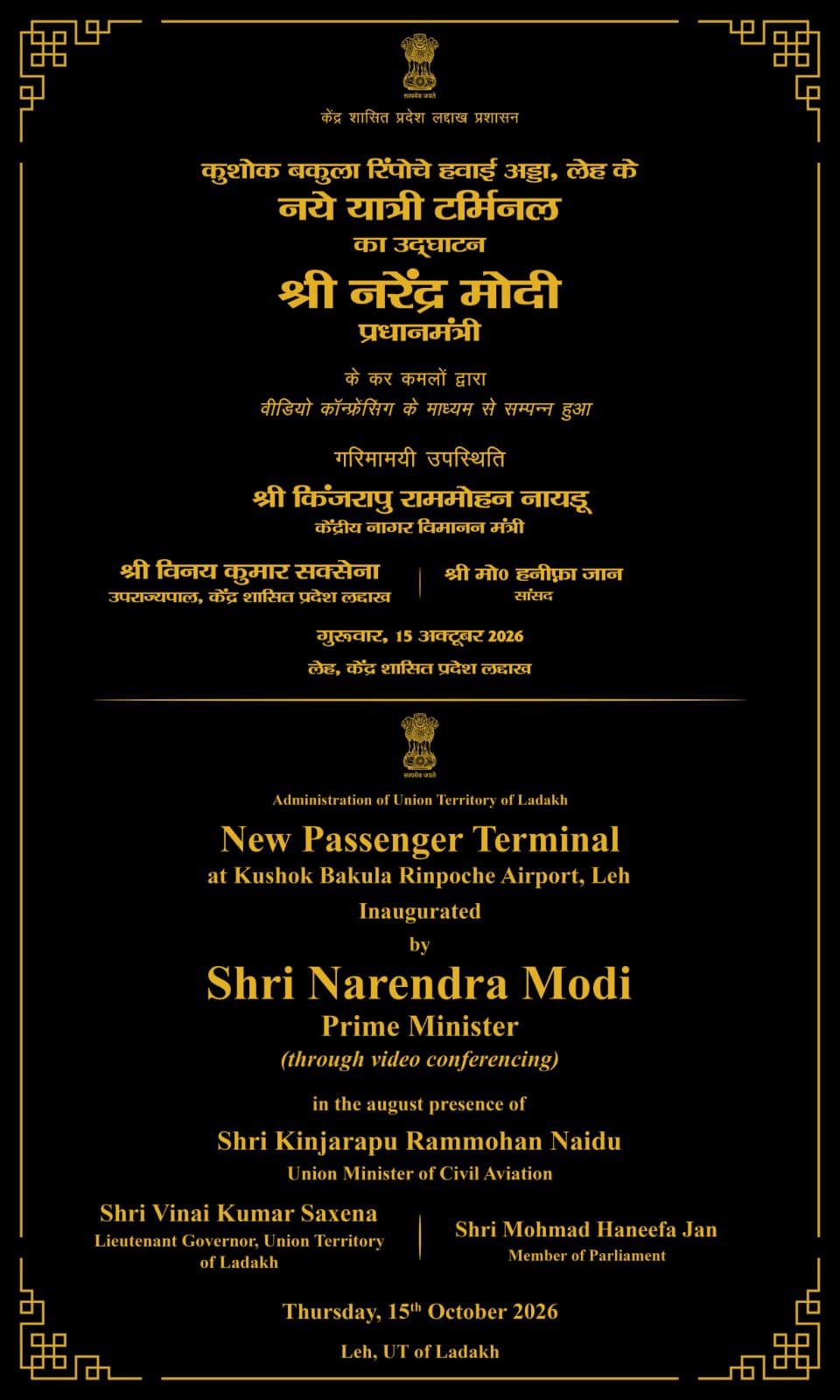
The infrastructure package spans several sectors. Among its key projects is the new passenger terminal at Kushok Bakula Rimpochee Airport in Leh, built at a cost of Rs 640 crore. Equipped with geothermal heating facilities, the terminal is designed to improve energy efficiency and reduce its carbon footprint, reflecting the need to balance infrastructure development with Ladakh’s ecologically sensitive environment.
The terminal is also expected to support tourism by improving passenger infrastructure in a region where travel and visitor access are important to local economic activity.
Road connectivity received a major boost with the dedication of the 298-km Nimmu-Padum-Darcha Road, constructed by the Border Roads Organisation (BRO). Modi said a journey that earlier took around 12 hours could now be completed in approximately three hours. The reduction in travel time is expected to make movement easier and benefit trade and commerce along the route, while strengthening connectivity in remote parts of the region.
The projects also address electricity needs. Modi dedicated the 9 MW Hanu Small Hydroelectric Project and the 66 kV double-circuit Dah-Hanu-Khaltsi transmission line, adding to Ladakh’s power infrastructure.
Water availability is another focus. Under Project Him Sarovar, 40 water bodies have been developed across 40 villages. The initiative forms part of the wider package aimed at addressing local development needs beyond transport and large infrastructure.
The Prime Minister also inaugurated India’s first Petroglyph Conservation Park at Sindhu Ghat in Leh, bringing the preservation of Ladakh’s ancient rock-art heritage into the development agenda.
Modi congratulated the people of Ladakh on the projects and acknowledged the engineers, workers and local teams involved, with particular appreciation for the BRO.
He also highlighted the region’s potential in ice hockey, winter sports and mountaineering, saying efforts were being made under Ladakh’s new sports policy to provide young people with better training and facilities and help them achieve at national and international levels.
Taken together, the projects represent a broad infrastructure push across transport, energy, water and heritage. Their longer-term significance will depend on how effectively improved connectivity and essential services translate into economic activity and better access to opportunities for residents.
For Ladakh, the larger challenge is to ensure that development reaches beyond major infrastructure sites and strengthens everyday life, while enabling more young people to access education, skills and livelihoods without having to depend on other cities.
BI Bureau