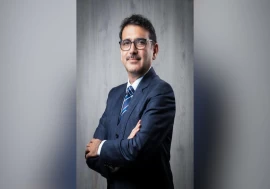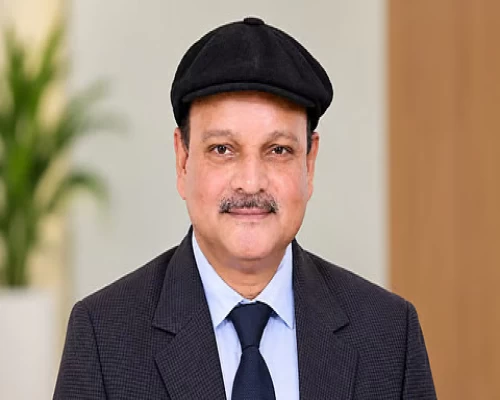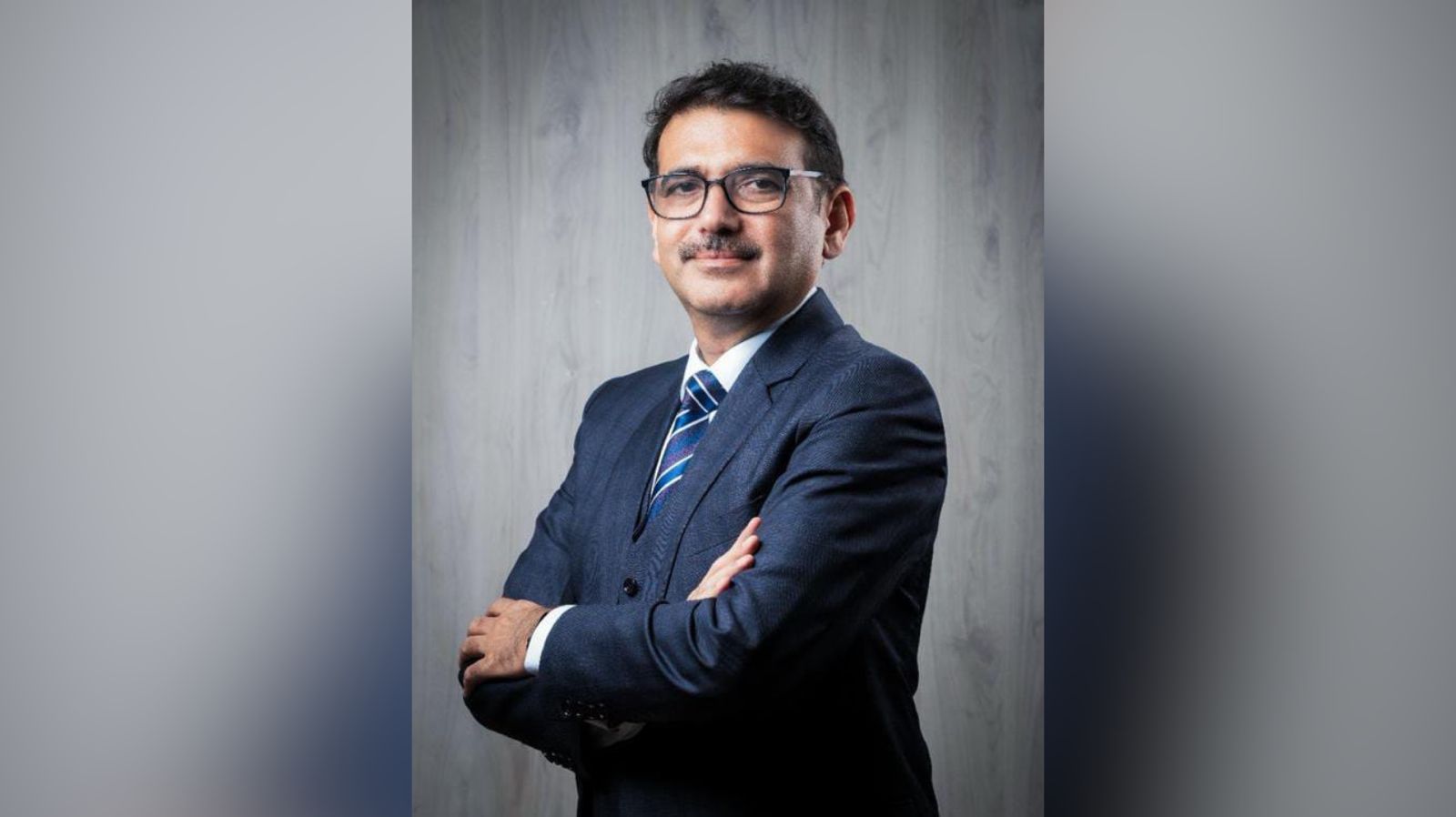
From Hindu College and the demanding railway divisions of Mughalsarai, Asansol and Dhanbad to the Railway Board, CONCOR and now IRFC, IRAS, Manoj Kumar Dubey’s career reflects a distinctive blend of financial acumen, operational understanding and institution-building. As he leads IRFC’s evolution from a dedicated railway financier to a diversified infrastructure financing institution, his journey offers a compelling lesson in how public-sector leadership can turn experience into institutional change.
Some careers are defined by the positions an officer occupies. Others are better understood through the institutions they help transform. The professional journey of Manoj Kumar Dubey, Chairman and Managing Director and Chief Executive Officer of Indian Railway Finance Corporation (IRFC), belongs to the latter category.
Spanning financial services, railway operations, infrastructure policy, logistics and public-sector finance, his career has unfolded across different dimensions of India's infrastructure ecosystem. Speaking with Bureaucrats India, he says that each assignment has added a new perspective to his understanding of how public institutions function, how large projects are financed and how administrative systems can be made more efficient.
Today, as IRFC moves from its traditional role as the dedicated financing arm of Indian Railways towards a broader infrastructure financing mandate, Dubey is drawing upon that accumulated experience to shape what the organisation calls IRFC 2.0, while laying the groundwork for its next phase of growth.
The foundations: Hindu College, Delhi University and an early lesson in finance
Dubey’s professional journey began long before he took charge of a public-sector enterprise. A graduate and postgraduate of Hindu College, University of Delhi, he spent formative years in an environment that brought together academic rigour, intellectual debate and diverse perspectives.
His years at Delhi University were followed by an early professional stint at the Unit Trust of India (UTI), then one of the country's leading mutual fund institutions. Before entering the civil services, he worked for approximately two years with UTI, where his role involved helping bring rural communities into the fold of mutual fund schemes.
The experience offered an early introduction to the importance of financial inclusion; the idea that financial systems must not remain confined to established centres of economic activity but should reach people and communities beyond them, tell Dubey.
His educational journey also continued alongside his professional responsibilities. He pursued an MBA from the Indian School of Mines, Dhanbad, now IIT (ISM) Dhanbad, and topped the 2011–13 batch, receiving the overall Silver Medal from the then President of India.
The combination of financial-sector exposure, public administration and advanced management education would become a defining feature of his professional approach.
For a financial administrator, understanding an organisation's balance sheet is important. Understanding how the organisation actually works is equally essential. Dubey’s postings in Mughalsarai, Asansol and Dhanbad gave him an opportunity to experience Indian Railways at the operational level. These were major railway divisions handling substantial freight traffic and intensive train operations. The experience brought him close to the everyday realities of freight movement, railway business, departmental coordination and financial management.
He recalls these years as an important learning phase, one in which he developed an appreciation for teamwork and the interdependence of different functions within a large public institution. This operational grounding would later prove valuable in assignments involving railway infrastructure, public-private partnerships, freight corridors and financing.
The next significant chapter of Dubey’s career unfolded at the Railway Board, where he worked in areas related to infrastructure finance, public-private partnerships and commercial finance.
This was a different kind of responsibility. While divisional assignments offered insight into the daily functioning of Indian Railways, the Railway Board provided a wider view of the policy frameworks, investment decisions and financial structures needed to build infrastructure on a national scale.
Dubey contributed to major railway infrastructure initiatives, including the locomotive manufacturing facilities at Madhepura and Marhowra, high-speed rail and the Dedicated Freight Corridor programme. His work involved infrastructure financing, public-private partnerships, tariff structuring and policy formulation, strengthening his understanding of the financial and commercial dimensions of large projects.
CONCOR: Strengthening financial and operational foundations
In October 2018, Dubey joined Container Corporation of India Limited (CONCOR) as Director (Finance) and CFO, serving until his appointment as IRFC’s CMD and CEO in October 2024.
At CONCOR, he contributed to financial management, capital expenditure planning and corporate restructuring. His tenure also saw efforts to resolve longstanding issues concerning railway land and tariff structures, helping strengthen the company’s operational and financial outlook.
From Miniratna to Navratna
Dubey assumed charge as CMD and CEO of IRFC on October 10, 2024. Established in 1986, IRFC has played a crucial role in financing Indian Railways’ rolling stock and infrastructure requirements.
A major milestone came in March 2025, when IRFC received Navratna status, gaining greater operational autonomy and strategic flexibility. The elevation from Mini-Ratna Category-I reflected the corporation’s financial strength and created new opportunities for growth.
IRFC reported a profit after tax of Rs 7,009 crore in FY 2025–26, compared with Rs 6,502 crore in the previous year, reflecting sustained financial performance.
Under Dubey’s leadership, IRFC is expanding beyond its traditional financing model to support the wider railway ecosystem. As outlined in a post on IRFC’s official X handle, the IRFC 2.0 vision focuses on diversifying the corporation’s business and expanding its role in infrastructure financing.
Its diversification strategy covers power generation, renewable energy, mining, metro rail, ports, logistics and other infrastructure sectors linked to railway development.
Two years of leadership. A transformation in motion. A future full of possibilities. As Shri Manoj Kumar Dubey, CMD & CEO, completes two years at the helm of Indian Railway Finance Corporation (IRFC), we look back with pride at a journey marked by vision, purposeful diversification and a renewed ambition for growth. From our Mini-Ratna beginnings to earning the prestigious Navratna status in March 2025, IRFC has strengthened its position as a key financial institution while preparing for a much larger role in India’s infrastructure growth. Under his leadership, the vision of IRFC 2.0 took shape, expanding beyond traditional railway financing to support the wider railway ecosystem and allied infrastructure sectors. From dedicated freight corridors, metro rail, ports to energy and mining, IRFC is broadening its horizons while staying true to its core purpose. Our sustained year-on-year growth in profitability, record financial performance, disciplined asset quality and strategic partnerships reflect this forward-looking approach. MoUs with organisations including RITES, IIFCL, DMRC, MMRDA, JNPA and REMCL are opening new avenues for collaboration, while our initiatives in renewable energy financing are helping support the transition towards a greener railway network. As we look ahead, the ambition is clear; to build on the foundations of IRFC 2.0 and move further ahead, a more diversified, consolidated, agile and future-ready institution, creating greater value for Indian Railways and the nation. Thank you, Dubey Sir, for your vision, guidance and commitment to taking IRFC forward. As we celebrate these two years, we look forward to the milestones still to come. Together, we move forward; financing progress, enabling transformation and powering the journey of a Viksit Bharat. @ManojDubeyIRAS #IndianRailways #VisionaryLeadership #ViksitBharat
— Indian Railway Finance Corporation Limited (@IRFC_1986) October 10, 2026
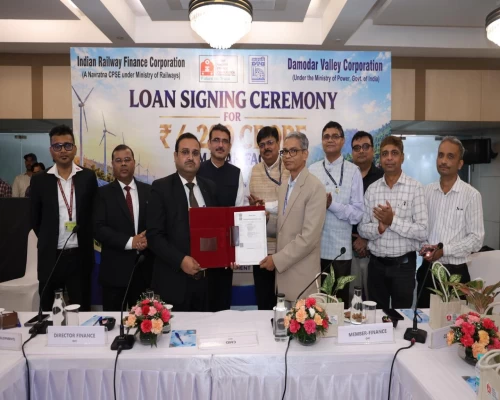
Key initiatives include a Rs 700 crore financing agreement with NTPC for 20 BOBR rakes, a Rs 5,000 crore loan agreement with NTPC, Rs 12,000 crore disbursement to HURL and collaboration with REMC Limited to explore renewable-energy financing opportunities.
IRFC has also undertaken refinancing initiatives for railway-linked infrastructure projects, including DFFCIL and Angul Sukinda Railway Limited, to improve financing terms and strengthen project viability.
This approach reflects the IRFC 2.0 vision; diversifying the corporation’s business while retaining its core purpose of supporting railway-led infrastructure development.
The next phase of IRFC’s evolution aims to build a more diversified, agile and future-ready infrastructure financing institution. This will require stronger project appraisal capabilities, new financing partnerships and a careful balance between growth and risk.
Dubey’s experience across railway operations, infrastructure policy and corporate finance provides a valuable foundation for this transition. The objective is to mobilise long-term capital for projects that support India’s evolving transport, logistics and clean-energy requirements.
Leadership beyond the balance sheet
Dubey’s interests extend to sports, Indian classical dance and music. His involvement in sports administration and his reflections on teamwork highlight the importance of discipline, collaboration and institutional culture.
As IRFC moves towards its next phase, its success will depend on translating strategic ambition into sustainable business, responsible capital deployment and meaningful contributions to national infrastructure.
From railway divisions and the Railway Board to CONCOR and IRFC, Dubey’s journey illustrates how operational experience, financial discipline and strategic leadership can contribute to institutional transformation.