Bhubaneswar: The Oil and Natural Gas Corporation (ONGC) has made another encouraging gas discovery off the Odisha coast, adding to its sustained exploration effort in the Mahanadi Basin. Coming after the Utkal and Konark discoveries in 2024, the latest find gives ONGC another opportunity to assess whether the technically challenging deepwater region could eventually support a larger offshore gas development.
ONGC struck gas in the MDW-28 well, around 43 km off the Odisha coast and about 23 nautical miles from Konark. Drilled in water depths of around 770 metres, the well reached about 1,450 metres and produced gas with encouraging flow and sustained pressure during a three-day test. The company has not yet disclosed the flow rate or the estimated size of the gas accumulation.
The discovery is promising, but ONGC will now have to undertake further testing and appraisal drilling to establish the size of the reservoir, the recoverable quantity of gas and whether it can be developed commercially. Those assessments will determine the eventual significance of the find.
What makes the discovery particularly interesting is that ONGC is not exploring the Mahanadi Basin as a one-off prospect. The company had already made the Utkal and Konark gas discoveries in the basin in 2024, and MDW-28 adds another encouraging result to its ongoing exploration campaign. The current programme includes four wells, allowing ONGC to build a clearer geological picture of the area through successive drilling.
There could also be a larger opportunity if these discoveries prove commercially viable. Offshore gas development requires substantial investment in production, processing and evacuation infrastructure. With several discoveries in the same broad area, ONGC can potentially examine whether they can be developed through common infrastructure, improving the economics of bringing the resources into production.
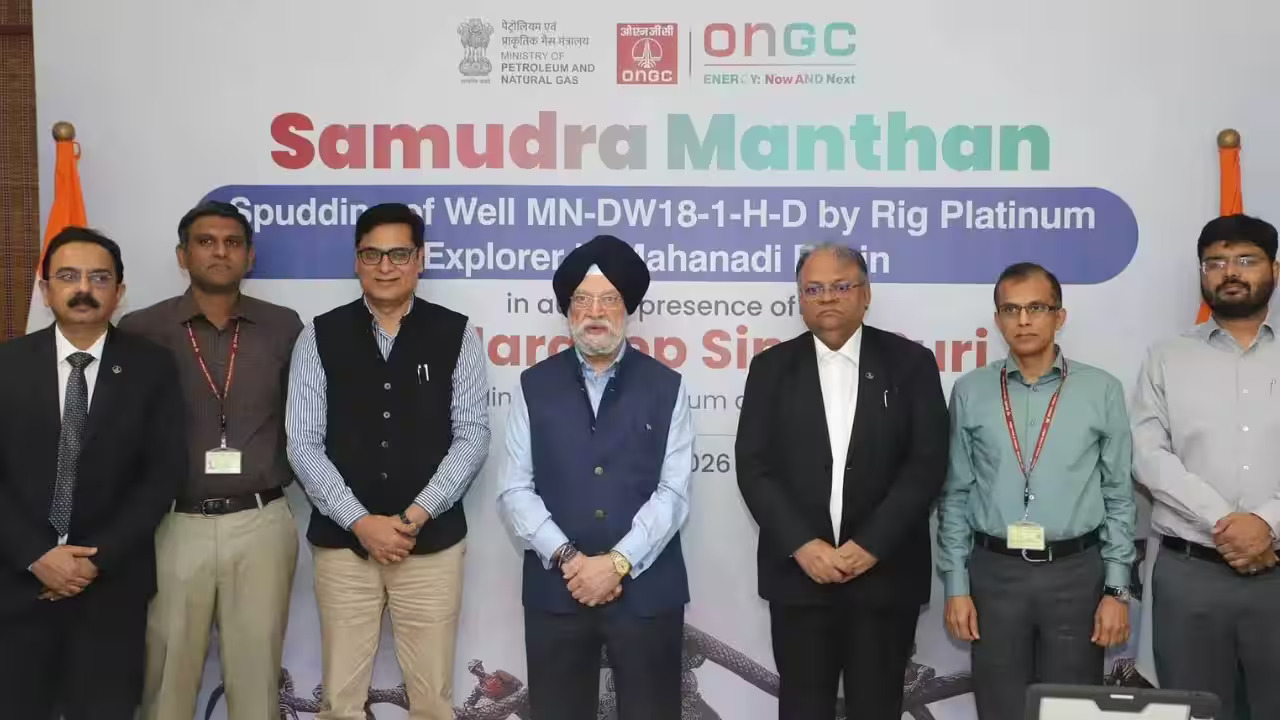
The government's Samudra Manthan programme is also designed to support this transition, with funding for deepwater exploration as well as common offshore infrastructure. This creates a wider framework for companies such as ONGC to move beyond finding hydrocarbons and work towards developing discoveries that can contribute to domestic production.
For India, that matters becausec is an important input for fertilisers, power generation, industry and city gas networks, while a significant share of domestic gas requirements continues to be met through imports. Any sizeable and commercially viable domestic discovery can therefore add to the country's supply base.
For ONGC, the Mahanadi campaign represents a longer exploration effort rather than a single successful well. The latest discovery strengthens the case for continued drilling in the basin and adds to the company's growing geological understanding of the region. Whether the Mahanadi eventually develops into a larger offshore gas-producing cluster will depend on the appraisal results, but ONGC has taken another significant step in establishing the basin's potential.
BI Bureau