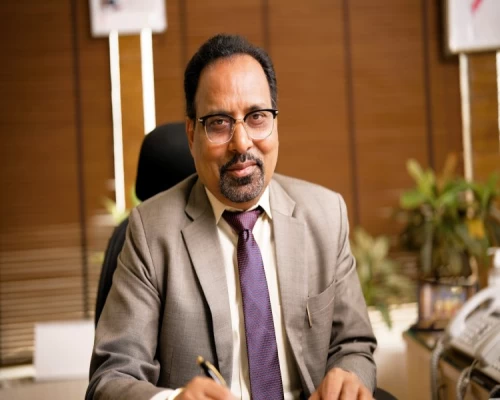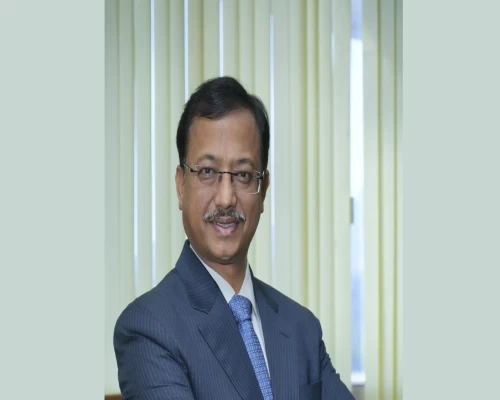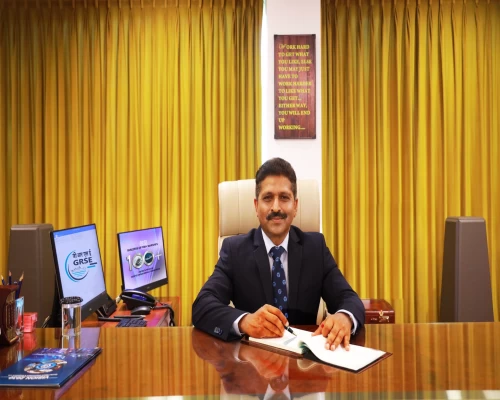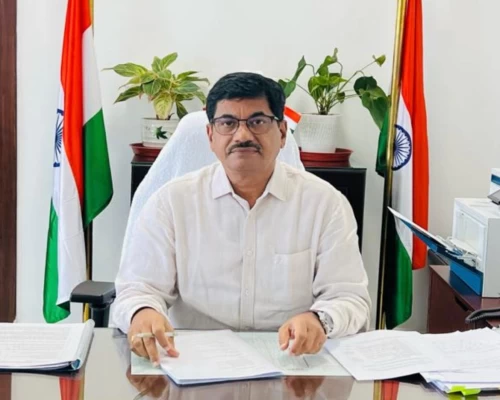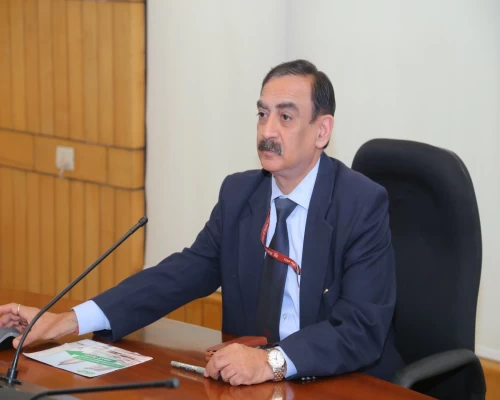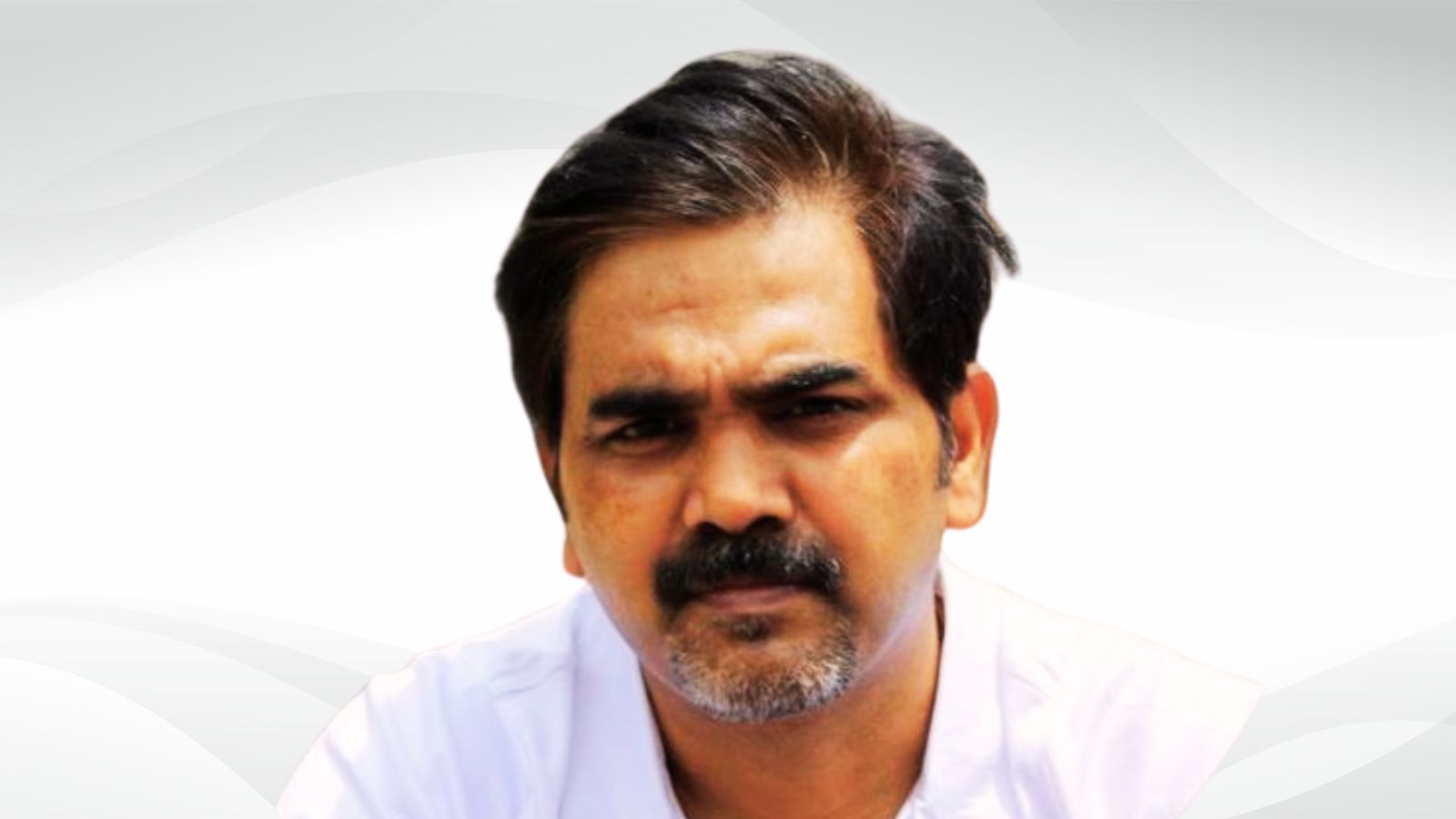
Dr Rajendra Prasad, General Manager and Regional Head of Gurugram RO at SIDBI, has been at the forefront of driving sustainable growth and financial innovation for India’s micro, small, and medium enterprises (MSMEs). With over 25 years of experience spanning policy, advocacy, and implementation, he has championed initiatives in green finance, climate resilience, and inclusive entrepreneurship, shaping the ecosystem for MSMEs across the country.
In this exclusive interview with Bureaucrats India, he shares insights on balancing business competitiveness with environmental sustainability, the evolution of MSMEs in global value chains, innovations in credit access, the impact of Mission Swavalamban, and the role of international partnerships in strengthening India’s MSME sector. He also reflects on personal milestones in his career and the passions that keep him grounded beyond finance.
You have led initiatives on sustainable finance, green climate funding, and risk-sharing facilities. How do you see MSMEs balancing the twin goals of business competitiveness and environmental sustainability?
At SIDBI, we pioneered adoption of green investment by MSMEs and other market players in the ecosystem. On the one hand, we promoted investment by MSMEs to adopt cleaner technologies, through investment in energy efficient machinery, which reduced the energy consumption ranging between 10 to 40% (variation depended on the industry and the level of technology). We negotiated risk sharing facilities from multilateral agencies, impact investors and provided comfort to bankers and lending agencies to fund adoption of energy efficient technologies by MSMEs. The Bank identified a stack of close to 900 technologies / machines, which ensures energy saving and thereby reducing the carbon footprint. To ensure that the MSMEs do not suffer and loose their competitive advantage, SIDBI negotiated certain lines of credit and ensured that MSMEs get financial assistance at much finer rates, much below the going rates in the market. While, the initial investment may have put some pressure on the cashflows, the concessional financing and the benefits accrued due to investment in energy efficient technologies helped MSMEs to improve their bottom lines as the breakeven of these investments were between 2-4 years. The savings towards the energy cost improved bottom lines by 5-10%, wherever energy efficient investments were made. In addition to the tangible benefits, there were certain intangible benefits as well, which is reflected in managing the resources better, optimizing the raw material usage and reducing the waste, improving the immediate environment as lesser wastes did go to landfills and cleaner water was released to the rivers and water bodies.
SIDBI has been a critical partner in driving MSME growth for over three decades. In your view, how has the role of MSMEs evolved in India’s economic story, especially in the context of global value chains?
SIDBI was setup in 1990 to cater to the financial and developmental needs to micro and small industries. The scope of the institute was enhanced with the introduction of MSMED Act 2006 and the domain of the activities also got an upgrade and included Micro, Small and Medium Enterprises. The Bank graduated from serving to micro and small industries to virtually any enterprise that has an udyam aadhar / udyam registration. There are close to 6.35 crore enterprises in the country, of which close to 99% are micro, small and medium enterprises. The MSME sector’s share in GDP has hovered around 30% in recent years. MSMEs play a pivotal role in foreign exchange (it constitutes 45% of all exports) earnings and global value chains, especially in textiles, leather, engineering goods, and handicrafts. MSMEs are among the largest sources of non-agricultural employment, supporting tens of millions of jobs, aiding livelihoods in both rural and urban areas through localized production and services. Registration and formalization through platforms like Udyam have expanded, bringing more enterprises into formal finance and market access, thereby strengthening structured growth and credit penetration.
One of the recurring challenges highlighted in SIDBI’s own survey is “timely and adequate” access to credit. What innovations—financial or technological—are being explored to bridge this persistent gap?
A number of studies and reports published by non-state and state players have indicated that besides other issues, Indian MSMEs suffered inadequacy and timely access to finance. To cater to these issues, the Bank adopted two-pronged strategy. (i) it partnered with Banks, Non-banking finance companies, Micro Finance Institutions and other intermediaries to reach out to the last mile in MSME value chain. (ii) it increased its branch network and currently has 16 regional offices (one each in major states) and over 160 branches. After addressing the structural issues of the sector, the bank focused on simplified processes, introduced tailor made products to meet / serve every segment of MSMEs. To quickly meet the funding requirements, bank promoted PSB59 (a platform where entrepreneurs can generate sanction letters within 59 minutes, end-to-end). Further, the bank also introduced a straight through process (STP), where sanction, documentation and disbursements of the loan is handled by the machine / computers. The Bank is now able to disburse loans upto Rs. 3 crores within 72 hours from the application and submission of necessary documents by the entrepreneur.
Mission Swavalamban, an initiative of SIDBI, aims to create mass entrepreneurship in underserved regions. What are some of the most promising outcomes you have seen on the ground from this mission?
SIDBI’s Mission Swavalamban has produced notable on-the-ground outcomes in recent years. Key achievements include large-scale enterprise creation, faster credit delivery, outreach to women and youth entrepreneurs, with linkage to local markets.
• Swavalamban Connect Kendras have guided thousands of aspiring entrepreneurs through awareness to business setup. In the first phase 100 districts were targeted, empowering over 10,000 micro-enterprises tailored to the specific local demand for retail, trades, and area-specific services.
• Mission-linked facilitators have standardized documentation and bank connect processes, resulting in sharply reduced turnaround times for small-ticket credit. Entrepreneurs previously waiting weeks for approvals now often see decisions in days, with SIDBI’s digital tools streamlining the application process and supporting first-time formal borrowers.
• The mission actively encourages participation by women and youth, with dedicated outreach at district level through workshops, “melas” (fairs), and partnerships with organizations like the Confederation of Women Entrepreneurs (COWE), helping first-time women entrepreneurs and self-employed rural youth launch businesses.
• Field-based outreach has successfully converted entrepreneurial interest into action, with structured support for skill development, business planning, and registration. Continuous mentorship helps new businesses navigate early operational challenges, supporting higher survival rates.
• The mission emphasizes onboarding, including Udyam registration, digital payments, formal bank accounts etc., boosting entrepreneurs’ eligibility for government schemes and better cushioning them against shocks through easier access to credit, insurance, and social benefits.
• Swavalamban Challenge Fund is piloting scalable, community-focused approaches to livelihoods—including skills training, digitization, and sustainability initiatives—helping validate, finance, and replicate successful microenterprise models in new districts.
With global institutions like the World Bank, IFC, and Green Climate Fund partnering with SIDBI, how do you see international cooperation shaping India’s MSME ecosystem in the next decade?
The global institutions such as World Bank, IFC, Green Climate Fund (multilaterals) and AfD, KfW (bilateral) and many impact investors have been associated with SIDBI. While, SIDBI has been able to generate low-cost funds from multilaterals and bilateral, we have also been able to garner good support from impact investors. However, these funds come with severe compliance burden, namely environmental, social and governance related compliances, which have largely been stringent and are designed to western standards. SIDBI has blended global ESG expectations with India-specific practicality by building a proportional, MSME-friendly framework: leveraging concessional lines from multilaterals/bilateral and impact investors while operationalizing right-sized environmental and social due diligence, cluster risk screens, and capacity-building that reduce compliance friction and improve uptake among small firms. Through initiatives like the SIDBI–D&B Sustainability Perception Index (SPeX), the Bank gauges MSME willingness, awareness, and implementation, then uses those insights to tailor nudges, simplify documentation, and align lending with feasible ESG milestones rather than “one-size-fits-all” western checklists, which lowers barriers and builds confidence to adopt ESG practices over time. Internally, SIDBI has embedded ESG governance (including Board-level oversight) and program tools such as its Environment and Social Management System to screen proposals on non-financial parameters before financing, ensuring consistency with global partner requirements while reflecting local constraints and realities across clusters and subsectors. As a result, MSMEs increasingly perceive tangible benefits—access to finance, value-chain competitiveness, and cost savings—leading to higher willingness and adoption, with initial hesitation giving way to broader participation in formal ESG pathways that are staged, simple, and supportive rather than punitive.
You have worked extensively on risk management—from climate risk to credit risk. In the current global environment, which risks do you believe MSMEs are most vulnerable to, and how can they prepare?
Credit risk is easier to assess; hence, the mitigation thereof is also easy. However, climate risk is unpredictable and the lenders have to largely look out for mitigation against a limited set of climate events – temperature rise, flood, drought, excessive rains, glacial events etc. MSMEs in India are highly vulnerable to climate hazards like floods, droughts, and heatwaves, which can severely disrupt operations and finances, but recent solutions include improved climate risk mapping, easier access to adaptation finance, and adoption of resilient technologies and practices—such as energy efficiency, and waste management, which help mitigate risks and secure MSMEs in a changing climate while supporting broader green transition efforts.
You hold a doctorate from TISS and have studied at JNU. How has your academic grounding in development and international politics shaped your perspective in financial policymaking?
Holding a doctorate from TISS and having studied at JNU, my academic grounding in development and international politics has deeply shaped my approach to financial policymaking by embedding a strong understanding of socio-economic development, inclusive growth, and the geopolitical dynamics that influence financial systems. This perspective enables me to appreciate the broader impacts of financial policies on marginalized sectors such as MSMEs, emphasizing sustainable development and equitable access to finance. It also sensitizes me to the importance of adapting global best practices to local realities, balancing compliance and pragmatism, as seen in institutions like SIDBI. This interdisciplinary training not only sharpens the policy lens but also drives innovative strategies that link finance with social and environmental objectives, ultimately promoting resilient and inclusive economic ecosystems.
Your career spans policy, advocacy, and implementation across 25+ years. Looking back, which initiative or project do you personally consider a turning point in your journey?
A personal turning point in my career has been my involvement in the design and implementation of the Green Transition Framework for MSMEs during my tenure at SIDBI. The framework has been adopted by Ministry of MSME, Government of India for some of its incentive schemes for MSMEs. The scheme’s direct impact on technology upgradation, skill development, market access, and employment generation marked a critical milestone, reinforcing my belief in inclusive financial solutions that bridge structural gaps and empower grassroots entrepreneurship across India’s vast MSME ecosystem.
On a lighter note, when you step away from the world of finance, risk, and sustainability, how do you unwind? Any hobbies or passions that keep you grounded.
The banking and responsibilities towards family largely keep me engaged. However, during the free time listen music, walk around and read some books of interest – mostly on Indian history and society. An almost forgotten dream is to spend time in wild and do nature photography. Hope, I have sufficient time for this in near future.