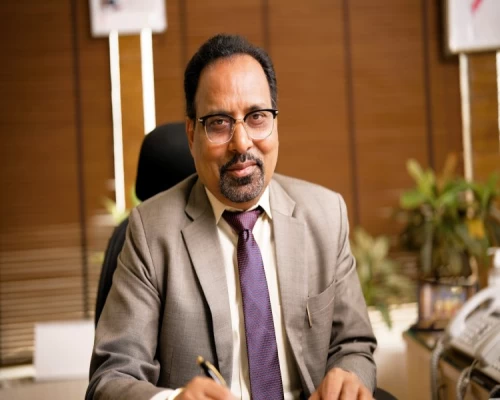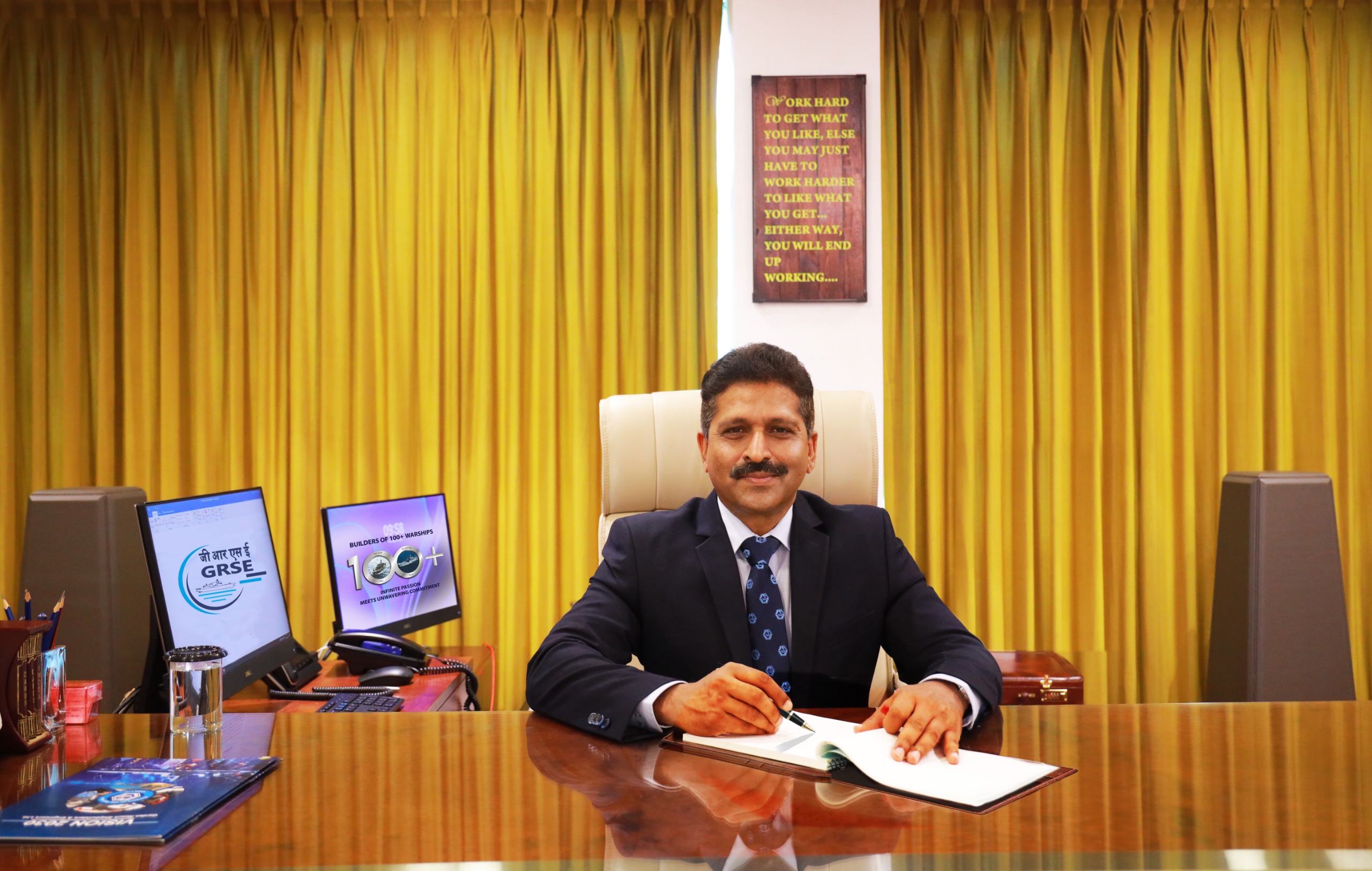
Cmde PR Hari, IN (Retd.), Chairman and Managing Director of Garden Reach Shipbuilders & Engineers Ltd (GRSE), has been steering the shipyard since March 2022 with a clear vision of global recognition and Navratna status. Having earlier served in key leadership roles within GRSE and also the Indian Navy, he brings deep operational and managerial experience to the helm.
In this exclusive interview with Bureaucrats India, he throws light on the company’s transition into an innovation led shipbuilder, its role in advancing Aatmanirbhar Bharat, international exports, use of emerging technologies and the roadmap for positioning GRSE as a future ready, globally competitive shipyard.
GRSE has evolved remarkably over the years. What was the driving vision behind the company’s shift from a conventional PSU to a dynamic, innovation-led shipbuilder?
Times change and organisations must evolve to survive and stay relevant. If you look at GRSE’s history you’ll see we have consistently modernised to meet the needs of the Indian Navy, Indian Coast Guard and other maritime forces. Since delivering the first indigenously built warship, INS Ajay, in 1961, our primary aim has been to provide modern, state-of-the-art platforms, and to keep incorporating the latest shipbuilding technologies. Also, GRSE is a publicly listed company and is accountable to both the Government and public shareholders, which also shapes our focus on performance and governance.
How is GRSE integrating the Aatmanirbhar Bharat vision of PM Narendra Modi into its design, manufacturing, and vendor development ecosystem to strengthen India’s defence self-reliance?
At GRSE, we have always aimed to build ships with a high degree of indigenous content. The biggest challenge used to be the steel that forms the bulk of any ship. Till the late 1990s, India had to import steel needed for the manufacture of naval platforms. Things began to change after the Indian steel plants came up with warship grade steel – DMR249A. It was in 2014 that we delivered our first warship built with this indigenously developed steel, Anti-Submarine Warfare Corvette INS Kamorta. In this ship and the INS Kadmatt, INS Kiltan and INS Kavaratti that followed, we achieved 90% indigenous equipment fit. There has been no looking back since then. Today, we are proud to be playing a major role in taking forward our Prime Minister’s Aatmanirbharta and ‘Make in India’ visions. Through leveraging the vast network of start-ups, MSMEs and OEMs, we have today been successful in creating an entire shipbuilding ecosystem in the region. Even the most advanced warships that we are building today have over 80% indigenous content. The indigenous content is expected to go up further in the days to come.
Beyond shipbuilding, GRSE is now venturing into the development of naval armaments. How does this align with the company's strategy for vertical integration and product diversification?
While warship building has always been and will remain our core strength, GRSE has always looked for new opportunities to increase its product base. As you would be aware, we are a fully diversified company with our products ranging from “Warships to Weapons”. We are the market leader in the manufacture and delivery of portable, modular steel bridges – popularly known as Bailey Bridges. Our Diesel Engine Plant in Ranchi has been assembling, testing and overhauling marine engines for years now. Now, we have started manufacturing Naval Surface Guns (NSGs), an important armament on nearly all warships. This is yet another move in keeping with our Government’s Aatmanirbharta and ‘Make in India’ visions. By producing these guns, we have reduced our dependence on imports. There are also other areas into which we have successfully diversified, such as ship repairs and development of Green and Autonomous platforms.
From building warships to exporting the CGS Barracuda to Mauritius, GRSE has made notable contributions globally. What are your plans to enhance GRSE’s presence in the international market?
The CGS Barracuda was India’s first export warship. Since then, we have also exported the Fast Patrol Vessel SCG PS Zoroaster to the Seychelles. This happened in 2021. Barely two years later, during early 2023, we designed, built and delivered an ocean-going passenger-cum-cargo ferry – MV Ma Lisha – to the Cooperative Republic of Guyana. This was India’s first such export to a Caribbean Nation. So, GRSE has been steadily moving ahead with its plans to establish itself as one of the finest shipbuilders in the world. We have been participating in global tenders for all kinds of platforms. You would be aware that GRSE is now building twelve multi-purpose cargo vessels for a German company. This provides us with the opportunities in the green energy segment. We have signed MoUs & MoIs with a number of companies globally for more orders.
With digital ship design, smart ship systems, and AI integration gaining prominence, how is GRSE leveraging emerging technologies to future-proof its platforms?
As I mentioned earlier, GRSE has always kept itself updated with the latest technology in the field of shipbuilding. We have already incorporated technologies such as Artificial Intelligence, Robotics and Virtual Reality in our shipbuilding efforts. To ensure a steady flow of latest technology, by tapping the enormous potential of our Startup ecosystem, we have also launched the “GRSE Accelerated Innovation Nurturing Scheme” or “GAINS”. This is an annual open challenge for academia, start-ups and MSMEs to develop latest solutions in the fields of Artificial Intelligence and Green Shipbuilding. This initiative has been a huge success, the third edition of GAINS was launched on 22 August 25, by the Hon’ble Defence Secretary of India.
Time-bound execution has become a GRSE hallmark. What mechanisms have been put in place to ensure timely delivery, quality control, and project efficiency across all verticals?
Maintaining schedules is extremely important, particularly in the sector of defence shipbuilding where the ship design is evolving and not frozen at the time of contract conclusion. Further, with several equipment & systems being first time inductions & developmental in nature, there is a need to effectively use technology driven shipbuilding processes to enhance production and arrest delays. Today, GRSE uses the ‘Integrated Shipbuilding Process’ that involves modular shipbuilding and ensures maximum outfitting during block fabrication stages itself. The use of the latest technology also ensures quality control and every process undergoes stringent checks to ensure zero-defect. All of this taken together has ensured project efficiency in whatever task we take up. To cite an example, GRSE has recently delivered our 1st P17A Frigate ahead of schedule.
GRSE has begun work on a 10-month major refit of CGS Barracuda. What does this return of India’s first exported warship to its builder symbolize in terms of trust, capability, and regional diplomacy?
For GRSE, it is certainly a matter of pride when a warship, built by us, returns for a refit, and this reinforces the confidence of the customer in our capabilities. Yes, CGS Barracuda is presently undergoing a refit at GRSE. But then, this is not the first time that a warship exported by us has returned for a refit. In 2024, the SCG PS Zoroaster returned to GRSE for its maiden short refit that was to take 90 days. We completed the job 30 days in advance. This was a major achievement that has not gone unnoticed. In February this year, GRSE signed a contract for a major refit of the CGS Barracuda. This signifies that GRSE has earned that trust through its capabilities and performance. This also goes a long way in reinforcing our Government’s efforts towards regional cooperation under the Security and Growth for All in the Region (SAGAR) vision.
The order for 30mm Naval Surface Guns marks a significant milestone. How does the indigenous Electro Optical Fire Control System enhance operational capability and open avenues for exports?
The Navy has placed an order for 10 Naval Surface Guns. This is a state-of-the-art weapons system fitted with the sophisticated and indigenously developed Electro Optical Fire Control System or EOFCS. Integration of the EOFCS has enhanced the gun’s targeting precision, turning it into a greater attraction for foreign buyers. Some countries have already expressed interest. This close-in weapons system is extremely effective and can be fitted on a variety of platforms, including frigates, fast patrol vessels, offshore patrol vessels and missile boats. It is a matter of great pride for GRSE that the first of these 30 mm NSGs successfully completed the sea acceptance firing trials.
As someone who has served in uniform and now leads a strategic defence PSU, how do you balance operational discipline with corporate adaptability in steering GRSE’s future growth?
Armed Forces hones one’s managerial skills on a backbone of integrity and discipline and I have been privileged to be a part of the Indian Navy and serve our Nation. An officer is taught to lead by example, manage with minimal resources, take responsibility for failures while giving the credit for success to the whole team, encourage joint effort and plan to achieve targets. These principles are equally applicable in the corporate sector too, more so in a strategic Defence PSU like GRSE. I believe, that I have been able to inspire my team to excel in whatever project they take up and the results so far are for all to see …and the future growth of the company would be equally bright.
With defence corridors and Make in India initiatives expanding, what kind of collaborations (private, MSME, or academic) is GRSE pursuing to foster a more resilient ecosystem?
GRSE has been at the forefront of collaborations and tie-ups to create a vibrant ecosystem of shipbuilding. We have successfully tied up with private shipyards through PPP models, not only to enhance capacity, but to bring together our expertise and their operational flexibility. We have also tied up with MSMEs, start-ups and OEMs to increase indigenous content in the warships we build. Now, as I mentioned earlier we also have the GRSE Accelerated Innovation Nurturing Scheme or GAINS through which we provide an opportunity to academia, start-ups and MSMEs to develop shipbuilding solutions using technology such as Artificial Intelligence and Robotics.
What are your major CSR initiatives and how have they impacted communities?
GRSE has always believed in contributing meaningfully to society through focused CSR initiatives across education, health, women empowerment, heritage, sanitation, and sustainable livelihoods.
We are closely associated with the Indian Institute of Cerebral Palsy (IICP), enabling children with cerebral palsy to receive both formal education and life-skills training in an inclusive environment. Beyond this, we partner with several organisations across the country. To share a few:
• With CRY, we launched the “Hockey for Her” project, empowering underprivileged in Jharkhand through professional hockey training, nutritional support, and life-skills mentoring.
• With Ramakrishna Mission, Belur Math, we support the Gadadhar Abhyudaya Prakalpa, benefiting over 530 underprivileged children from tribal and minority communities in Jharkhand and West Bengal through nutrition, education, digital literacy, and holistic development.
• With Smile NGO, we have extended advanced eye-care equipment support to underprivileged communities in Kolkata.
• With ASHA NGO, we have initiated the installation of sanitation facilities at a children’s home in Ranchi, improving hygiene and dignity for underprivileged.
• With Ramakrishna Mission, Jhargram, we are supporting the construction of new classrooms for underprivileged, ensuring access to safe and inclusive education.
• With Technology Resource Communication & Service Centre (TRCSC) Jharkhand, we initiated a sustainable livelihood project by distributing fruit-bearing trees to farmers in Jharkhand, promoting eco-friendly agriculture and enhancing incomes.
We also run youth training programmes around our yards to equip local youth with employable skills. In Kolkata, we recently signed an MoU with the Syama Prasad Mookerjee Port for the renovation and upkeep of Suriname Ghat and Mayer Ghat — preserving the city’s rich heritage and creating cleaner, more welcoming community spaces.
Collectively, these projects address critical needs of marginalized communities, from healthcare and sanitation to education and livelihood. They also nurture empowerment among women, children, and youth, aligning GRSE’s CSR vision with inclusive social development and national priorities.
Looking ahead to the next five years, what are your top three priorities to ensure GRSE remains at the forefront of India’s shipbuilding and defence innovation landscape?
The next five years will be very important for us, and with a very strong orderbook & many more orders on the anvil, our priorities are clear. Firstly, ensure timely execution of the current orders through effective use of technology, efficient management of our infrastructure & resources and internal processes improvement. Next would be to develop new products, especially in the Green & autonomous segments and also Naval Weapons by leveraging New technology. And the third, but equally important priority would be to enhance our capacity through creation of new shipbuilding facilities, induction of production support equipment and systems and automation. Five years from now, we want to see ourselves as a global leader in shipbuilding, and I am confident that we are on the right track.
BI Bureau