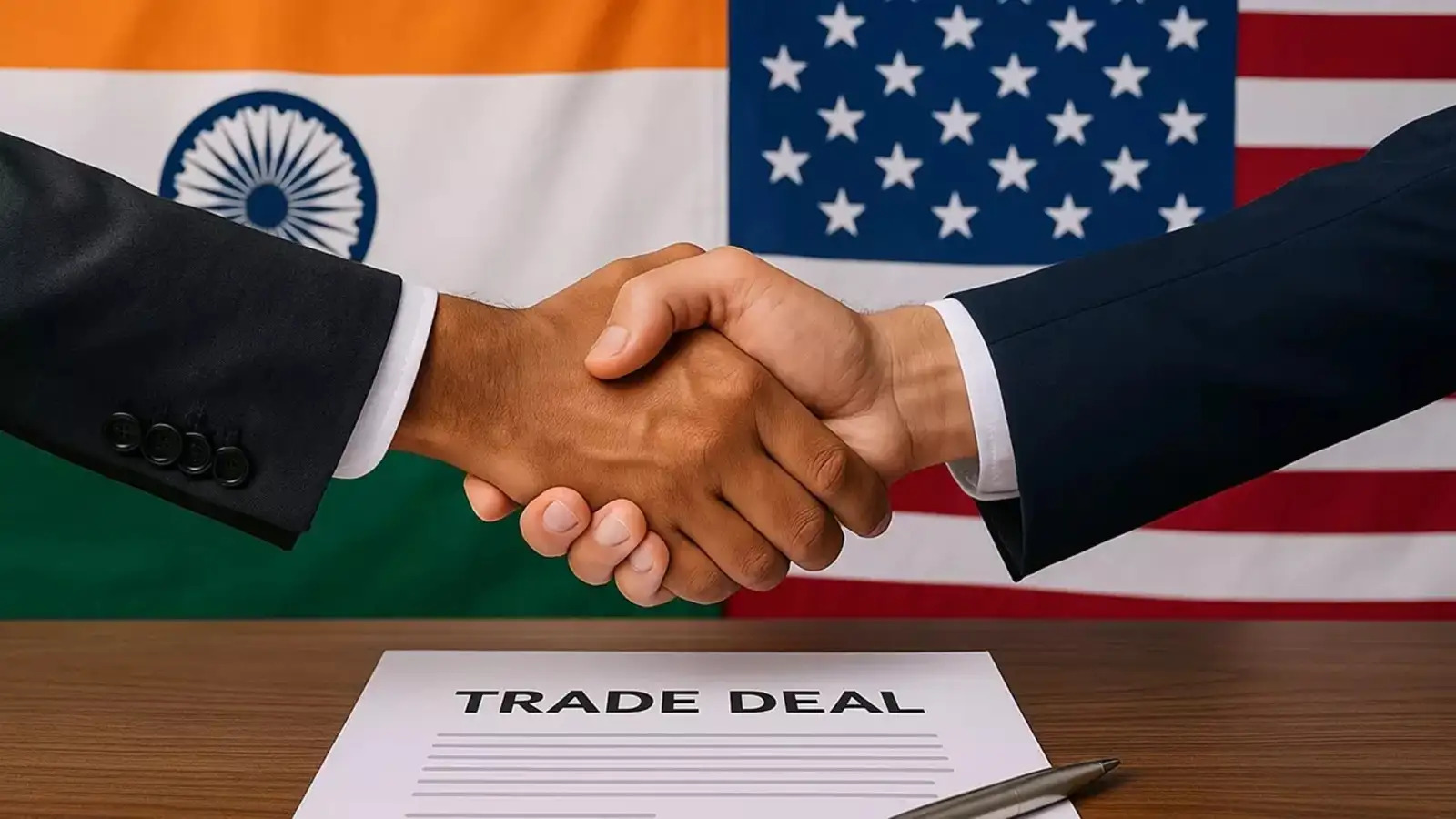
New Delhi: After months of trade turbulence and tough talk, New Delhi and Washington have struck what is being projected as a reset in bilateral commerce, with the US agreeing to bring down tariffs on Indian goods to 18%, a level lower than those faced by China, Pakistan and Bangladesh. Announced days after the Union Budget, the deal has been pitched by both sides as a breakthrough that restores predictability to India–US trade ties and gives Indian exporters a competitive edge in the world’s largest market.
The agreement marks a sharp climbdown from punitive duties that had gone as high as 50% during the height of the tariff standoff. US President Donald Trump said the revised tariff regime reflects a “fair and reciprocal” arrangement, while Prime Minister Narendra Modi described it as a step that strengthens India’s position in global trade and deepens strategic economic cooperation with Washington.
At the heart of the deal is the headline tariff cut, which immediately places India in a more favourable bracket compared to several Asian peers. Sectors such as textiles, leather goods, engineering products and handicrafts are expected to benefit from improved price competitiveness in the US market. Early market reactions reflected this optimism, with equities stabilising and export-linked stocks seeing renewed interest.
In return, India has reportedly agreed to lower tariffs on a range of US goods and ease non-tariff barriers, alongside commitments to step up imports of American energy and technology. The US has indicated that India could significantly expand purchases of US products over the coming years, though precise figures, timelines and sector-wise commitments are yet to be formally detailed.
However, beyond the celebratory headlines, trade experts are urging restraint. Analysts point out that the announcement appears to be more of a political understanding than a fully negotiated, legally binding trade agreement. Several key elements, including product-specific tariff schedules, safeguard clauses and dispute-resolution mechanisms, remain unclear, raising questions about how much relief exporters will actually see on the ground.
There is also scepticism over whether the 18% figure represents a uniform tariff or an average rate that masks higher duties in sensitive sectors such as steel, aluminium and automobiles. Economists caution that non-tariff barriers, standards-related issues and regulatory hurdles could continue to restrict access for both Indian and US exporters despite the nominal tariff cuts.
Another area drawing scrutiny is India’s broader strategic trade positioning. The deal follows a period of friction triggered by India’s energy imports from Russia, which had drawn strong opposition from Washington. While the new agreement is seen as easing immediate tensions, experts note that it may also limit India’s flexibility in managing energy security and diversified sourcing in the future.
Reactions within India remain mixed. Supporters see the deal as a diplomatic win that reinforces India’s growing economic clout and aligns with its ambition to emerge as a preferred alternative to China in global supply chains. Critics, however, argue that without full transparency and parliamentary scrutiny, it is difficult to assess whether concessions made by India outweigh the gains from lower US tariffs.
As negotiators work towards formalising the understanding into a detailed framework, the true test of the India–US trade deal will lie not in headline numbers but in execution. For now, the tariff truce offers relief and renewed optimism, but whether it translates into sustained export growth and balanced gains remains an open question.
BI Bureau