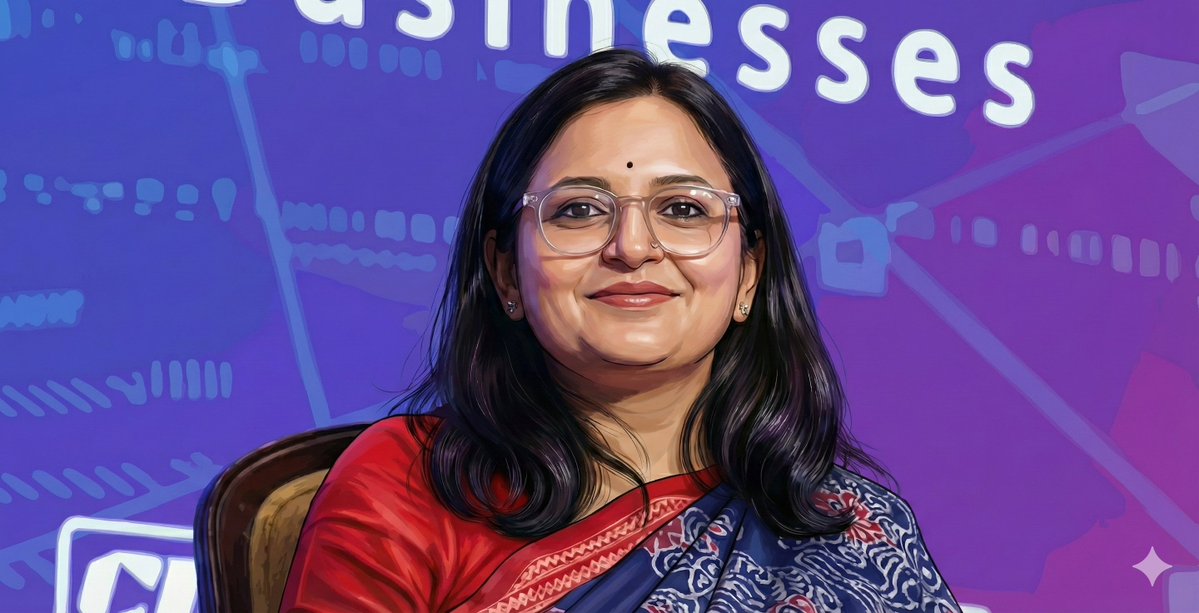
New Delhi: As the fine print of the Union Budget 2026-27 is still being digested a day after Finance Minister Nirmala Sitharaman presented it in Parliament on February 1, one name has quietly emerged at the centre of the exercise - IAS officer Anuradha Thakur. While the Budget speech belonged to the political executive, the blueprint of India’s latest fiscal roadmap was crafted in North Block under the stewardship of the country’s first woman Secretary in the Department of Economic Affairs.
A 1994-batch IAS officer of the Himachal Pradesh cadre, Thakur is the chief bureaucratic force behind Budget 2026-27. As Secretary, Department of Economic Affairs, she heads the Budget Division, the nerve centre of fiscal policymaking, responsible for reconciling revenue projections, expenditure priorities and macroeconomic assumptions. From managing inter-ministerial negotiations to safeguarding fiscal discipline amid global uncertainty, her role places her at the heart of the government’s economic decision-making.
Thakur took charge in July 2025, becoming the first woman to lead the Department of Economic Affairs since its inception. The department oversees Budget formulation, public debt management, capital markets policy and engagement with multilateral financial institutions, making it one of the most powerful arms of the Finance Ministry.
Budget 2026-27, unveiled yesterday, reflects months of internal deliberations led by Thakur’s team. Officials point to her role in shaping a framework that balances growth with prudence, with a clear emphasis on capital expenditure, employment creation, manufacturing competitiveness and long-term sustainability, while keeping the fiscal deficit on a calibrated path.
Her rise is backed by a wide-ranging administrative career. Before joining the Finance Ministry, Thakur served in the Ministry of Corporate Affairs, held senior roles in the Serious Fraud Investigation Office, and was closely associated with key initiatives such as the Air India privatisation and the launch of the Bharat Bond ETF.
Beyond Budget-making, Thakur also serves as an ex-officio member of the SEBI board and acts as a key interface between the government and financial regulators, ensuring alignment between fiscal policy and market regulation.
As India begins to assess the impact of Budget 2026-27, Anuradha Thakur’s role stands out as both historic and consequential - a reminder that behind the headline numbers lies a complex policy exercise, steered this time by a woman who has reshaped India’s economic governance from within.
BI Bureau