New Delhi: The Delhi government has approved a new Electric Vehicle (EV) Policy that excludes strong hybrid vehicles from tax incentives and lays down a phased transition towards an all-electric transport ecosystem, including a ban on the registration of new petrol-powered two-wheelers from April 1, 2028.
The policy, approved by the Delhi Cabinet on June 29 and set to come into effect from July 1 after the Lieutenant Governor's approval, focuses exclusively on promoting battery electric vehicles. While earlier drafts had proposed tax benefits for strong hybrid cars, the final policy drops those provisions and instead offers incentives only for pure EVs.
Officials said the policy is exclusively aimed at promoting pure electric vehicles. The draft policy had proposed a 50 per cent exemption on road tax and registration charges for strong hybrid vehicles priced up to Rs 30 lakh (ex-showroom) to encourage cleaner mobility while EV charging infrastructure expanded. The proposal had received support from several institutions and mobility experts but also faced criticism from those who argued that public investment should be directed towards charging infrastructure and accelerating the adoption of fully electric vehicles.
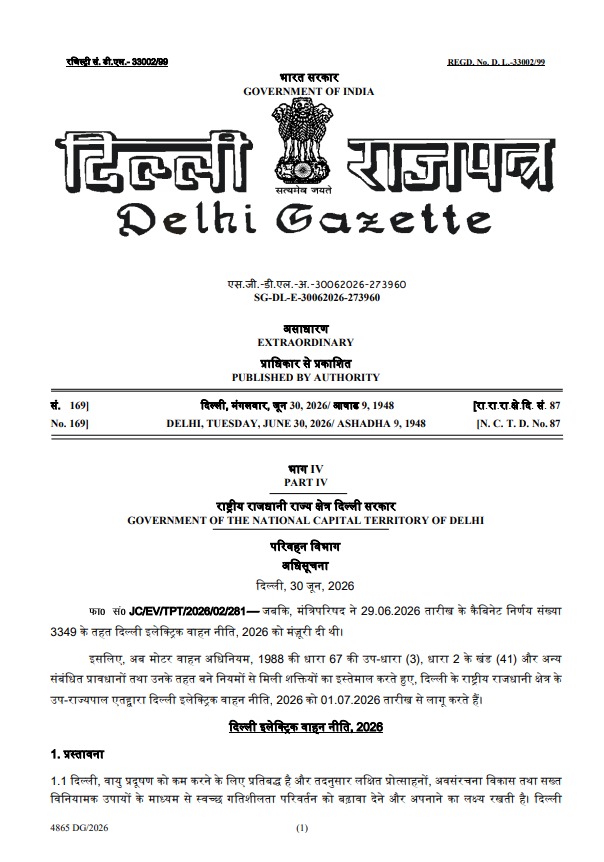
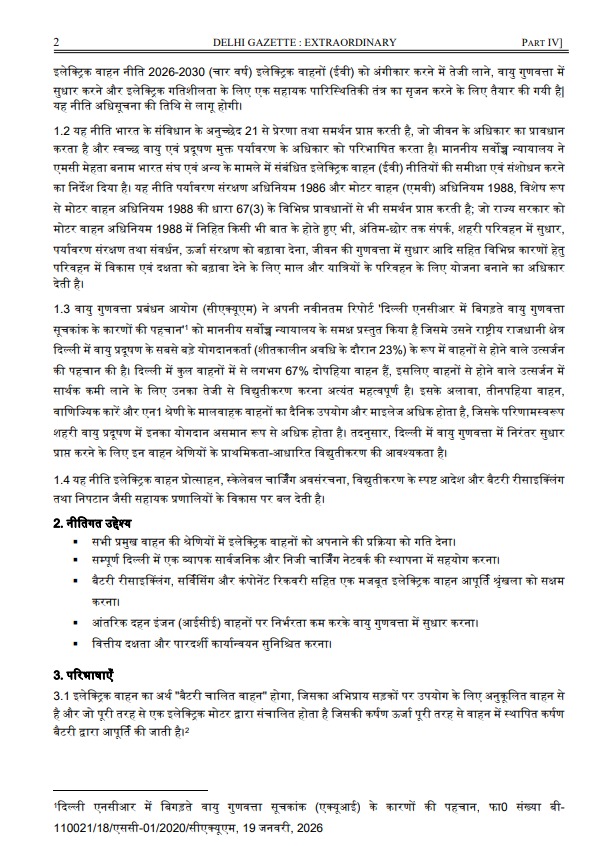
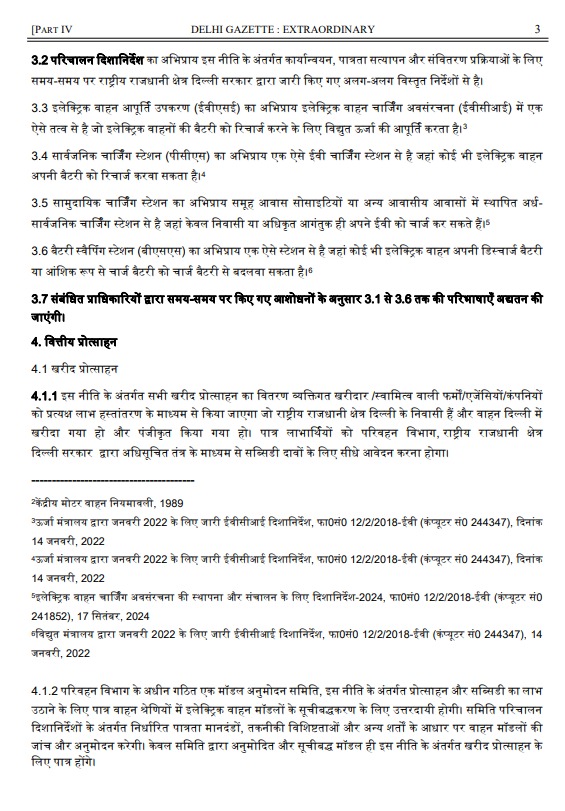
Under the approved policy, all pure electric vehicles will receive a 100 per cent waiver of road tax and registration charges. For electric cars, the benefit will apply to vehicles with an ex-showroom price of up to Rs 30 lakh. Officials also said that EVs purchased under the policy cannot be sold or registered in another state for three years.
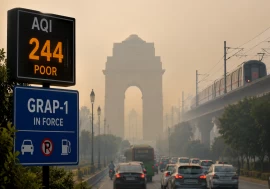
Announcing the Cabinet's decision, Chief Minister Rekha Gupta said the policy is intended to reduce Delhi’s air pollution while strengthening its transport system.
“The draft policy was prepared after extensive consultations with stakeholders, with suggestions incorporated at every stage. The policy will now be sent to the Lieutenant Governor for approval and will come into effect from July 1. Residents purchasing vehicles in Delhi will be eligible to avail of the benefits under the policy,” Chief Minister Gupta said.
The Chief Minister said the government will invest Rs 15,000 crore in incentives and charging infrastructure during the policy period.
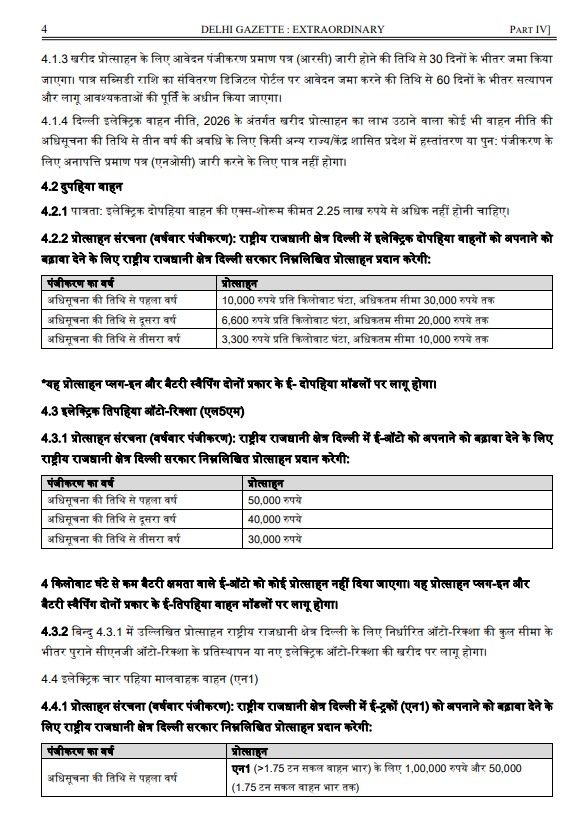
The policy introduces a phased transition towards electric mobility. From January 1, 2027, only electric three-wheelers and N1 light commercial trucks will be registered in Delhi. From April 1, 2028, registrations of new petrol and diesel two-wheelers will end, with only electric two-wheelers eligible for registration in the capital.
To encourage adoption, buyers of electric two-wheelers will receive incentives of up to Rs 30,000 in the first year, Rs 20,000 in the second year and Rs 10,000 in the third year. Electric passenger three-wheelers will be eligible for incentives of Rs 50,000, Rs 40,000 and Rs 30,000 over the three years, respectively.
Buyers of N1 electric trucks, light commercial vehicles with a gross vehicle weight of up to 3.5 tonnes, will receive subsidies of up to Rs 1 lakh in the first year.
According to transport department officials, commercial goods vehicles account for 33 per cent of vehicular pollution in Delhi, while two- and three-wheelers contribute 46 per cent. Nearly 80 per cent of commercial goods vehicles operating in the capital fall in the N1 category.
The policy also introduces financial support for scrapping older vehicles. Owners scrapping BS-IV or older two-wheelers will receive Rs 10,000, while incentives of Rs 25,000 and Rs 50,000 have been announced for three-wheelers and N1 trucks, respectively. Gramin Seva vehicles reaching the end of their operational life will receive Rs 15,000, while the first one lakh owners scrapping BS-IV or older four-wheelers will be eligible for a scrapping incentive of Rs 1 lakh.
In another measure aimed at commercial transport, the government will waive the Delhi entry fee for the first 1,000 electric N2 trucks, weighing between 3.5 tonnes and 12 tonnes, purchased within three months of the policy's notification.
The policy also places new obligations on educational institutions. Schools will be required to convert at least 10 per cent of their owned or hired bus fleet to electric within two years of the policy's notification, 20 per cent within three years and 30 per cent by March 31, 2030.
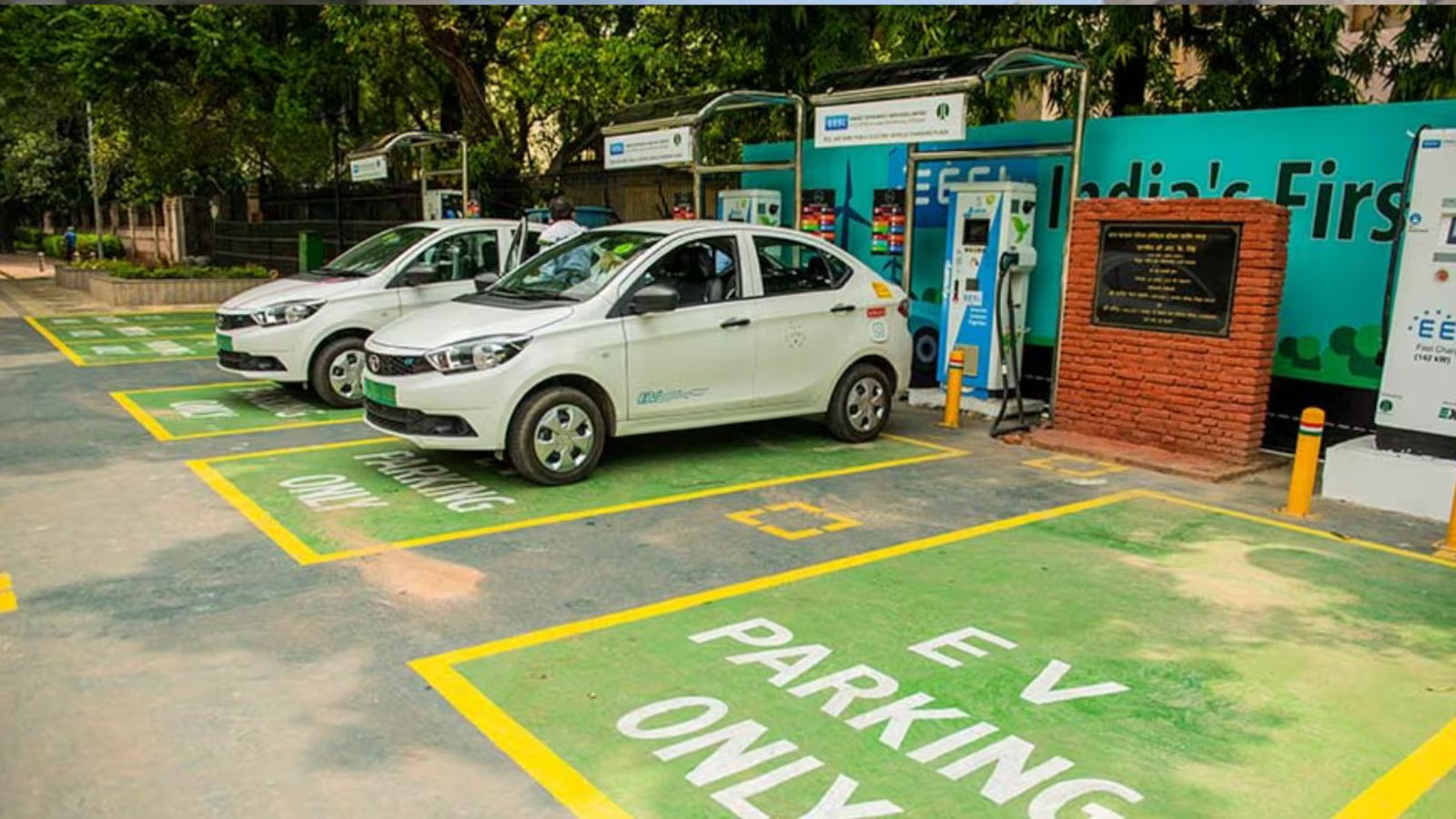
To support the shift, Delhi has set a target of installing 32,000 EV charging points during the policy period through the PM E-Drive scheme and the Delhi government's budget. Officials said land has already been identified and charging infrastructure will begin coming up across the city in the coming months.
The government said the policy is backed by its largest investment yet in electric mobility and clean transport, with the twin objective of reducing air pollution and expanding EV adoption across the capital.
BI Bureau