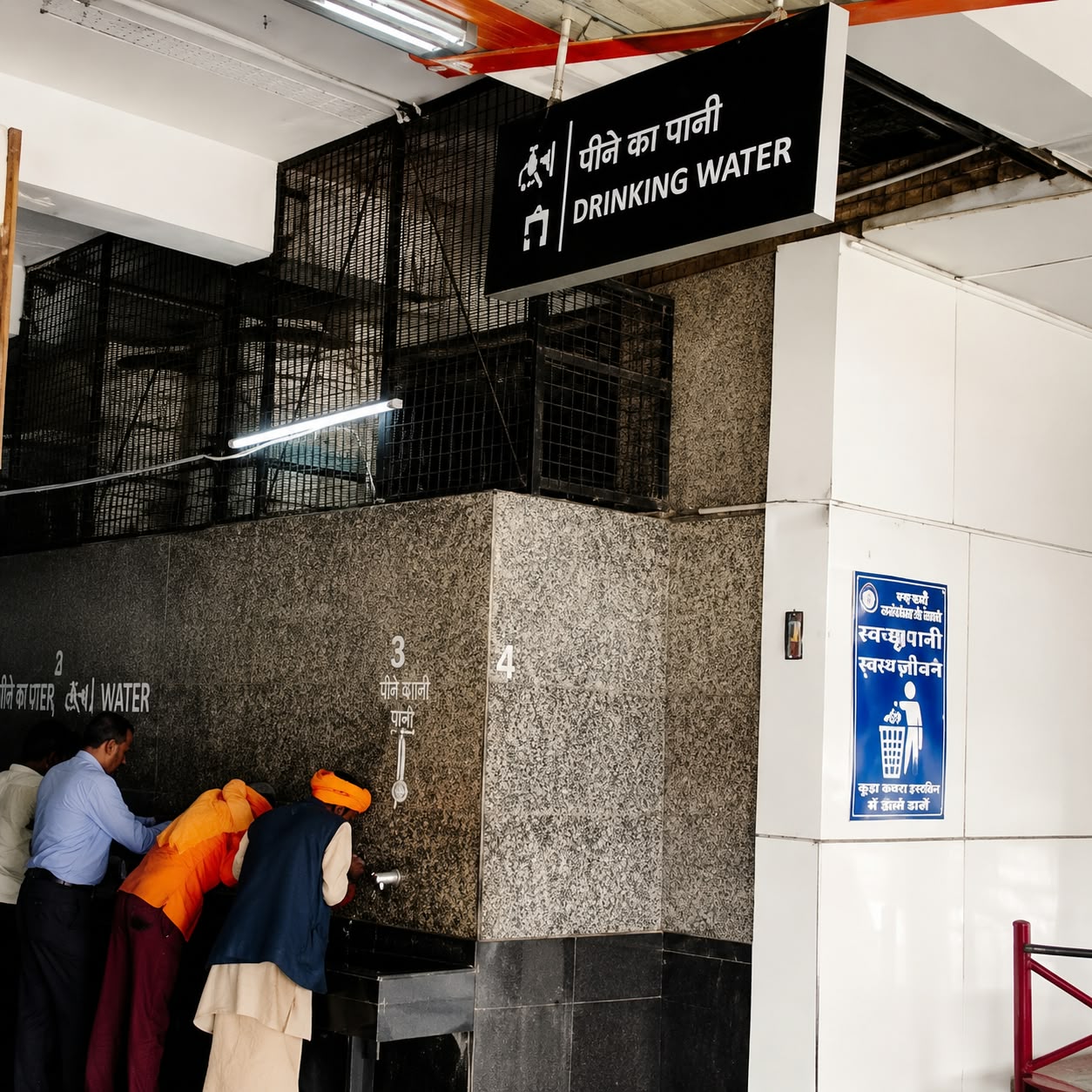
New Delhi: For millions of railway passengers, drinking water is among the most basic facilities expected at a station. But a recent CAG audit found E. coli in drinking water samples at dozens of stations, prompting the Railways to order an immediate overhaul of the way station water is filtered, tested and maintained.
Railway Minister Ashwini Vaishnaw on Sunday directed officials to introduce a new ‘tank to tap’ water filtration system at around 20,000 locations, including water coolers, as part of immediate corrective measures following the audit findings.
The Railways will also step up testing at both source and outlet points. Officials said water quality at stations will now be monitored at the Railway Board level, while storage tanks will undergo scheduled cleaning and maintenance.
“From now onwards, the water quality of stations will be monitored at the board level. There will be scheduled cleaning and maintenance of storage tanks. Progress and water quality reports will be published periodically to ensure transparency. This action is part of a larger drive to address all CAG observations and improve the overall travel experience,” said a senior railway official.
In its report titled ‘Passenger Amenities and Sanitation at Non-Suburban Railway Stations in Indian Railways’, the CAG found E. coli in drinking water samples collected from platform taps at 49 stations across eight zones in 2022-23 and 56 stations across nine zones in 2023-24.
The stations identified included Coimbatore, Palakkad, Hyderabad, Chhatrapati Shivaji Maharaj Terminus, Bhiwandi Road, Kalyan, Lonavala and Madhupur.
The presence of E. coli in drinking water can indicate contamination by sewage, human waste or animal faecal matter, raising concerns over the safety of water supplied to passengers.
“Inspection of the water supply systems was not carried out as per prescribed periodicity. There was a shortfall in testing of drinking water for residual chlorine, bacteriological analysis and chemical analysis,” said the national auditor.
The water quality findings were part of a wider audit of passenger amenities at railway stations. Of the 512 stations inspected, 458, or more than 89%, were deficient in at least one Minimum Essential Amenity, including drinking water, seating, toilets, platform shelters, fans, water coolers and signage.
The CAG noted that even high-revenue and high-footfall stations had significant gaps in basic passenger facilities.
Sanitation infrastructure also remained deficient, with non-functional toilets, inadequate facilities in pay-and-use toilets and unauthorised entry points affecting cleanliness and safety.
The audit examined 395 passenger amenity works undertaken between 2019-20 and 2023-24 and found that 59% were delayed. The delays ranged from one year to more than four years, while only 41% of the works were completed within the stipulated timelines.
Several projects faced delays of more than three years because of defective planning, non-availability of material and skilled labour, and contractor failures, according to the CAG.
Passenger grievance data pointed to another concern. Complaints relating to cleanliness, water availability, medical assistance and electrical facilities had increased, alongside high and rising dissatisfaction with the resolution of complaints.
The CAG also found continuing deficiencies despite high expenditure on station cleaning activities.
“Deficiencies exist in maintenance of amenities provided at stations. Non-functional toilets and unhygienic conditions of toilets/urinals were observed. Deficiencies in management of garbage and sanitation at station premises continue to persist,” said the CAG.
The Railways’ latest measures will put greater focus on the quality of water reaching passengers, while also seeking to address the broader gaps in maintenance, monitoring and delivery of basic amenities identified in the audit.
BI Bureau