New Delhi: Imagine a small farmer in Uttar Pradesh whose wife suddenly needs a major surgery. Or a daily-wage worker in Bihar whose elderly father requires urgent hospitalisation. For families with limited savings, a serious illness can mean borrowing heavily, selling assets or exhausting years of savings.
Now imagine being able to access eligible treatment without arranging lakhs of rupees upfront. For millions of Indian families, this is the promise behind Ayushman Bharat.
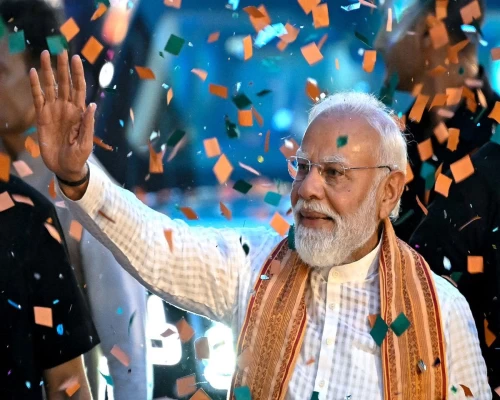
As the flagship healthcare initiative completes eight years, Prime Minister Narendra Modi has highlighted its expanding reach, with more than 60 crore people now covered under the scheme. Launched on September 23, 2018, Ayushman Bharat was envisioned as a major step towards ensuring that access to quality healthcare is not determined by a family’s ability to pay.
Under the Pradhan Mantri Jan Arogya Yojana (PM-JAY), eligible families receive annual health cover of up to Rs 5 lakh for secondary and tertiary hospitalisation. Government figures show that the scheme has funded around 13.25 crore hospital admissions, involving treatment worth Rs 2.03 lakh crore. More than 48.5 crore Ayushman cards have also been issued.
For Prime Minister Modi, the larger vision goes beyond insurance. It is about building a healthcare system that reaches people where they live, while providing financial protection when serious illness strikes.
This is reflected in the expansion of Ayushman Arogya Mandirs. Around 1.86 lakh such centres have been established across the country and have recorded more than 500 crore visits. They provide preventive and primary healthcare services, including screening, diagnostics, essential medicines and treatment for common ailments.
The emphasis on prevention is significant. More than 42 crore screenings for diabetes and hypertension have been conducted, alongside screening for oral, breast and cervical cancers. For a villager who previously had to travel considerable distances for a basic health check-up, a functioning primary healthcare centre closer to home can make early detection far more accessible.
The scheme has also expanded its social safety net. Since 2024, all citizens aged 70 years and above, irrespective of their socio-economic status, have been brought under the Ayushman Bharat framework. More than 1.36 crore Ayushman Vay Vandana cards had been created by September 21, 2026. Coverage has also been extended to families of ASHA workers, anganwadi workers and helpers, with more than 44.8 lakh cards issued to them.
Women account for nearly half of the Ayushman cards issued, while the scheme’s portability has become particularly relevant for migrant workers. More than 30 lakh treatments worth over Rs 8,800 crore have reportedly been availed by beneficiaries outside their home states, allowing eligible people to access care even when they are away from their place of residence.
The government’s healthcare vision is also increasingly digital. The Ayushman Bharat Digital Mission has created more than 97.6 crore ABHA IDs, with nearly 120 crore health records linked to them. Meanwhile, eSanjeevani has facilitated more than 50 crore telemedicine consultations, helping connect patients with doctors without requiring every consultation to involve a physical hospital visit.
Eight years on, the scale of Ayushman Bharat is striking. But its real significance lies beyond the numbers. A health insurance card matters most when it prevents a family from falling into debt; a nearby health centre matters when it enables early diagnosis; and a digital consultation matters when distance is the biggest barrier to care.
Prime Minister Modi’s vision of healthcare for every doorstep is therefore evolving on two fronts: protecting families from the financial shock of serious illness and bringing primary, preventive and digital healthcare closer to communities.
The next phase will be about converting this enormous scale into consistently accessible, timely and quality healthcare across India - particularly for those living in remote and underserved areas. The journey of Ayushman Bharat over the past eight years has established the infrastructure and reach. The larger challenge now is to deepen its impact at the last mile.
BI Bureau