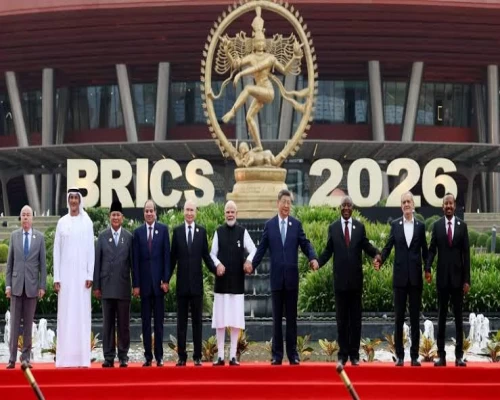
New Delhi: The BRICS summit in New Delhi is giving India an opportunity to showcase an aspect of its economy that rarely gets centre stage in high-level diplomacy: the businesses, farmers, producers and artisans behind products that originate in different parts of the country.
For delegates and international journalists, this regional India is being presented through food, local produce and handicrafts. Bihar’s makhana and sattu, coffee from Koraput in Odisha, handicrafts from Gujarat and millet-based preparations are among the products being brought into the summit experience.
The choices are not simply about showcasing Indian culture. They point to the regional economies that produce these goods, the communities whose livelihoods depend on them and the potential to connect local products with larger domestic and international markets.
At The Lalit, New Delhi, millets have been included in the breakfast menu prepared for BRICS guests. Amit Biswas, Executive Sous Chef at the hotel, said the decision was in line with the focus on promoting millets and Prime Minister Narendra Modi’s emphasis on the grain.
The menu has been designed for an international gathering, with Indian dishes such as galouti kebabs and tandoor-baked breads being served alongside preparations such as braised eggplant with miso paste and simmered Chinese cabbage. At The Leela Palace New Delhi, menus are being planned around dietary requirements, sustainability and cultural preferences.
The Taj Mahal New Delhi has brought another layer to the presentation through its “Tradition to Table” selection. Chefs have curated family recipes, particularly those associated with mothers, and brought together savoury preparations from six regions, including Kashmiri spiced walnuts, Maharashtra bhakarwadi, Rajasthan mini kachori, Bengal kucho nimki and Tamil Nadu murukku.
But the more direct economic message is coming through the media kits prepared by the Ministry of External Affairs in partnership with state governments.
Bihar has contributed sattu and makhana, two products closely associated with the state. Makhana, or fox nuts, has moved from being primarily a traditional food product to finding growing demand in wider consumer markets. Sattu, made from roasted gram, remains an important part of everyday food traditions in Bihar and eastern India.
Odisha is showcasing coffee from Koraput, bringing attention to a regional agricultural product and the farmers and local supply chains behind it. Gujarat, meanwhile, has contributed handicrafts, putting the skills of its artisans before an international media audience.
Vasudev Ravi, Officer on Special Duty (Public Relations), Ministry of External Affairs, said the initiative was an opportunity to showcase the “India Story” to Indian and international media attending the summit. He said the ministry had partnered with three state governments to showcase traditional foods and other regional products.
Ravi said the Bihar government had contributed sattu and makhana, while Odisha was showcasing coffee from Koraput and Gujarat had contributed various handicrafts to highlight the skills available in the state. He added that the effort was aimed at showcasing India and telling the “India Story”.
For the states involved, such visibility can have a value beyond the summit. International exposure can help create awareness around lesser-known products and their places of origin, while stronger demand can support producers, processing units, traders, artisans and other businesses connected to these regional supply chains.
This is particularly relevant as India seeks to expand the role of local enterprises and products in a larger global market. A packet of makhana or a cup of Koraput coffee may appear to be a small part of summit hospitality, but behind each is a chain of production that runs from a particular region to consumers beyond it.
The BRICS platform therefore offers India a chance to make a broader economic point. Its growth story is not being built only in major industrial centres and metropolitan cities. It also runs through agricultural districts, small businesses, traditional industries and artisan communities spread across the country.
As India discusses trade, technology, finance, development and greater economic cooperation among BRICS countries, it is also using the summit to put some of these regional economies in front of the world. The message is that India’s global economic presence is increasingly connected to what its states and local producers can grow, make and take to wider markets.
BI Bureau