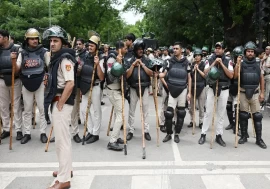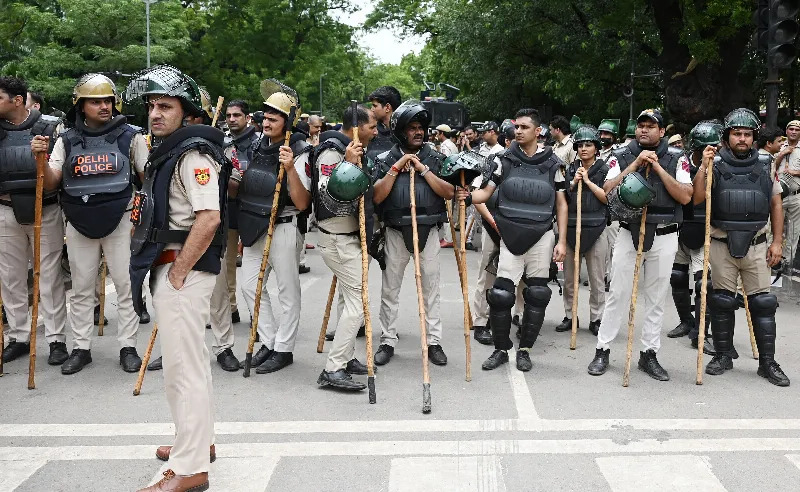
New Delhi. Can the Army and police be drawn into a political movement against an elected government? This question has come to the forefront following remarks attributed to YouTuber Dhruv Rathee, who reportedly called upon serving personnel to join protests, and student leader Neha Bora's reference to Bangladesh's Gen Z movement as a model for political mobilisation in India.
Former Uttar Pradesh DGP Dr (Prof) Vikram Singh has strongly objected to the reported appeal to police and Army personnel, arguing that uniformed forces cannot be treated as instruments of political change. He has called for the matter to be examined under the applicable law, emphasising that the discipline of the forces is non-negotiable.
Former Jammu & Kashmir DGP Shesh Paul Vaid has also weighed in on the controversy surrounding Neha Bora's remarks about Bangladesh. The 2024 student-led uprising in Bangladesh culminated in the removal of then Prime Minister Sheikh Hasina. References to that movement in the Indian political context have prompted questions about whether the call is for democratic protest or an attempt to replicate a regime-change movement.
Former DGPs raise a common concern around the two controversies that where does political dissent end and unlawful incitement begin?
In a democracy, criticising the government, organising peaceful protests and demanding a change of government are legitimate rights. However, appeals that seek to involve serving police or military personnel in political agitation raise serious questions about institutional discipline and the forces' obligation to operate within the Constitution and the law.
Former UP DGP cited that such remarks comes under the purview of the Police Forces (Incitement to Disaffection) Act, 1922, Section 131 of the Indian Penal Code and Section 159 of the Bharatiya Nyaya Sanhita. Whether these provisions apply depends on the precise statements, their context and the evidence. The allegations must therefore be examined by the competent authorities rather than treated as proven offences. Former J&K DGP Shesh also raised questions about alleged organised or externally funded efforts to dethrone the duly elected government.
The CJP protest of July 20 was a clear warning. A red line is crossed when calling upon the Army and Police to stand up against a duly elected government. My appeal to the Government of India: Act now, before it is too late. https://t.co/OAXher7KR7
— Shesh Paul Vaid (@spvaid) October 15, 2026
The Government of India and the appropriate authorities should review the relevant statements and recordings and determine whether any law has been violated. If evidence establishes an offence, action should follow in accordance with due process.
BI Bureau