New Delhi: A terror operation cannot become a live television spectacle, disturbing visuals cannot be replayed without restraint, and a heated debate cannot be allowed to become a platform for communal hostility. The Ministry of Information and Broadcasting has issued a fresh reminder to private satellite TV channels that the rules governing television content apply as much to the manner of reporting as to the information being broadcast.
In an advisory, the ministry has asked all private satellite TV channels to strictly adhere to the Programme Code prescribed under the Cable Television Networks (Regulation) Act, 1995, and the Cable Television Networks Rules, 1994. It warned that violations could invite action under the applicable statutory provisions.
The advisory follows observations by the Inter-Departmental Committee (IDC), which found instances of television coverage that did not conform to the spirit of the Programme Code. The committee also noted that multiple channels had broadcast similar news and visuals on similar subjects, while stressing that inappropriate behaviour and language should not be normalised on television.
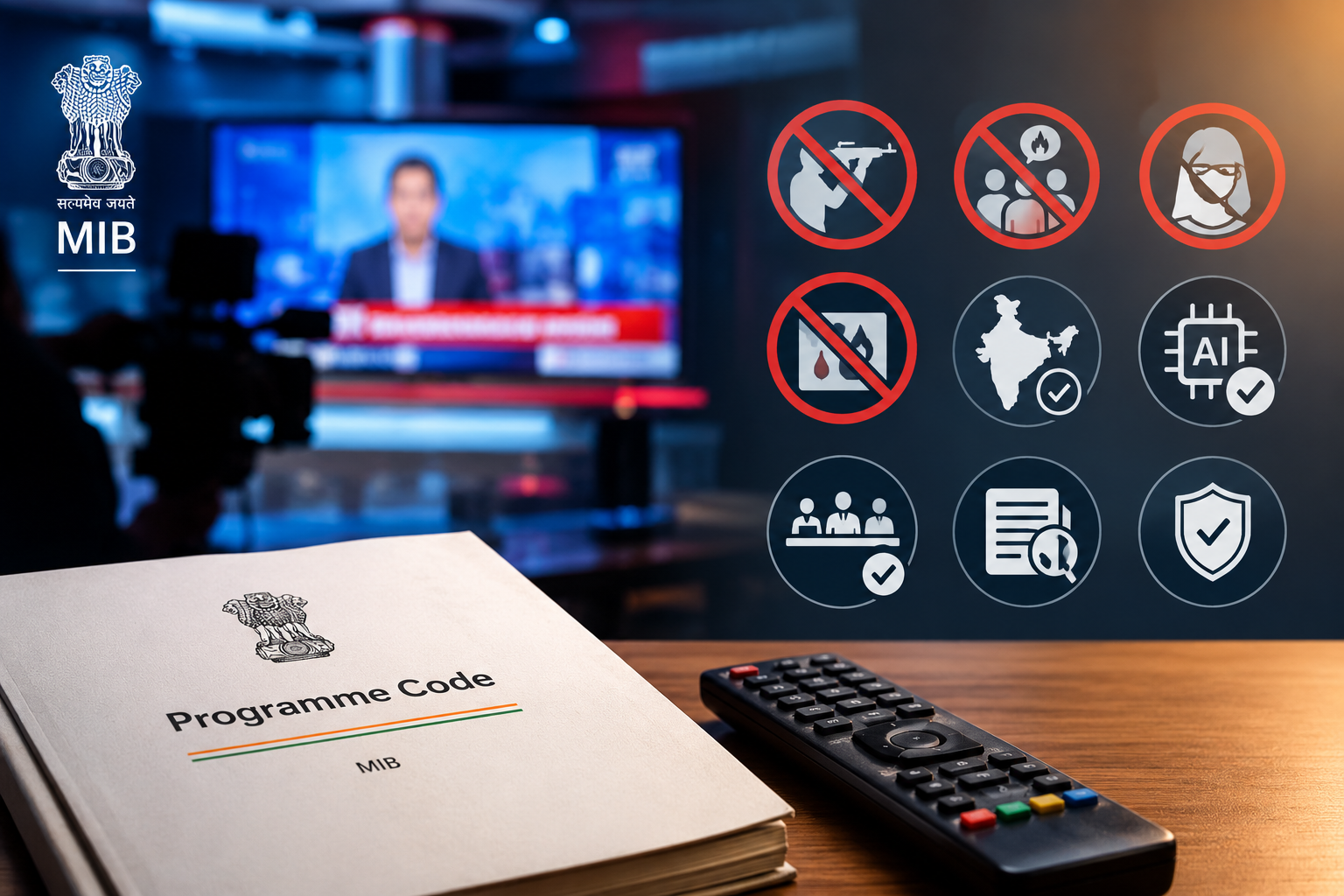
Among the key instructions is a prohibition on live coverage of anti-terrorist operations by security forces. Media coverage during such operations must be restricted to periodic briefings by an authorised officer until the operation concludes. Channels have also been advised to time-stamp visuals wherever necessary to prevent recorded footage from creating a misleading impression of live coverage.
The ministry has called for greater editorial restraint in reporting crime, violence and disturbing incidents. Coverage should rely on verified facts and present events in a balanced and responsible manner, avoiding deliberate falsehoods, suggestive innuendos and half-truths. Channels have been asked to avoid sensational reporting that could glorify or normalise unlawful or socially undesirable behaviour.
The advisory also cautions against excessive repetition or looping of disturbing visuals, recommending blurring or masking wherever warranted to protect viewers from unnecessary distress. Coverage of natural disasters, major accidents and other incidents should be time-stamped wherever necessary to prevent panic and should be based on verified information.
The ministry has also flagged the editorial responsibility of broadcasters during live debates and panel discussions. Programmes must not promote communal or anti-national attitudes, as stipulated under the Programme Code. Channels have been advised to exercise adequate editorial control, including careful selection and prior sensitisation of panellists and participants.
Where necessary, broadcasters should take immediate corrective measures, including muting participants, issuing disclaimers, interrupting discussions or discontinuing the feed to prevent derogatory, abusive or inflammatory content from being aired.
The advisory reiterates the requirement to protect the identity of victims of sexual offences. Channels must not disclose names or other direct or indirect identifying details, including photographs, family information, locality or other particulars that could reveal a victim's identity, in accordance with applicable legal provisions and Supreme Court directions.
Broadcasters have also been advised to use only authentic maps of India published by the Survey of India across television broadcasts, graphics and digital representations.
Artificial intelligence has received specific attention in the advisory. The ministry has asked channels to exercise due caution when using AI tools, including generative AI, for graphics, virtual news presentations and other programme elements. Such tools may be used in an assistive capacity, provided they do not compromise the accuracy, authenticity or sensitivity of news content and the Programme Code continues to be followed.
The advisory places responsibility on broadcasters to strengthen editorial oversight and content management systems. Its central message is that compliance cannot be limited to avoiding explicit violations: the selection, presentation and repetition of content must also meet the standards prescribed for television broadcasting.
BI Bureau