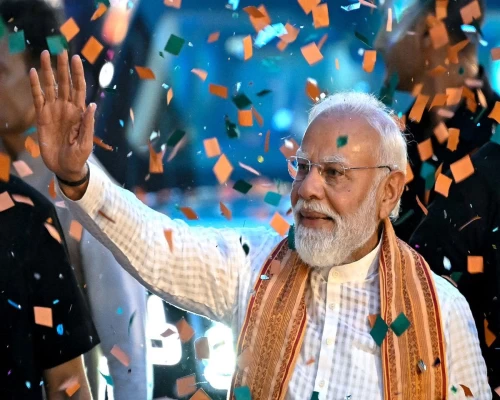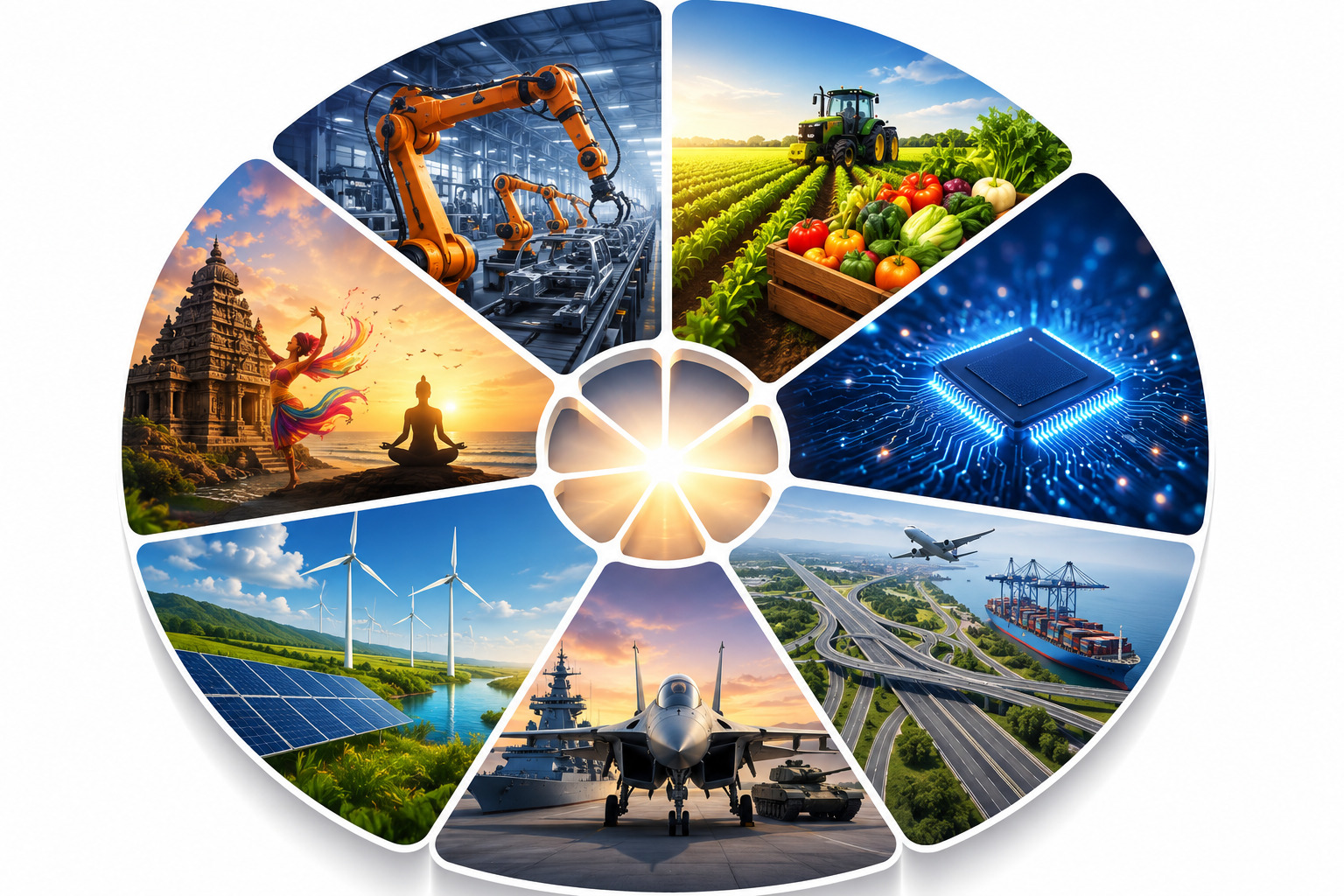
New Delhi: As India marked its 80th Independence Day, Prime Minister Narendra Modi’s address from the Red Fort outlined an ambitious roadmap for Viksit Bharat 2047. Rather than a collection of standalone announcements, the speech brought together manufacturing, agriculture, technology, energy, defence, youth and global competitiveness under the seven-pronged ‘Saptadhara’ framework.
The underlying message was clear: India’s next phase of growth must move beyond being a large consumer market to becoming a producer, innovator and global economic force.
A major thrust of the speech was on strengthening domestic manufacturing and integrating India more deeply into global supply chains. Modi stressed the need to build complete value chains within India - from components and design to finished products - while leveraging Free Trade Agreements to expand the global footprint of Indian enterprises.
The policy challenge now is to convert Make in India from a manufacturing programme into a globally competitive ecosystem driven by scale, quality, technology and Indian brands.
The Prime Minister’s message to farmers was equally significant: move from the farm to the export market.
With FTAs opening new markets, the opportunity lies in taking Indian agricultural products - including millets, spices, fruits and other traditional foods - beyond commodity markets towards processing, branding and exports.
This makes food processing, cold chains, quality standards, traceability and market access as important to agricultural growth as farm productivity itself.
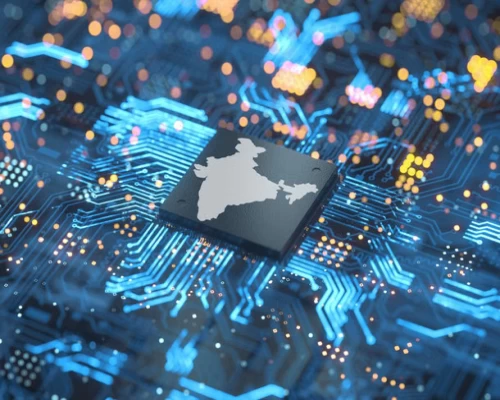
Technology emerged as another defining pillar. Modi spoke of semiconductors, AI, quantum technology, robotics, space and data centres as critical to India’s future.
Among the most significant announcements was the target to train one crore young Indians in AI skills within a year, alongside free online coaching for competitive examinations.
The larger signal is unmistakable: India’s demographic dividend will depend increasingly on whether its young workforce can transition into an AI-led economy.
The technology push is inseparable from energy security. Data centres, semiconductor fabs and advanced manufacturing will require abundant and reliable power.
Against this backdrop, the Prime Minister reiterated the ambition of 100 GW of nuclear capacity by 2047, alongside expansion of renewable energy, green hydrogen, energy storage and green mobility. 99% of previously classified offshore “No-Go” areas opened for oil and gas exploration and Rs 25,000 crore allocated to accelerate offshore exploration and facilitate new discoveries.
The message is evolving from energy security as an import concern to energy security as the foundation of India’s industrial and technological ambitions.
Defence self-reliance, critical minerals and emerging technologies formed another important strand of the address.
From drones and counter-drone systems to hypersonic technologies, India’s objective is increasingly to become not just self-reliant in defence but a global supplier.
The focus on critical minerals is equally strategic. As semiconductors, batteries, electric mobility and clean technologies become central to economic growth, securing the raw materials behind them becomes a matter of economic and national security.
The address also placed people at the centre of the development agenda.
The government’s target of one crore AI-trained youth, a Rs 1 lakh crore innovation fund and a renewed focus on startups underline the attempt to turn India’s demographic strength into an innovation advantage.
Women’s economic participation received a parallel push, with the target of taking the number of Lakhpati Didis to six crore.
The message extends beyond employment: India’s development story increasingly depends on expanding the number of people who can participate meaningfully in the formal, digital and entrepreneurial economy.
Saptadhara: a framework for convergence
The seven streams - spanning manufacturing, agriculture, technology, infrastructure, defence, the green and blue economy, and soft power - are not isolated sectors. They are interconnected.
Manufacturing needs reliable energy and critical minerals. AI needs chips, data centres and skilled talent. Agriculture needs processing and export infrastructure. Defence needs domestic innovation. Green growth needs technology and capital.
This convergence is what could make Saptadhara more than another policy framework.
The 80th Independence Day address shifts the focus from what India wants to become to how quickly its institutions can deliver it.
Modi’s call for a ‘Reform Express’ signals that the next phase will require regulatory changes, faster decision-making, stronger coordination between the Centre and states, and institutions capable of responding to technologies and markets that are changing rapidly.