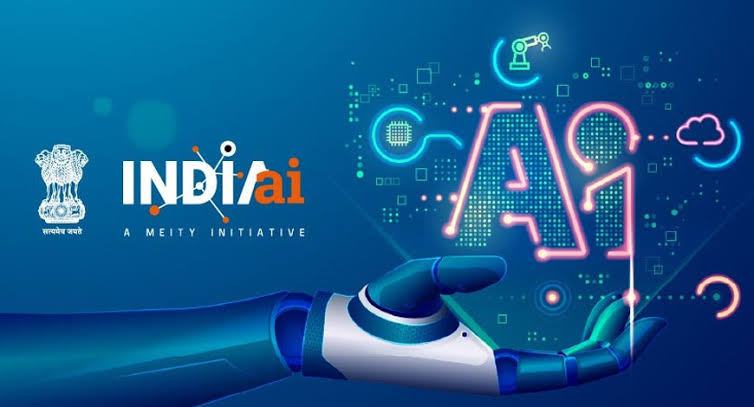
New Delhi: From building homegrown large language models to funding deepfake detection tools and expanding affordable computing power, the government’s flagship IndiaAI Mission has moved beyond policy announcements and into implementation, according to an update presented in the Rajya Sabha by Union Minister for Electronics and Information Technology, Railways, and Information & Broadcasting, Ashwini Vaishnaw.
The minister said the IndiaAI Mission is built around the government’s vision of democratising artificial intelligence while creating economic opportunities and employment for young Indians. At the same time, it seeks to address emerging risks associated with AI through dedicated investments in governance, safety and responsible innovation.
Approved in March 2024 with an outlay of Rs 103.71 billion over five years, the mission is structured around seven pillars, IndiaAI Compute, Foundation Models, AIKosh, IndiaAI Application Development Initiative, FutureSkills, Startup Financing, and Safe and Trusted AI.
One of the biggest developments under the mission has been support for indigenous AI models. The government said 20 sovereign AI model proposals have been identified for support, including 12 large language models (LLMs) and eight small language models (SLMs).
Among the projects highlighted are Sarvam AI’s 30-billion and 105-billion parameter language models, Gnani.AI’s speech-to-speech model, BharatGen’s multilingual foundation models and Avataar AI’s video generation model. Domain-specific SLMs for healthcare, language technologies and agentic AI systems are also progressing through different stages of development and deployment.
The government has also expanded access to AI computing infrastructure. Fifteen compute service providers have been empanelled under the mission, supporting 237 projects with more than 9.3 million GPU hours sanctioned.
To encourage AI-led innovation, 12 national-level hackathons and innovation challenges have been launched, resulting in the development of 62 AI prototypes and the deployment of 20 AI solutions.
On the talent front, the mission has awarded 686 fellowships across undergraduate, postgraduate and doctoral programmes in 178 institutions. More than 2.6 million people have also completed the YUVA AI for All programme.
The government said AI research infrastructure is also expanding rapidly. Twenty-seven India Data and AI Labs have already been established, training more than 2,500 students, while work is underway to set up another 188 labs. In addition, 58 AI Centres of Excellence are being established across states and Union Territories in partnership with state governments and industry.
Alongside capability building, the government has placed significant emphasis on AI safety. Under the Safe and Trusted AI pillar, 13 Responsible AI projects have been approved in educational institutions, covering bias mitigation, machine unlearning, privacy-preserving AI, explainability, deepfake detection and AI risk assessment.
Among the notable initiatives are Saakshya, a multi-agent framework developed by IIT Jodhpur and IIT Madras for deepfake detection, AI Vishleshak for strengthening audio-visual forgery detection, and IIT Kharagpur’s real-time voice deepfake detection system.
Research is also underway to make AI systems more transparent and secure. NIT Raipur is developing algorithms to reduce bias in healthcare applications, IIT Delhi, IIIT Delhi and IIT Dharwad are building privacy-preserving machine learning models using federated learning, the Defence Institute of Advanced Technology is working on explainable AI for security applications, and IIT Jodhpur is developing machine unlearning techniques to remove sensitive or outdated information from generative AI models.
The government said these efforts are aimed at making AI systems fairer, more transparent and more trustworthy. It also highlighted the establishment of the AI Safety Institute, which will work with academia, startups, industry and government bodies to strengthen AI safety and security. The India AI Governance Guidelines have also proposed a risk-based framework to address issues such as algorithmic bias, misinformation, deepfakes and broader societal risks.
BI Bureau