New Delhi: For years, the global electric vehicle conversation has largely revolved around Tesla and BYD. Now, two Indian automakers have secured a distinction that puts them ahead of both global giants, not in sales or market share, but in how efficiently their electric vehicles use energy.
According to the International Council on Clean Transportation (ICCT) Global Automaker Rating 2025, Tata Motors and Mahindra Automotive have emerged as the world’s two most energy-efficient electric vehicle manufacturers. The ranking places Tata Motors first and Mahindra second, ahead of Tesla and BYD in terms of electricity consumed to travel a given distance.
The recognition comes at a time when India’s electric passenger vehicle market is still at a relatively early stage. Industry observers believe such global recognition could encourage domestic manufacturers to continue building more efficient electric vehicles while strengthening India’s position in the global EV landscape.
The ICCT assessed 22 of the world’s largest automobile manufacturers on multiple aspects of their transition to electric mobility. The evaluation covered EV sales performance, manufacturing decarbonisation, future readiness and battery-electric vehicle efficiency.
Among these parameters, Tata Motors secured the highest position globally for energy efficiency. The report recorded an adjusted energy consumption figure of 106 Wh/km for Tata Motors, while Mahindra Automotive followed closely with 113 Wh/km.
Tesla and BYD, widely regarded as leaders in the global EV industry, ranked third and fourth respectively. The report also noted that the average energy consumption across leading EV manufacturers stood at 131 Wh/km, placing both Indian companies well ahead of the global average.
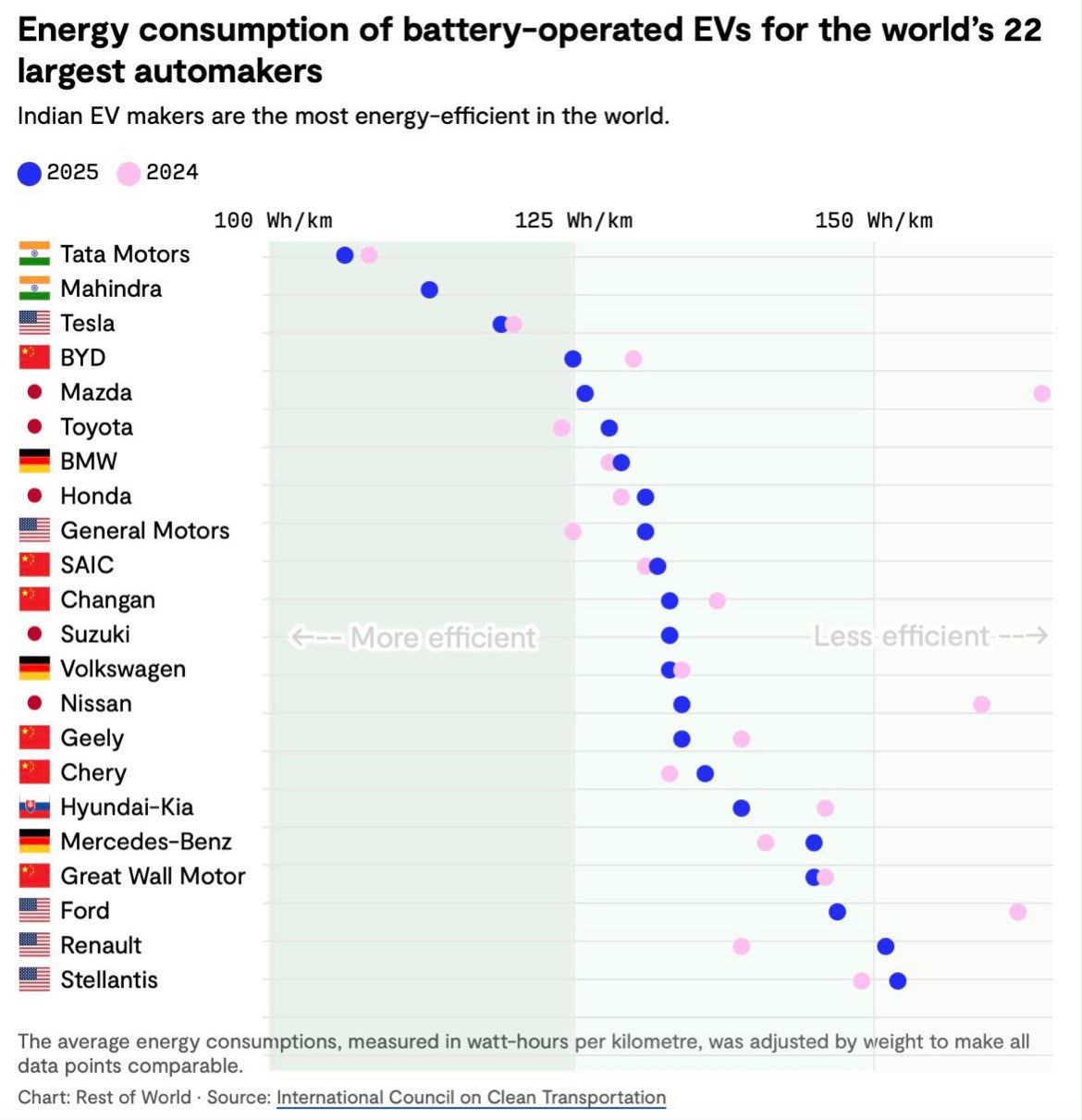
In practical terms, lower Wh/km figures mean an electric vehicle consumes less electricity to travel every kilometre. This translates into lower energy consumption and reduced running costs for customers.
The ICCT attributes the strong showing of Tata Motors and Mahindra to the kind of electric vehicles they currently produce. Unlike several international manufacturers that focus on larger, heavier electric SUVs and premium sedans, the Indian companies have concentrated on compact crossovers designed for efficiency, affordability and everyday use.
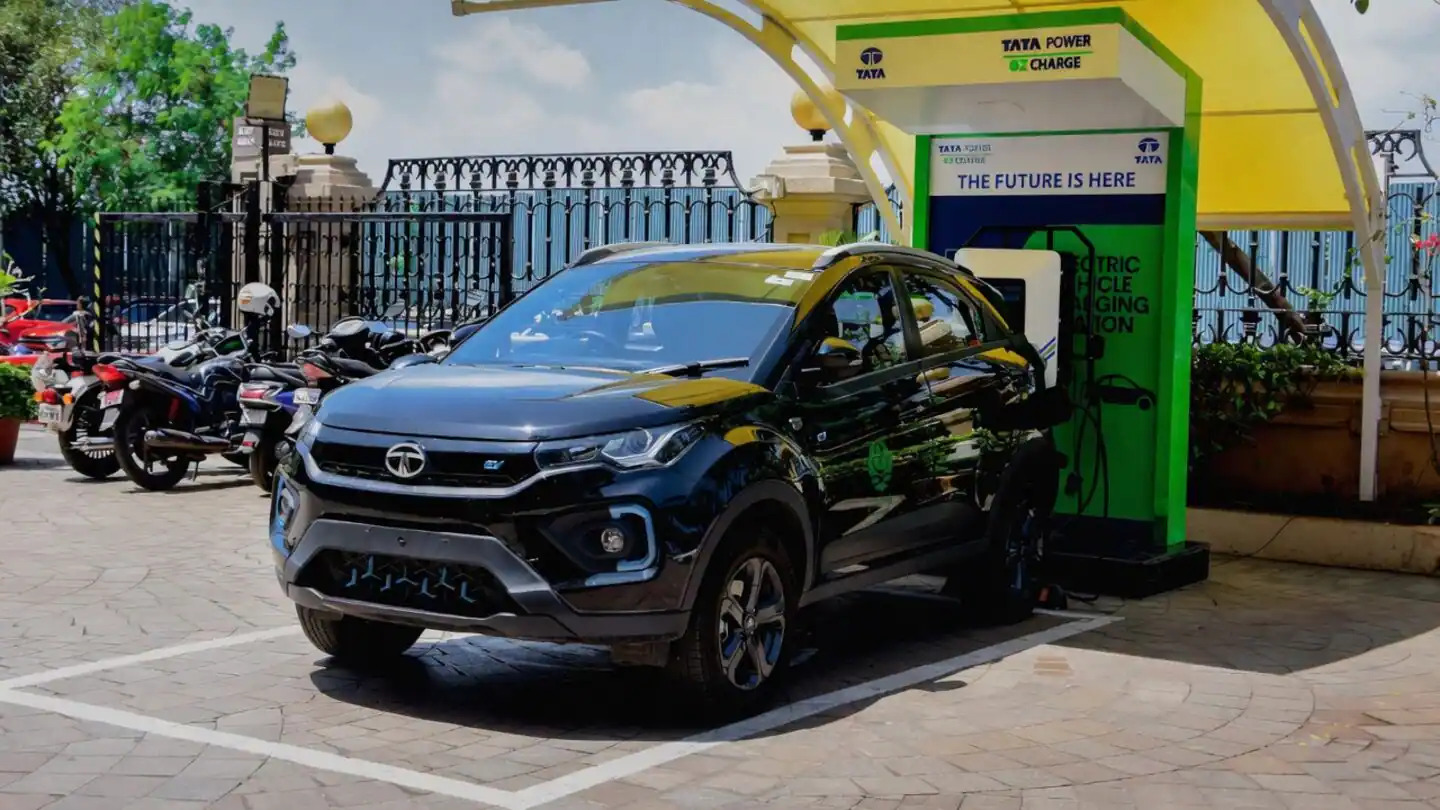
According to the report, vehicles such as the recently launched Tata Sierra.ev and Mahindra BE 6 have been engineered with energy efficiency as a priority rather than outright performance. Their relatively lighter construction, optimised powertrains and smaller battery packs have helped deliver impressive efficiency during standardised testing.
The Tata Sierra.ev is offered with 63 kWh and 75 kWh battery options and has a claimed range of up to 665 km under the MIDC test cycle. Tata also claims more than 500 km of real-world range under its C75 cycle with the larger battery pack. The SUV supports fast charging, adding 263 km of range in 15 minutes, while charging from 20 to 80 percent takes around 26 minutes.
Mahindra’s BE 6 is available with 59 kWh and 79 kWh battery packs and offers an ARAI-certified range of up to 682 km. Both models have been developed to maximise efficiency while maintaining practicality for daily use.
The ICCT converts each manufacturer’s official test-cycle data into comparable Wh/km values before calculating an average across its battery-electric vehicle portfolio. The ranking focuses solely on electricity consumption under standard laboratory testing conditions and does not evaluate acceleration, charging speed or vehicle pricing.
While the report applauds the efficiency of Indian electric vehicles, it also points out that energy consumption is only one part of the overall ownership experience. Factors such as charging speed, battery technology, charging infrastructure and driving range continue to influence consumer adoption.
The report notes that Tata Motors remains among the weaker manufacturers globally on charging speed, while its driving range rankings also trail several international competitors. In other words, although Tata’s EVs consume less electricity, they still lag some global rivals in fast-charging capability and long-distance usability.
India’s EV market also remains relatively small, with electric vehicles accounting for less than five percent of new passenger vehicle sales, compared with around 25 percent globally.
The Indian government has set a target of achieving 30 percent EV penetration by 2030. According to the ICCT, reaching that goal will require stronger fuel-efficiency regulations, supportive industrial policies, market incentives and significant investment in charging infrastructure.
The latest rankings suggest that while India still has ground to cover in expanding EV adoption and infrastructure, its manufacturers are already setting global benchmarks in one area that matters to every electric vehicle owner, getting more kilometres from every unit of electricity.
BI Bureau