New Delhi: New Delhi: India’s private space sector continues to expand, with around 440 space technology startups now registered on the Department for Promotion of Industry and Internal Trade’s (DPIIT) Start-up India portal.
The growth follows the Union Cabinet’s June 2020 decision to open the space sector to private participation across the full range of space activities. The move also led to the creation of the Indian National Space Promotion and Authorisation Centre (IN-SPACe) as a single-window, independent nodal agency to facilitate and regulate the participation of non-government entities.
Minister of State for Atomic Energy and Space Jitendra Singh informed the Rajya Sabha in a written reply earlier this week that IN-SPACe had granted 113 authorisations to 52 Non-Government Entities (NGEs) by mid-2026. These include 18 startups involved in activities such as satellite operations, payload establishment and launch services.
The 18 startups include Agnikul Cosmos, Akshat Aerospace, Azista BST, Bellatrix Aerospace, Cosmoserve Space India, Dhruva Space, Digantara Research and Technologies, GalaxyEye Space Solutions, HEX20Labs India, Inorbit Space Telecommunications, Manastu Space Technologies, NSpace Tech India, OrbitAID Aerospace, PierSight Space, PixxelSpace India, Skyroot Aerospace, Space Kidz India and TakeMe2Space Technologies.
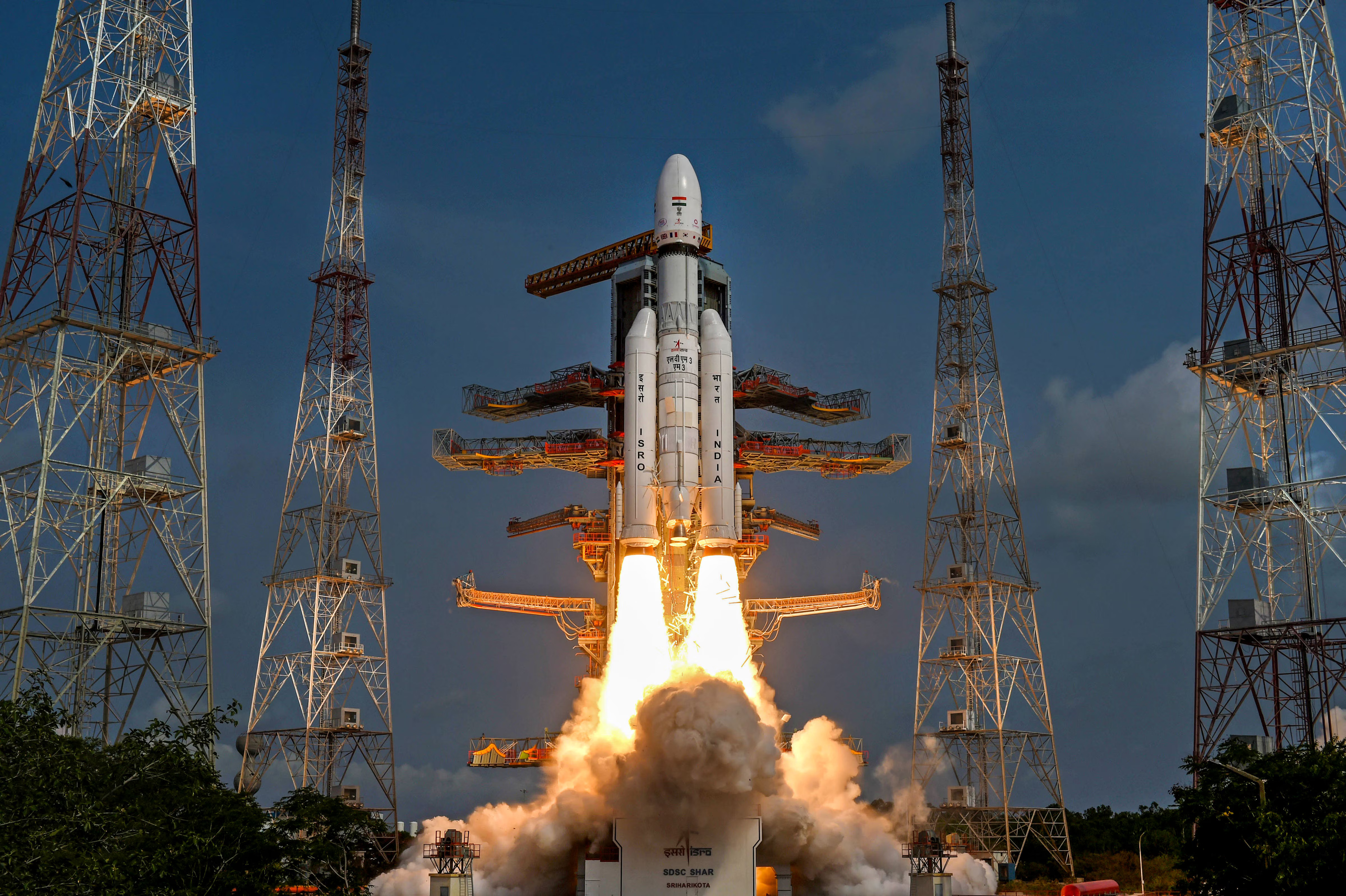
Private participation is also expanding in launch activities. Applications for access to ISRO infrastructure, including the launch pads at the Satish Dhawan Space Centre in Sriharikota, are processed through IN-SPACe’s digital platform under a standard operating procedure. Applications are subsequently reviewed for readiness by an expert committee.
Two commercial rocket launches by Indian private companies are proposed for FY 2026-27, while the launch manifest for FY 2027-28 is yet to be approved by IN-SPACe. According to the government, more than six launches could potentially be undertaken by Indian private companies in FY 2027-28.
Private investment in India’s space sector has also increased sharply, rising from $100.5 million in 2021-22 to $618.5 million by March 31, 2026. Of the total investment recorded during this period, $187 million came in 2026 alone.
With startups entering areas ranging from launch vehicles and satellite systems to space communications and payload technologies, India’s space ecosystem is moving beyond traditional government-led operations towards a broader mix of public and private participation.