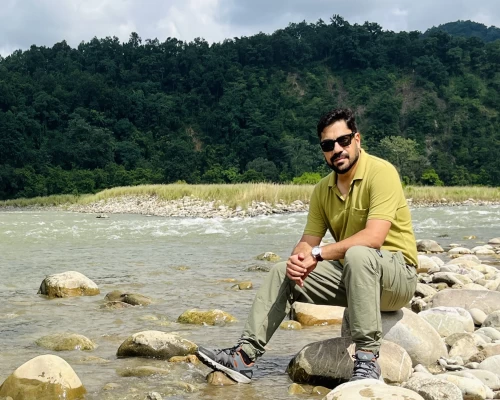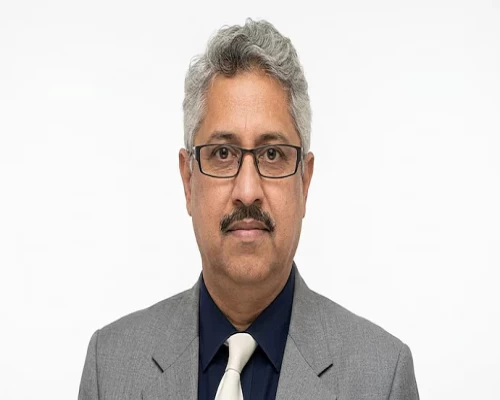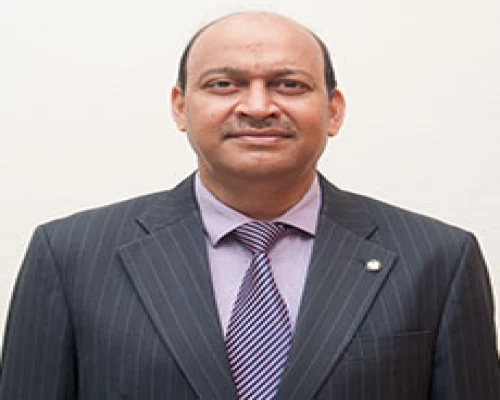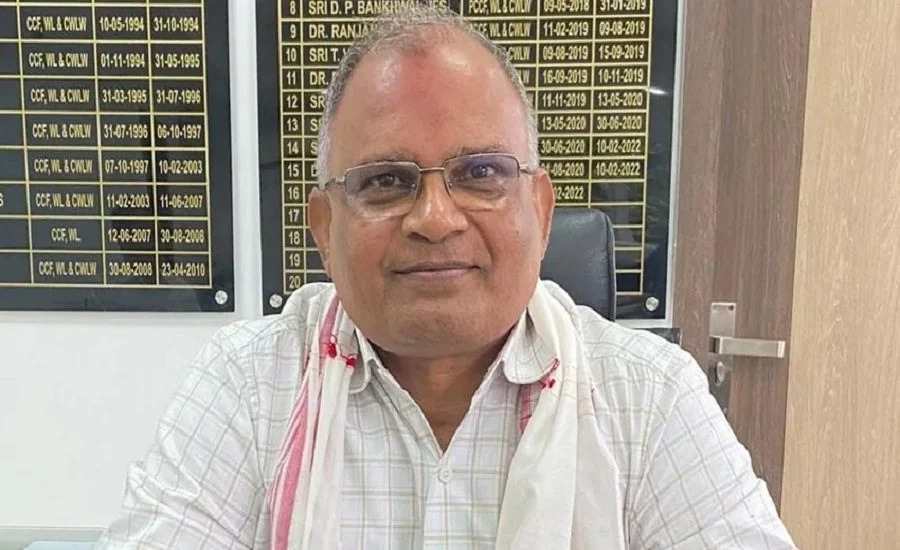
Guwahati: The Assam Government has re-engaged retired Indian Forest Service (IFS) officer M K Yadava as Special Chief Secretary of the Mines & Minerals Department for a period of two years, with effect from November 13, 2026. The decision, approved by the State Cabinet on November 10, grants him full administrative and financial powers in his new assignment.
Yadava’s appointment comes shortly after the conclusion of his tenure as Special Chief Secretary (Forest), which ended on November 11, 2026. He had earlier retired as Principal Chief Conservator of Forests (PCCF) and Head of Forest Force in February 2024, following which he was engaged by the state government in an administrative role.
His re-engagement in the Mines & Minerals Department marks a new chapter in his association with the Assam administration, bringing his experience in natural resource management, forest governance and environmental conservation into a department dealing with the state's mineral resources.
During his tenure in the Forest Department, Yadava was closely associated with some of Assam’s most significant forest conservation and restoration initiatives, particularly the large-scale anti-encroachment campaign launched in 2021 under the leadership of Chief Minister Dr Himanta Biswa Sarma.
One of the most notable achievements was the reclamation of forest land and wildlife habitats from illegal encroachments. Yadava played a key role in planning and executing these operations, which covered several reserve forests, national parks and wildlife sanctuaries. With the Chief Minister's active support and monitoring, the campaign brought substantial areas of ecologically sensitive land back under forest protection.
In his published professional profile, Yadava has cited the reclamation of approximately 1.15 lakh bighas (147.65 sq km) of forest land during the campaign. Major operations included Lumding Reserve Forest in 2021, Poba Reserve Forest in 2022, Bura Chapori Wildlife Sanctuary and Orang National Park in 2023, followed by operations in Rengma, Doyang, Nambor South and other reserve forests in 2025.
The conservation drive also helped improve ecological connectivity. The reclamation of around 22,000 bighas in Orang National Park, announced by Chief Minister Sarma in October 2024, helped establish an uninterrupted 180-km protected landscape connecting Orang with Kaziranga National Park and Bura Chapori Wildlife Sanctuary. This created a larger and more connected habitat for wildlife movement.
Another important intervention was the development of the Gaja Mitra initiative to address human-elephant conflict. Envisioned by Chief Minister Sarma and developed with Yadava's contribution, the initiative focused on community participation, awareness and patrolling, solar fencing in strategic locations, and improving water availability and habitats to help contain elephant movement within forest areas. It built upon the Mobile Anti-Depredation Squads and Field Anti-Depredation Squads introduced by Yadava in 2020. The state subsequently expanded its institutional response to human-elephant conflict through the Gaja Mitra Scheme in high-conflict districts.
Yadava also played a significant role in mobilising public participation in afforestation through the Amrit Brikshya Andolan. The campaign, which sought to make tree plantation a mass public movement, saw Assam establish 10 Guinness World Records in September 2023. Among its major achievements was the plantation of 9,21,730 saplings in 24 hours on 100 hectares of degraded forest land at Bhairabkunda. The initiative demonstrated how administrative coordination, community participation and public mobilisation could be brought together for environmental conservation.
The scale of Assam's conservation efforts is also reflected in more recent government figures. According to information presented in the Assam Legislative Assembly in July 2026, the state reclaimed 16,937.24 hectares of encroached land between 2021–22 and 2025–26, including 5,918.14 hectares from eight national parks and wildlife sanctuaries. Plantation activities have also been undertaken in several reclaimed areas to support ecological restoration.
These initiatives reflect the Assam Government's emphasis on protecting its natural heritage while addressing the challenges of human-wildlife conflict and ecological degradation. The Chief Minister's backing of the conservation programme, coupled with the Forest Department's enforcement and restoration efforts under Yadava's tenure, gave the campaign an important administrative dimension.
The transition to the Mines & Minerals Department now places Yadava in another critical area of natural resource governance. Assam's mineral sector requires a framework that balances resource utilisation, regulatory oversight, environmental safeguards and sustainable development. His experience in managing forest resources and coordinating large-scale conservation interventions will be relevant as the state seeks to strengthen its mineral administration.
BI Bureau