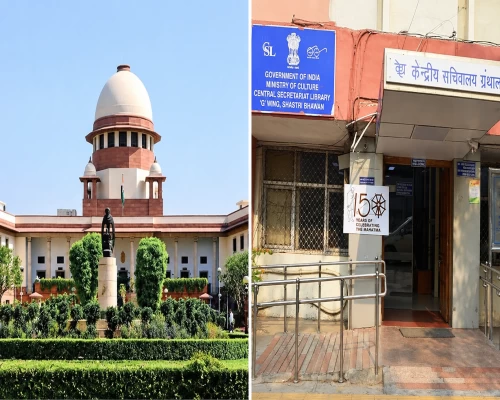
New Delhi: The Supreme Court on Monday stayed its November 20 judgment on the Aravalli Hills, saying that clarification was required on the definitions it had recently approved and that an independent expert assessment was necessary before the directions could operate.
A Bench of Chief Justice of India Surya Kant and Justices JK Maheshwari and AG Masih said that the recommendations of the earlier committee, largely comprising bureaucrats, and the findings of the Court based on those recommendations would remain in abeyance. The matter will now be taken up on January 21, 2026.
The Court was hearing a suo motu case initiated after widespread protests by environmentalists and civil society groups, who expressed concern that the earlier judgment could weaken protection for the Aravalli range.
“We direct that recommendations of the committee and findings of the Supreme Court … shall remain in abeyance till then. Case to be taken up on January 21, 2026,” the Bench ordered.
Solicitor General Tushar Mehta appeared for the Union government and said that the controversy stemmed from misunderstandings. “There were a lot of misconceptions regarding orders, the government’s role, etc. An expert committee was constituted and a report was given which the court accepted,” he submitted.
The Bench, however, said that ambiguities persisted and required a fresh look by an independent group of experts. CJI Kant observed that such an opinion was necessary to provide clear guidance on issues concerning the Aravalli, particularly the definition of hills and ranges. The Court also said it needed to examine whether the restrictive demarcation approved last month could expand areas where mining may be permitted.
“An analysis of whether sustainable mining or regulated mining within the newly demarcated Aravalli area, notwithstanding the regulated oversight, would result in any adverse ecological consequences… that aspect can be examined,” CJI Kant said.
Notice was issued to the Union government and the concerned State governments. In the interim, the Court ordered that both its earlier directions and the previous committee’s recommendations would not be implemented.
While staying its own November 20 ruling, the Supreme Court acknowledged that the judgment had led to multiple challenges and requests for clarification. At the same time, the Bench noted that these challenges were not supported by scientific material placed before the Court.
It recorded that it had “no scientific reasons justifying any ex-facie acceptance of the same, nor any cogent evidence or expert testimony to substantiate these individual contentions.” Even so, the Court said it appeared prima facie that there were gaps in the articulation of its earlier directions.
The Bench also took note of the broader public response. It recorded that there had been “a significant outcry among environmentalists,” who feared that the newly adopted definition and the Court’s directions could be interpreted in a manner harmful to the mountain range. According to the order, such criticism could not be ignored, as it “appear to stem from the perceived ambiguity and lack of clarity in certain terms and directives issued by this Court.”
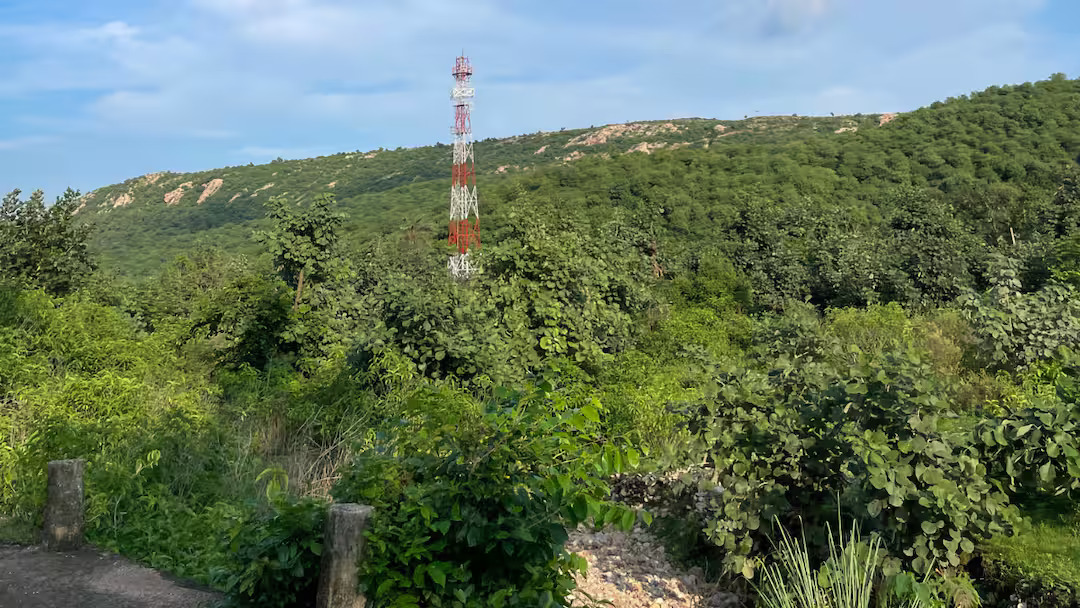
The Aravalli range extends across Delhi, Haryana, Rajasthan and Gujarat. The controversy arose after the Supreme Court last month accepted an elevation-linked definition for identifying Aravalli Hills for the purpose of mining regulation. According to reports, this definition could exclude more than 90 per cent of the Aravalli area from stricter mining controls.
In May 2024, while hearing matters related to illegal mining, the Court had noted that States were using different definitions of the Aravalli Hills and Aravalli Range. A committee was then constituted to address the issue and submitted its report in October.
The committee suggested that any landform in the Aravalli districts with an elevation of 100 metres or more from the local relief should be classified as Aravalli Hills. It further defined the Aravalli Range as “two or more Aravalli Hills located within a proximity of 500m from each other, measured from the outermost point on the boundary of the lowest contour line on either side.”
On November 20, a Bench led by then CJI BR Gavai had accepted these definitions and also endorsed a ban on mining in core or inviolate areas. At the same time, it declined to impose a complete prohibition on mining in the Aravallis, noting that a total ban could encourage illegal mining and criminal activity.
That judgment will now remain on hold until the Court revisits the issue with the aid of a new expert committee.
BI Bureau