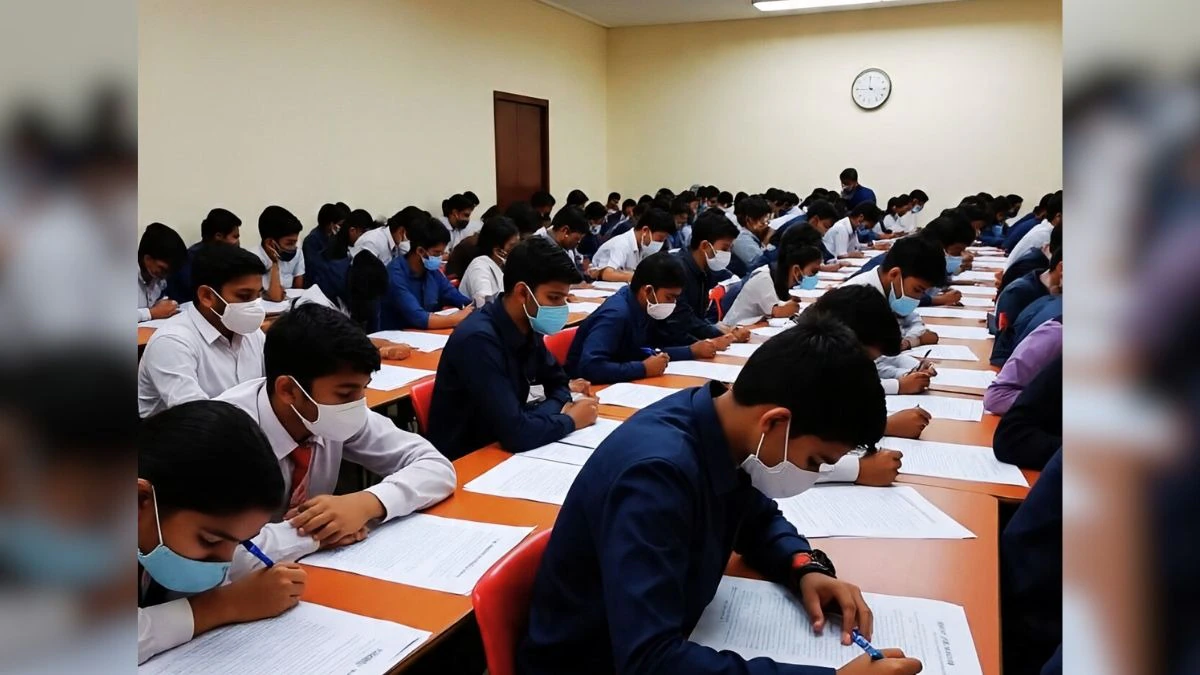
New Delhi: The Centre has issued revised guidelines on the use of scribes in competitive examinations for persons with disabilities (PwDs), making it mandatory for examining bodies to set up their own pools of vetted scribes within two years. The widely used “own scribe” system, flagged for malpractice, will be phased out.
The new framework, notified by the Ministry of Social Justice and Empowerment, applies to all public competitive written examinations linked to jobs and admissions in technical and professional courses. It draws from Supreme Court directives and aligns with the Rights of Persons with Disabilities Act, 2016, and the Public Examination (Prevention of Unfair Means) Act, 2024.
The ministry said candidates should be encouraged to attempt exams independently with the help of assistive technologies such as software-enabled laptops, Braille, large print, recording devices, screen readers like JAWS and NVDA, and speech-to-text tools. This, it added, would reduce reliance on scribes and prepare candidates for independent functioning in workplaces and professional courses.
“Significant inputs have been received from responsible bodies like UPSC, DoPT, NRA, etc., expressing concern over the credibility and transparency of the exams being undertaken by the PwDs by using a scribe, in general. In particular, the provision of ‘Own Scribe’ has been identified as a significant vulnerability in maintaining the integrity and fairness of the examination process,” the guidelines said.
Reports of malpractice, including collusion between candidates and privately arranged scribes, where scribes wrote answers without proper dictation, prompted the move. Until the scribe pools are ready, candidates will be allowed to bring their own scribes only in exceptional cases.
The eligibility norms for scribes have been tightened. They must typically have a qualification two to three academic years lower than the minimum required for the exam. They cannot appear for the same examination and must have no conflict of interest.
Candidates with functional limitations in writing will continue to receive at least 20 minutes of compensatory time per hour, irrespective of whether they use a scribe. Exam centres must be fully accessible, with ramps, lifts, audio announcements, wide corridors and ground-floor seating. Special provisions such as quieter rooms will be arranged for neurodiverse candidates and those with chronic health conditions.
The guidelines also require examination authorities to set up grievance redressal systems, train staff in disability etiquette, and conduct annual sensitisation sessions for invigilators. Feedback on scribe quality must be collected, and incentives and training should be provided to empanelled scribes.
To protect privacy, personal and medical data of candidates must be stored securely in compliance with the Digital Personal Data Protection Act, 2023. Officials who fail to follow the guidelines or exclude PwDs risk penal action, while malpractice by candidates or scribes will also attract penalties.
BI Bureau