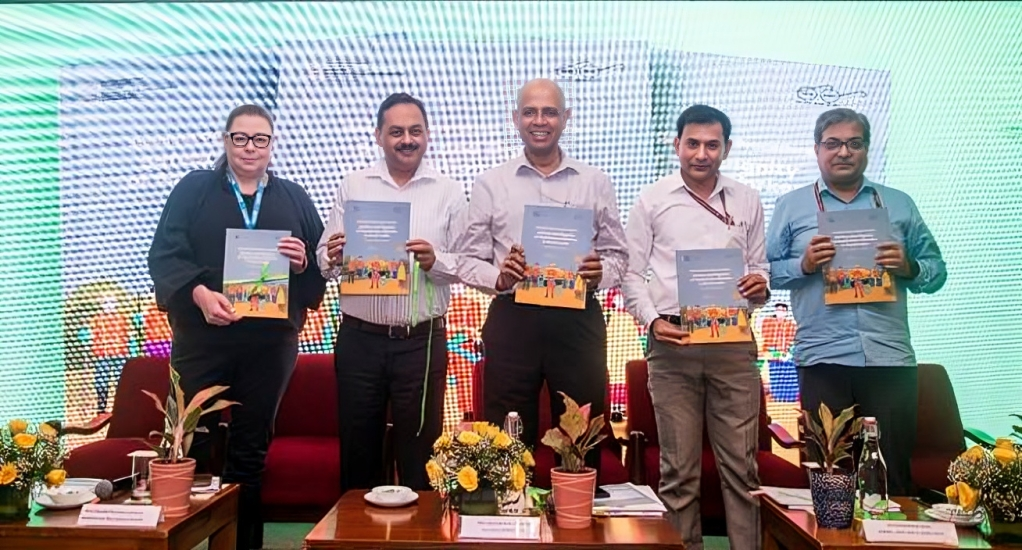
New Delhi: The Department of Drinking Water and Sanitation (DDWS), Ministry of Jal Shakti, in collaboration with UNICEF India, hosted the National Rural Sanitation Workshop at the India Habitat Centre, New Delhi. The workshop brought together senior government officials, state mission directors, development partners, and sector experts to review the progress of the Swachh Bharat Mission – Grameen (SBM-G) and identify priorities for its next phase.
Addressing the gathering, Secretary, DDWS, Ashok KK Meena said, “As we move forward on the SBM-G journey, we recognize that sanitation is not just about infrastructure, it is about dignity, equity and sustainability. This event and the launch of these protocols reflect the government’s commitment of leaving no one behind, while adapting to the climate challenges of our times. The next phase of SBM-G must continue to build on the collective momentum of the last decade and anchor local leadership in delivery.”
As part of the workshop, two key technical publications were released, marking an important step towards ensuring that sanitation services are not only safe and inclusive but also climate-resilient and equitable. These include the Standard Operating Procedures for the Safety and Dignity of Sanitation Workers in Rural India and the Protocol for Developing Climate Resilient Sanitation Technical Designs and Services.
Karina Malczweska, Chief WASH & CCES at UNICEF India, opened the session by underlining the importance of future-ready sanitation systems, aligned with sustainable rural development goals. Kamal Kishore Soan, Additional Secretary and Mission Director, JJM & SBM-G, said, “This meeting allows us to assess what we are doing and identify the areas that need our attention. The focus continues to be on ensuring pace and quality goes hand in hand. As climate risks intensify, integrating resilience into sanitation systems is no longer optional, it is essential.”
Sushil Kumar Lohani, Additional Secretary in the Ministry of Panchayati Raj, led a session on strengthening the role of Gram Panchayats (GPs) in sustaining sanitation outcomes. He highlighted how over 2.5 lakh Panchayats have been preparing thematic development plans using the e-GramSwaraj platform and tracking performance through the Panchayat Advancement Index. Local governance is becoming increasingly central to rural sanitation planning and implementation.
The workshop also focused on the Clean and Green Panchayat initiative, which encourages local bodies to lead in waste management, greywater reuse, and inclusive sanitation infrastructure. Several best practices were showcased by award-winning Gram Panchayats, including examples of 100% waste segregation, large-scale composting, eco-friendly approaches, and safe sanitation practices.
The review of SBM-G progress presented a mixed picture. As of now, 80% of targeted villages have achieved ODF Plus Model status, although only 54% have undergone verification. Greywater management coverage has reached 91% nationally, with more than 20 States and Union Territories having surpassed the 95% mark. Solid waste management coverage stands at 87%, while plastic waste management has been implemented at the block level in 70% of locations. However, functionality in these areas remains an ongoing concern.
With Swachh Bharat Mission entering its tenth year, the workshop reaffirmed the government’s focus on an integrated approach to sanitation that is rooted in local leadership, enabled by climate-resilient innovations, and driven by sustainability. Convergence of efforts, behaviour change at the community level, and robust monitoring systems remain central to achieving a cleaner, healthier, and more equitable rural India.
BI Bureau