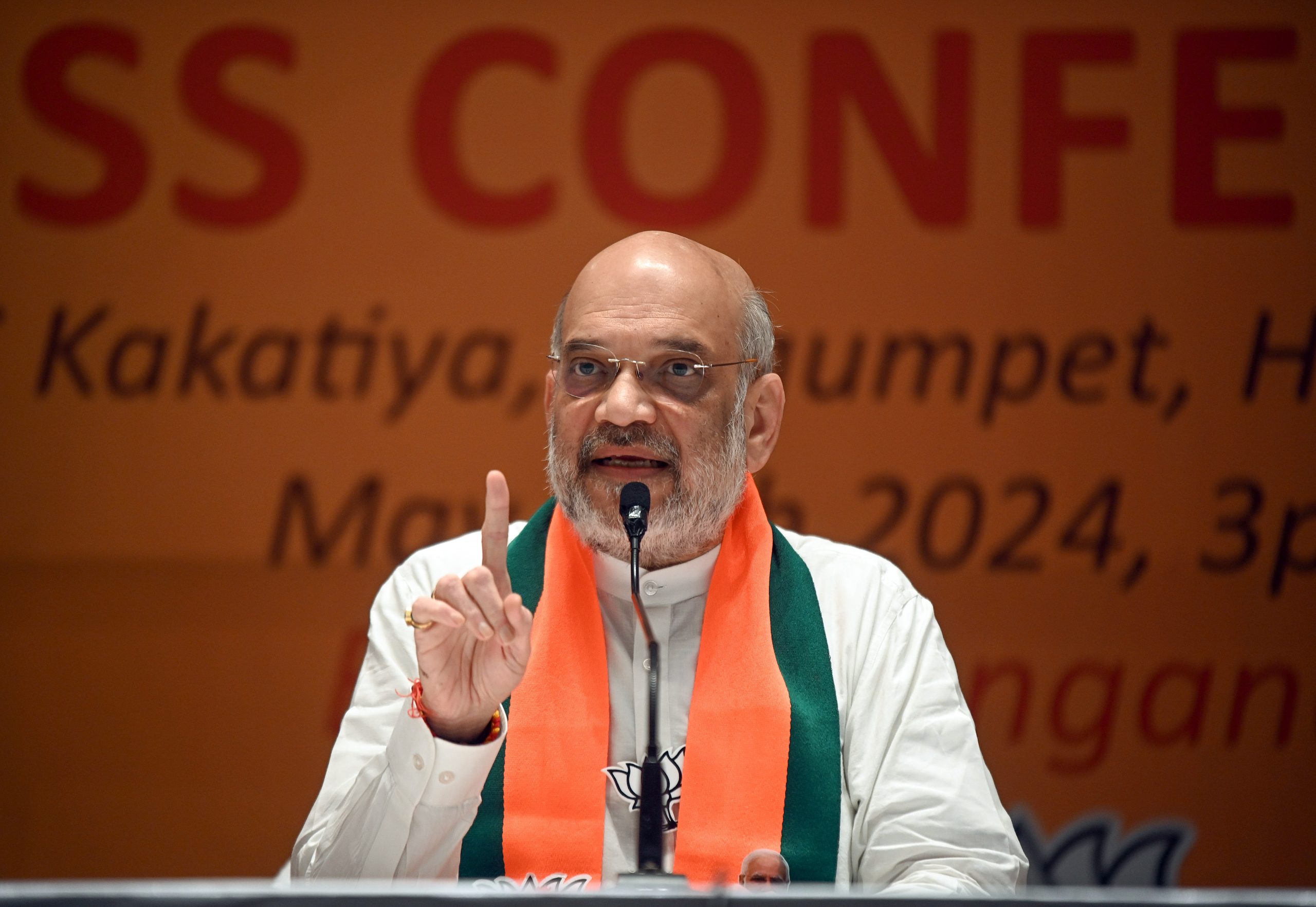
New Delhi: When Prime Minister Narendra Modi announced the creation of the Ministry of Cooperation in July 2021, it marked a significant shift in India's development approach. For the first time since Independence, the cooperative sector received a dedicated institutional framework at the Union level, signalling that cooperatives would no longer be viewed merely as traditional rural institutions but as key drivers of inclusive economic growth. Guided by the vision of Sahkar Se Samriddhi' (Prosperity through Cooperation), the Ministry was conceived to strengthen grassroots institutions, empower farmers and rural communities, and build a more participatory economic model aligned with the vision of a *Viksit Bharat by 2047.
Five years later, the Ministry has emerged as one of the most significant governance reforms in the rural economy, with Union Home and Cooperation Minister Amit Shah playing a central role in steering its direction. His approach has been to modernise India's cooperative ecosystem through policy reforms, digital transformation and institutional strengthening, while ensuring that cooperatives become commercially viable, professionally managed and capable of creating sustainable livelihoods.
For decades, India's cooperative movement had an extensive grassroots presence but suffered from fragmented governance, uneven reforms and limited policy attention. Millions of farmers depended on cooperative institutions for credit, procurement, dairy, marketing and agricultural services, yet these institutions often lacked technological support, professional management and access to modern markets. The creation of a separate Ministry sought to bridge these gaps by providing focused policy direction and bringing various cooperative initiatives under one umbrella.
Over the last five years, the Ministry has worked towards transforming Primary Agricultural Credit Societies (PACS) into vibrant, multi-purpose rural institutions. Computerisation of PACS, model by-laws for greater transparency, expansion of their services beyond agricultural credit, and their integration with storage, procurement and value-addition activities reflect an effort to build institutions that serve as comprehensive rural service centres. The establishment of new national cooperative organisations in areas such as seeds, exports and organic products further illustrates the government's intent to create stronger market linkages for cooperative enterprises.
A defining feature of Amit Shah's leadership has been the emphasis on governance reforms rather than simply expanding government support. His repeated assertion that cooperatives must become professionally managed, technology-driven and financially sustainable has shaped the Ministry's policy interventions. The focus has been on empowering members through better governance, digital systems and institutional accountability, thereby enabling cooperatives to compete effectively in an increasingly dynamic economy.
Technology has become a cornerstone of this transformation. The ongoing computerisation of PACS, digital service delivery and the rollout of 50,000 e-PACS represent an attempt to make cooperative institutions more transparent, efficient and accessible. These initiatives are expected to reduce operational inefficiencies, improve financial management and ensure that rural citizens receive faster and more reliable services. Digital integration also positions cooperatives to participate more effectively in national agricultural supply chains and emerging rural enterprises.
The Ministry's initiatives have also broadened the scope of cooperatives beyond traditional agriculture. Greater attention to dairy, fisheries, food processing, storage infrastructure, organic farming and exports reflects a shift towards building integrated rural value chains. This approach aligns with the government's broader objective of enhancing farmers' incomes while generating employment opportunities across the rural economy. Cooperatives are increasingly being positioned not merely as credit institutions but as engines of local entrepreneurship and community-owned economic development.
Prime Minister Narendra Modi has consistently argued that India's journey towards becoming a developed nation must be inclusive, with rural communities playing an active role in economic progress. The Ministry of Cooperation embodies this philosophy by encouraging collective ownership, shared prosperity and community participation. In this framework, cooperatives become instruments of economic democracy, enabling small and marginal farmers, women, artisans and rural entrepreneurs to participate more meaningfully in India's growth story.
The completion of five years of the Ministry is therefore not merely an institutional milestone but an opportunity to assess a broader transformation underway in India's cooperative landscape. While challenges relating to implementation, capacity building and state-level coordination remain, the policy direction is unmistakable. The emphasis has shifted from preserving legacy institutions to creating modern, digitally enabled and economically competitive cooperatives capable of contributing to national development.
As India moves towards the goal of Viksit Bharat 2047, the cooperative sector is assuming renewed significance in strengthening rural resilience, improving market access and promoting inclusive growth. The past five years suggest that the Ministry of Cooperation is no longer simply overseeing cooperative societies—it is attempting to redefine their role in India's economic architecture. Under Prime Minister Narendra Modi's vision of Sahkar Se Samriddhi and Amit Shah's reform-driven leadership, the cooperative movement is being repositioned as a powerful instrument for grassroots development, self-reliance and shared prosperity.
BI Bureau