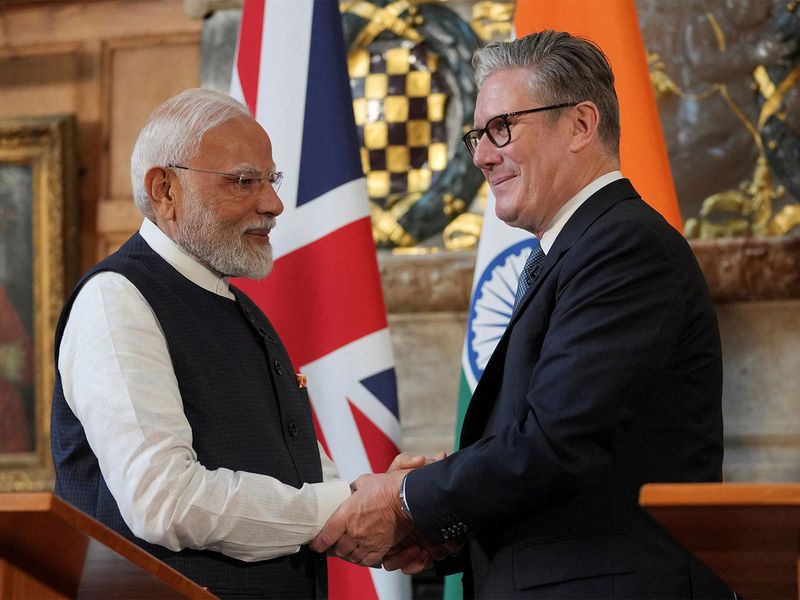
New Delhi: The India-UK Comprehensive Economic and Trade Agreement (CETA) came into effect on Wednesday, marking a new phase in economic ties between the two countries. The agreement gives duty-free access to nearly all Indian exports entering the United Kingdom while providing for phased reductions in Indian import duties on several British products.
Trade experts believe the pact will strengthen bilateral trade, attract fresh investments and create new opportunities across manufacturing and services. It is also expected to improve the competitiveness of Indian businesses in one of the world's largest consumer markets.
The biggest gains are expected on the export front. Around 99 per cent of Indian exports by value will now enjoy zero-duty access to the UK, making Indian products more competitive against goods from Europe, China and other markets.
Labour-intensive industries are likely to benefit the most, particularly textiles and garments, leather and footwear, gems and jewellery, marine products, engineering goods, auto components, processed food, chemicals, pharmaceuticals and agricultural products. Industry expects the removal of tariffs to improve profit margins, encourage higher production and generate employment across key manufacturing clusters.
The agreement also provides a significant boost to India's services sector. Indian IT companies, consulting firms, engineers, architects, accountants, healthcare professionals and education service providers are expected to gain from improved market access and greater regulatory certainty. The pact covers 137 service sub-sectors, making it one of India's most comprehensive agreements for services.
"As trade volumes increase, ensuring timely access to working capital will be equally important to help businesses scale confidently and compete effectively in the UK market," Sampat added.
A key feature of the agreement is the Double Contribution Convention (DCC), under which Indian professionals on temporary assignments in the UK of up to five years will be exempt from making social security contributions in both countries. The provision is expected to reduce costs for employees and employers while improving the competitiveness of Indian firms operating overseas.
For Indian consumers, the most noticeable impact is expected to be on imported British products, although the benefits will be gradual rather than immediate.
Products likely to become more affordable over time include Scotch whisky, gin, premium British cars, luxury motorcycles, cosmetics, chocolates, biscuits, medical devices and selected food items as import duties are reduced in phases.
Luxury automobiles are among the major beneficiaries of the agreement. Imported British cars, which currently attract duties of up to 110 per cent, will see tariffs reduced progressively for eligible vehicles imported within specified quotas. The government has also introduced safeguards, including annual import quotas and eligibility conditions, to protect domestic manufacturers and India's electric vehicle ecosystem.
Economists believe the long-term significance of the agreement extends well beyond lower prices for imported goods. Easier access to the UK market is expected to help Indian exporters diversify at a time of global trade uncertainty, while encouraging British investment in manufacturing, financial services, renewable energy, education and technology.
"We are continuing to see that the India-UK corridor is not just a trade relationship; it is a strategic partnership leveraging innovation, resilience, and shared ambitions. With nearly all Indian mid-market firms planning UK expansion and UK businesses eyeing India for growth, this collaboration is set to thrive in the coming years across technology, clean energy, and advanced manufacturing," said Anuj Chande OBE, Grant Thornton Partner and Head of South Asia Business Group.
Industry body ASSOCHAM estimates that bilateral trade between India and the UK could nearly double to around $120 billion by 2030, supported by stronger merchandise exports, higher services trade and increased investment flows.
"The agreement is expected to significantly benefit Indian sectors such as textiles, leather, marine products, gems and jewellery, engineering goods, and chemicals. Likewise, the UK is set to gain across key sectors, including automotive, beverages and spirits, life sciences, and healthcare," said Nirmal K Minda, President, ASSOCHAM.
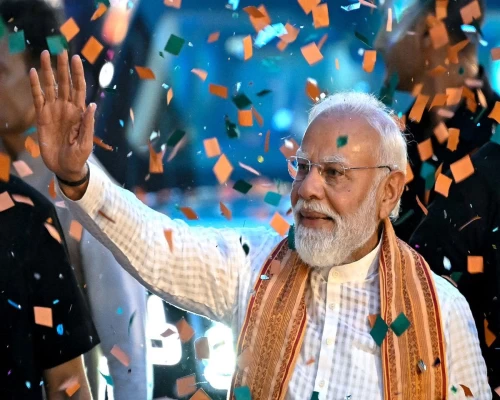
Prime Minister Narendra Modi has described the agreement as a "historic milestone", saying it will create opportunities for farmers, workers, MSMEs, startups and innovators while contributing to the goal of Viksit Bharat 2047.
While consumers are expected to see the prices of premium British products decline gradually over the coming years, trade experts say the larger impact of the agreement will come from stronger exports, increased manufacturing activity, higher investment and job creation. The pact is expected to deepen India's integration with advanced global markets while giving Indian businesses wider access to one of the world's most valuable consumer economies.
BI Bureau