New Delhi: Walk into any Indian household and chances are you’ll find a Dabur product. A bottle of honey on the dining table, coconut oil in the bathroom cabinet, ghee in the kitchen or apple cider vinegar in a health-conscious family’s pantry. For years, consumers have reached for these products believing they were buying something “100% pure” and “100% natural”. But what if the very claims that helped reinforce that trust were not in line with the country’s food regulations?
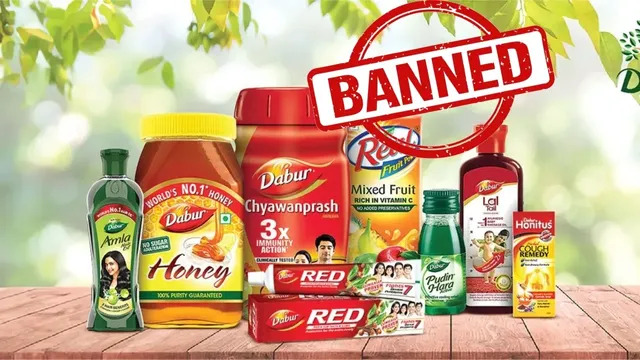
That question is now at the centre of one of the most significant regulatory actions against a leading FMCG company. The Food Safety and Standards Authority of India (FSSAI) has directed Dabur India Ltd. to immediately stop selling several food products carrying “100%” claims, holding that such expressions are ambiguous, cannot be objectively verified and are likely to mislead consumers. The regulator has also asked the company to submit an Action Taken Report within 15 days.
For years, Dabur made purity one of its strongest selling propositions. Phrases such as “100% Pure”, “100% Natural”, “100% Purity Guaranteed”, “100% Organic” and “100% Tender Coconut Water” were prominently displayed across a range of products. Those were not just marketing lines. They became assurances that influenced purchasing decisions, especially among families buying products for children, elderly parents and health-conscious consumers. FSSAI now says those assurances crossed the line laid down under the Food Safety and Standards (Advertising and Claims) Regulations, 2018.
The regulator’s order covers products including honey, apple cider vinegar, virgin coconut oil, sesame oil, cow ghee, coconut water and coconut milk. It further states that Dabur Himalayan Organic Apple Cider Vinegar and Dabur Organic Honey displayed the Jaivik Bharat logo without valid FSSAI organic endorsement. Dabur Hommade Coconut Milk was also found carrying a “100% Purity” claim that is not permitted for compound foods. More importantly, this was not the first time the regulator raised concerns. According to the order, Dabur had already been directed to discontinue these claims, but the corrective action was found to be unsatisfactory, prompting FSSAI to issue the prohibition order.
At one level, this may appear to be a dispute over words printed on a label. In reality, it is about consumer trust. Most people do not have the expertise or resources to independently verify whether a packaged food product is “100% pure” or “100% natural”. They rely on what is written on the pack. When those claims come from a legacy brand that has spent decades cultivating an image of purity and Ayurveda, consumers are even less likely to question them. That is precisely why food regulations insist that such claims must be truthful, scientifically substantiated and capable of objective verification.
The significance of this action extends well beyond Dabur. It reflects FSSAI’s increasingly assertive approach towards food safety, labelling and consumer protection. Over the past few years, the regulator has intensified action against misleading advertisements and unsubstantiated health claims. It has repeatedly warned food businesses against wrapping or serving food in newspapers because chemicals in printing ink can contaminate food. It has stepped up scrutiny of organic certifications, front-of-pack claims and marketing language that could mislead consumers into believing a product is healthier or more authentic than regulations permit. More recently, FSSAI has also acted against several food companies over questionable claims relating to “healthy”, “organic” and “natural” products, signalling that no brand is beyond regulatory scrutiny.
For the FMCG industry, the message is difficult to ignore. Words such as “pure”, “natural”, “organic” and “healthy” have long been among the most powerful tools in food marketing. They help brands build trust, differentiate products and command premium prices. FSSAI’s latest action suggests that these words will now be examined as regulatory claims rather than advertising slogans. Companies will increasingly be expected to demonstrate not only that their products meet safety standards, but also that every promise printed on the label can withstand legal and scientific scrutiny.
For Dabur, the immediate task may be replacing labels and complying with the regulator’s directions. The larger challenge, however, is restoring confidence in the promise that has defined the brand for generations. A company that built its identity around purity now finds that very promise under the scanner. FSSAI’s action sends a clear message to the entire food industry that consumer trust cannot be built on absolute claims unless those claims can be proven. In an era of stricter regulation and greater consumer awareness, reputation alone is no longer enough. Compliance has become just as important as credibility.
BI Bureau