New Delhi: In 1862, a 21-year-old Satyendranath Tagore boarded a ship in Calcutta to sit for an examination that his own country did not allow him to take at home. The papers were set in London and included subjects such as Greek and Latin, neither of which was central to the work of a district officer in Bengal or Punjab. Tagore cleared the examination in 1863 and joined the service in 1864, becoming the first Indian in what the British called the "heaven-born service".
The door remained narrow for those who followed him. The maximum age for the examination was gradually reduced from 23 to 19, leaving Indian candidates little time to prepare for an examination conducted in London and in English. By 1919, only 78 of the 1,255 officers in the Indian Civil Service were Indian, about six per cent.
The Government of India Act, 1919, provided for the creation of a Public Service Commission. It came into being on October 1, 1926, and began functioning from Metcalfe House in Delhi. It was not an independent institution. Its chairman and members were appointed by the Secretary of State in London, and its role was largely advisory. Leaders of the freedom movement criticised these limitations. Yet its establishment marked an important change: for the first time, India had a permanent recruiting body for the civil services based in the country.
Independence brought the larger institutional change. While moving the draft articles on Public Service Commissions in the Constituent Assembly on August 22, 1949, B R Ambedkar helped lay the constitutional foundation for the institution through Articles 315 to 323. Dr Rajendra Prasad stressed the need to protect the independence of the commissions against jobbery, nepotism and favouritism. The constitutional framework established the safeguards that would shape public recruitment in independent India. The institution would eventually become the Union Public Service Commission (UPSC).
The examination itself has continued to evolve. In 1979, the Civil Services Examination took the broad structure of Preliminary, Main and Interview that candidates recognise today. An essay paper was introduced in 1993 and online applications began in 2000. The Civil Services Aptitude Test, or CSAT, was introduced in 2011 and made a qualifying paper in 2015. Each reform reflected a continuing debate over what a public servant should be expected to know and what the examination should attempt to assess.
The scale of the competition has changed beyond recognition. Applications for the Commission's examinations and recruitments rose from 42,727 in 1950-51 to 4,510,044 in 2022-23. The profile of successful candidates has also widened. In 1952, only three women were among those recommended through the Civil Services Examination. In 2025, women accounted for 299 of the 958 candidates recommended, with 11 women among the top 25 ranks.
Technology has transformed the process as well. The candidate who once had to make a sea voyage to London now encounters a recruitment system that uses digital applications and biometric and facial-recognition technologies. At this year's Civil Services Preliminary Examination on May 24, AI-based facial recognition was used for about 5.5 lakh candidates.
But greater scale and access have also brought greater scrutiny. A group of 63 candidates has approached the Central Administrative Tribunal over 27 questions from this year's Preliminary Examination, alleging that some had incorrect answers or more than one correct option. These remain allegations, not findings, and the tribunal is scheduled to hear the matters on October 8.
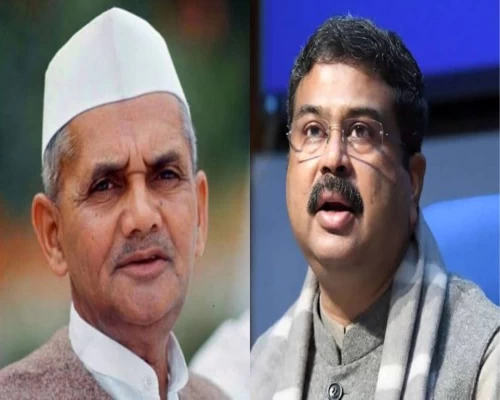
It was against this long history that Prime Minister Narendra Modi spoke at Bharat Mandapam as the UPSC marked its centenary. He described the hundred years as a "proud milestone" and spoke of the Commission's role in administration and public service. But the larger focus of his address was on the young Indians who appear for the examination every year and the public trust placed in those who eventually enter the civil services.
Modi framed that responsibility around two principles, "Nation First" and "Citizen First", and invoked the phrase "नागरिक देवो भव". The citizen, he said, should be at the centre of public service, with a working culture that is pro-people and proactive.
The more consequential point concerned the purpose of the examination itself. India, Modi said, needs young people who are drawn to public service rather than public office. A recruitment examination, he argued, should therefore assess more than what a candidate knows. It should also seek to understand why that candidate wants to join the civil services.
That question would have been almost inconceivable to the examiners of 1855, when Greek and Latin were among the subjects used to select officials for Britain's Indian administration. The examination was designed to measure knowledge and academic ability, not a candidate's conception of public service.
Today, the institutional context is fundamentally different, but the question remains relevant. Knowledge can be tested through papers, interviews and increasingly sophisticated assessment systems. Motivation is harder to measure, but it is also central to understanding what draws young Indians towards a career in public service.
The history of the civil services examination is also a history of what India has expected from its public servants. It began as an examination conducted in a distant imperial capital, evolved into a recruitment system based in India, acquired constitutional protection after Independence and has repeatedly changed its methods as the country changed.
A century after the Public Service Commission first began its work, the UPSC has become one of the country's most closely followed institutions for entry into public service. Its evolution reflects the changing aspirations of India and of the young people who seek to serve it. The question of why they choose public service may not have a single answer, but it remains an important part of what the institution represents: selecting capable administrators for a country whose needs and aspirations continue to evolve.
BI Bureau