New Delhi: On August 15, 2026, India enters another Independence Day with a significantly larger economic, technological and institutional footprint than at any point in its history. It is today the world’s fifth-largest economy, a major digital power and one of the fastest-growing major economies, while its public systems increasingly operate at a scale few countries can match.
Since 2000, India’s economy has nearly quadrupled in real terms and per capita income has almost tripled. Extreme poverty has declined from an estimated 16.2% in 2011-12 to 2.3% in 2022-23, according to the World Bank. Real GDP grew by 7.7% in 2025-26, while UPI processed more than 23.2 billion transactions worth nearly ₹29.9 lakh crore in May 2026 alone.
With this progress has come a different set of expectations from governance. The conversation is moving from access to quality, from infrastructure creation to effective delivery, and from economic growth to the wider question of opportunity, security and dignity.
For its Independence Day special, Bureaucrats India asked serving and experienced civil servants and police officers: What should be India’s biggest governance priority before 2047?
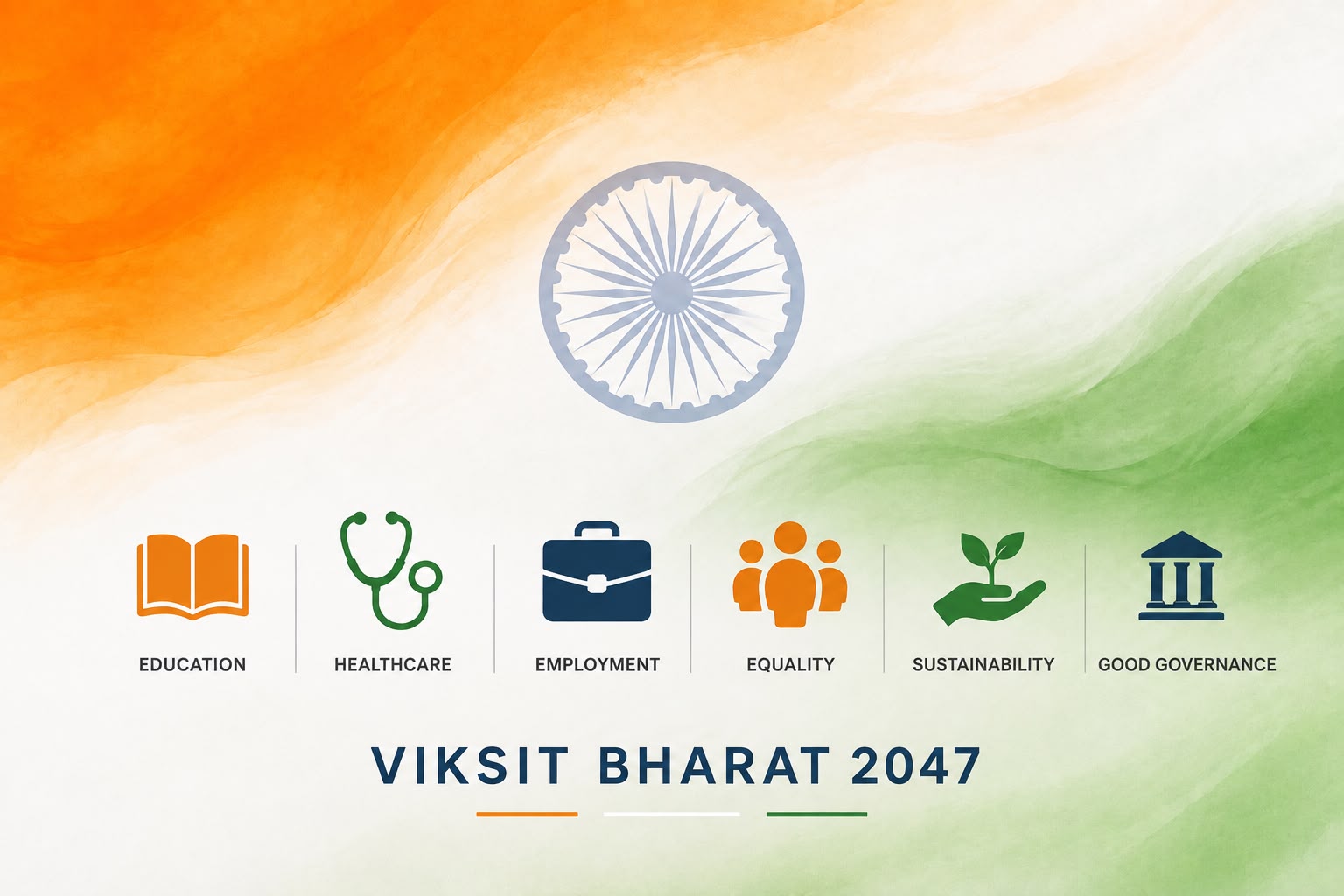
Their responses cover education, healthcare, employability, institutional capacity, technology, equal opportunity and environmental sustainability. Taken together, they point less towards another list of priorities and more towards the quality of governance needed to carry India’s progress forward.
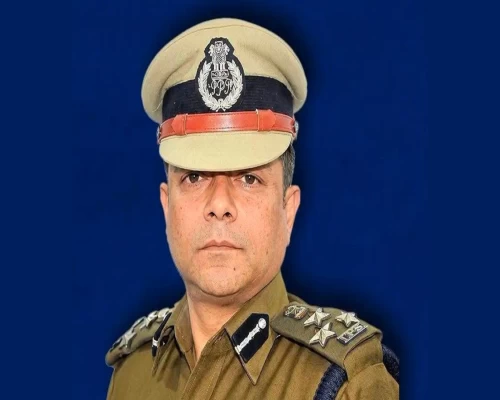
For Praveen Kumar Sinha, IPS, a 1994-batch officer of the Indian Police Service, currently serving as Special Director General of Police (Intelligence), Punjab, the focus is on strengthening fairness, opportunity and confidence in public institutions.
He emphasises the “importance of addressing inequality, ensuring fairness in public systems and maintaining young citizens’ confidence in governance and the rule of law. As economic opportunity expands, the ability to participate in that growth becomes increasingly important to how citizens experience progress.”
Education and healthcare emerge as closely connected priorities in the views of several officers.
Rekha Yadav, a 1994-batch officer of the Indian Railway Personnel Service, currently serving as Principal Executive Director (Industrial Relations), Railway Board, Ministry of Railways, Government of India, puts the emphasis on affordable and “employable education and affordable healthcare.” She also highlights the importance of safe food and water.
The focus on employability is significant. With a large and young workforce, education has to connect more closely with skills, livelihoods and the changing requirements of the economy. Healthcare, meanwhile, has to remain accessible to people across income levels and outside the formal economy.
There has been measurable progress on the health front. Government health expenditure rose from 29% of total health expenditure in 2014-15 to 48% in 2021-22, while the share of out-of-pocket spending by households fell from 62.6% to 39.4% over the same period.
Anita Shah Akella, a 1996-batch officer of the Indian Audit and Accounts Service, currently serving as Joint Secretary, Ministry of Corporate Affairs, Government of India, also identifies education and affordable healthcare as the most important priorities.
“The convergence is telling. Education and health are no longer only social-sector concerns. They are central to productivity, social mobility and the quality of human capital that will support India’s next phase of growth,” she says.
Rahul Srivastava, an officer of the Indian Police Service, currently serving as Public Relations Officer and Social Media Head of Uttar Pradesh Police, brings “education, employability, affordable healthcare and public infrastructure” into the same frame. He places particular emphasis on “vocational and practical skills and on effective delivery.”
That emphasis on delivery reflects one of the most significant shifts in Indian governance. Aadhaar, direct benefit transfers, UPI and other elements of digital public infrastructure have demonstrated the ability of public systems to reach citizens at extraordinary scale. The next opportunity is to carry the same focus on accessibility and efficiency into the everyday services people depend upon.
Sonal Goel, IAS, a 2008-batch officer of the Indian Administrative Service, currently serving as Secretary, Government of Tripura, links “education and employability with accessible healthcare and technology-enabled governance.”
She stresses stronger skills and vocational learning, healthcare that reaches underserved areas, and the use of AI and technology to make governance “smarter and more humane”. For her, technological capability has to be accompanied by empathy, accountability and sound human judgement.
That balance will matter as digital systems become more deeply embedded in public administration. Technology can make governance faster and more responsive, but its real value lies in whether it improves the citizen’s experience of the State.
For Asmita Lal, IAS, a 2015-batch officer of the Indian Administrative Service, currently serving as District Magistrate, Baghpat in Uttar Pradesh, the larger priority is “institutional capacity.”
She argues for institutions that are “capable, accountable and deeply citizen-centric”, with greater responsiveness, transparency and focus on outcomes. “Strong local institutions and empowered frontline functionaries, are essential to making public services simpler, faster and more dignified,” says the officer.
This is where several of the responses converge. Economic growth, infrastructure and technology create capacity. Strong institutions determine how effectively that capacity is converted into public value.
Satwik Vyas, a 2018-batch officer of the Indian Forest Service, currently serving as Divisional Forest Officer, Dumka, Jharkhand, adds “sustainability and dignity” to the discussion. His priorities include “equal opportunity, financial security and respect for every form of work, alongside protecting wildlife and nature.”
As India expands its cities, infrastructure and industries, questions around water, forests, energy and climate resilience will increasingly become questions of governance and economic security as well.
Prime Minister Narendra Modi’s Viksit Bharat vision places growth, infrastructure, technology, youth and quality of life at the centre of the country’s development trajectory. The progress already achieved provides a strong base for that ambition. The perspectives of these public servants point towards the next layer of it: better human capital, stronger institutions, accessible public services, wider opportunity and sustainable growth.
India’s governance challenge is not about choosing one priority over another. It is about making these priorities work together, so that economic and technological progress translates into opportunity and a better quality of life.
For a country that has come this far since Independence, the measure of the next phase may be how consistently that progress is felt in the everyday lives of its citizens.