New Delhi: When the first passenger train left Bombay for Thane on April 16, 1853, few could have imagined how the engine pulling those wooden coaches would shape India’s future. Powered by coal-fired steam, the journey covered just 34 kilometres, but it marked the beginning of what would become one of the world’s largest railway networks.
More than 173 years later, Indian Railways has entered another phase of that journey.
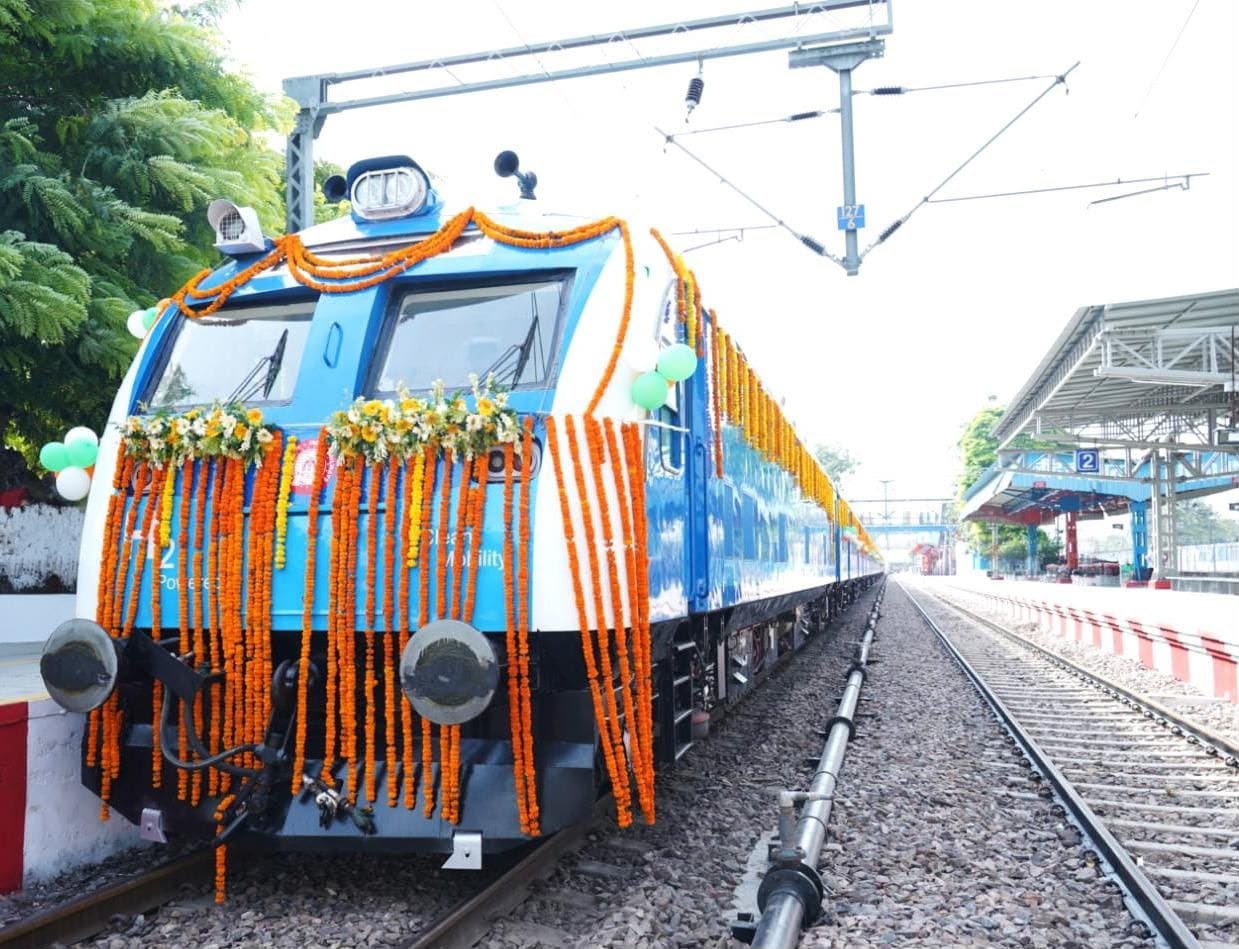
Prime Minister Narendra Modi on Friday flagged off India’s first hydrogen-powered train from Jind in Haryana. Running on the 89-km Jind-Sonipat route, the 10-coach train is being described by the government as the world’s longest hydrogen-powered passenger train. While the inauguration is a milestone in itself, it also reflects how railway technology has evolved, from steam to diesel, from diesel to electricity, and now towards hydrogen.
For nearly a century, steam locomotives powered Indian Railways. Coal was abundant, steam technology was proven and the expanding railway network became the backbone of trade, industry and passenger movement. But steam engines consumed enormous quantities of coal and water, required extensive maintenance and were relatively inefficient.
The search for better alternatives gathered pace after Independence. Diesel locomotives began replacing steam engines in the 1950s, offering greater reliability, longer operating ranges and lower maintenance costs. The transition was gradual. It took decades before the last scheduled steam locomotive was retired in the mid-1990s, bringing to an end almost 140 years of the steam era.
Even before steam disappeared, another transition had quietly begun. India’s first electric train ran between Bombay VT and Kurla in 1925. Yet electrification remained limited for decades because of the enormous investment required in transmission infrastructure and overhead lines. As a result, diesel continued to dominate large parts of the network well into the twenty-first century.
The pace changed significantly over the past decade. Today, more than 99 per cent of India’s broad-gauge railway network has been electrified, making it one of the world’s largest electrified railway systems. Electrification has reduced dependence on imported diesel, lowered operating costs and improved energy efficiency.
Hydrogen-powered trains represent the next technological experiment.
Unlike electric trains that draw power from overhead wires, hydrogen trains generate electricity on board using fuel cells. Hydrogen reacts with oxygen inside the fuel cell to produce electricity, with water vapour and heat as the only direct by-products at the point of use. That makes them an attractive option for railway lines where installing overhead electrification is technically difficult or economically unviable.
Globally, hydrogen-powered rail transport is still at an early stage. Germany became the first country to introduce commercially operated hydrogen passenger trains in 2022, replacing diesel services on selected regional routes. France, Italy, Austria and China have also been testing hydrogen-powered trains as countries explore alternatives for sections that remain unelectrified.
Most hydrogen passenger trains currently in operation worldwide have three or four coaches. India’s 10-coach train is therefore unusual, not merely because of its length but because it demonstrates an attempt to adapt hydrogen technology for higher passenger capacity.
Hydrogen, however, is unlikely to replace electrification across the railway network. Railway experts see it as a complementary technology rather than a substitute. Electric traction remains the most efficient option for busy, high-density corridors. Hydrogen is expected to find its place on routes where passenger volumes are lower and electrification may not be commercially viable.
After flagging off the train, Modi described it as “a successful example of Make in India”, saying it had been designed by Indian engineers and manufactured by an Indian company. He also noted that while many countries currently operate three- or four-coach hydrogen trains, India had introduced a 10-coach version.
Whether hydrogen becomes a mainstream railway technology will depend on factors ranging from the cost of producing green hydrogen to the creation of refuelling infrastructure and long-term operating economics. But if steam defined the nineteenth century, diesel the twentieth and electrification the early twenty-first, hydrogen has now entered the conversation about what the future of rail transport could look like.
BI Bureau