New Delhi: Democracies are often judged by how they protect the right to protest. They should also be judged by how they treat those entrusted with protecting that right.
That dilemma played out once again during Delhi's recent student protest over alleged irregularities in competitive examinations. As thousands of aspirants gathered at Jantar Mantar and clashes erupted during the planned "Sansad Chalo" march, the national conversation understandably centred on students' demands, the integrity of public examinations, allegations of police excesses and government accountability. But behind every barricade stood police personnel carrying out a duty in a conflict they neither created nor controlled.
More than 33,000 police personnel had laid down their lives in the line of duty since Independence. That was the reminder Prime Minister Narendra Modi gave the country's top police leadership while addressing the All India Conference of Directors General and Inspectors General of Police in Guwahati in November 2014. Calling them "martyred police personnel", he urged states to preserve their stories so that their sacrifices would not fade from the nation's memory.
More than a decade later, that reminder echoes once again as India witnesses fresh protests over alleged irregularities in competitive examinations. The country is debating the future of students, the accountability of governments and the conduct of the police. Those are important questions. But there is another aspect of such protests that rarely receives the same attention, the experience of the police personnel deployed to maintain law and order.
The constable deployed outside Parliament, a university campus or a government office has little connection with the issue that has brought people onto the streets. He does not conduct examinations, prepare question papers or decide government policy. His duty begins only when a protest requires policing. Whether it is controlling crowds, regulating traffic, protecting public property or preventing clashes, he is the officer expected to maintain law and order, regardless of the issue being protested.
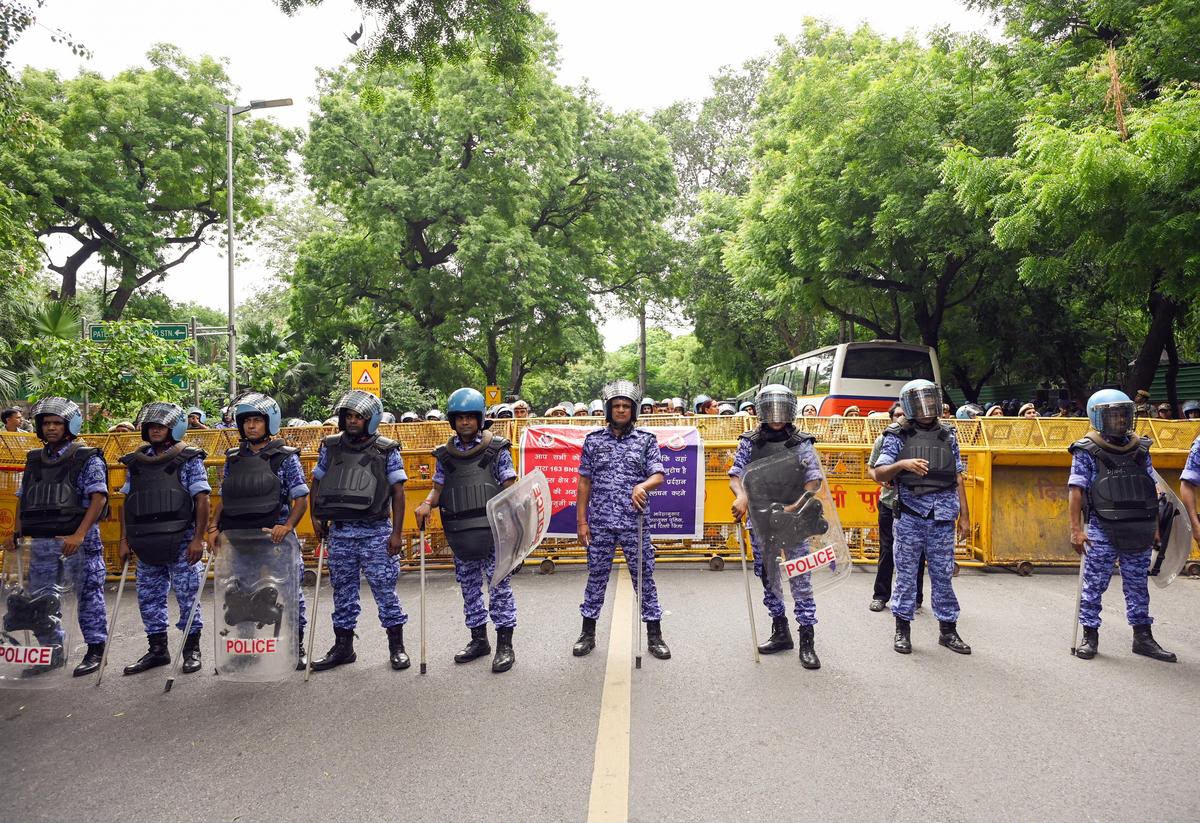
That reality was visible once again during the recent "Sansad Chalo" protest in Delhi over alleged examination irregularities. As demonstrators attempted to march towards Parliament, clashes broke out with security personnel. According to Delhi Police, 130 police personnel and 65 protesters were injured. Protesters accused the police of using excessive force, while the police maintained that their personnel had come under attack while enforcing security arrangements. Predictably, the national conversation centred on the conduct of the police and the rights of the protesters. Far less attention was paid to the injuries suffered by the officers deployed to manage the situation.
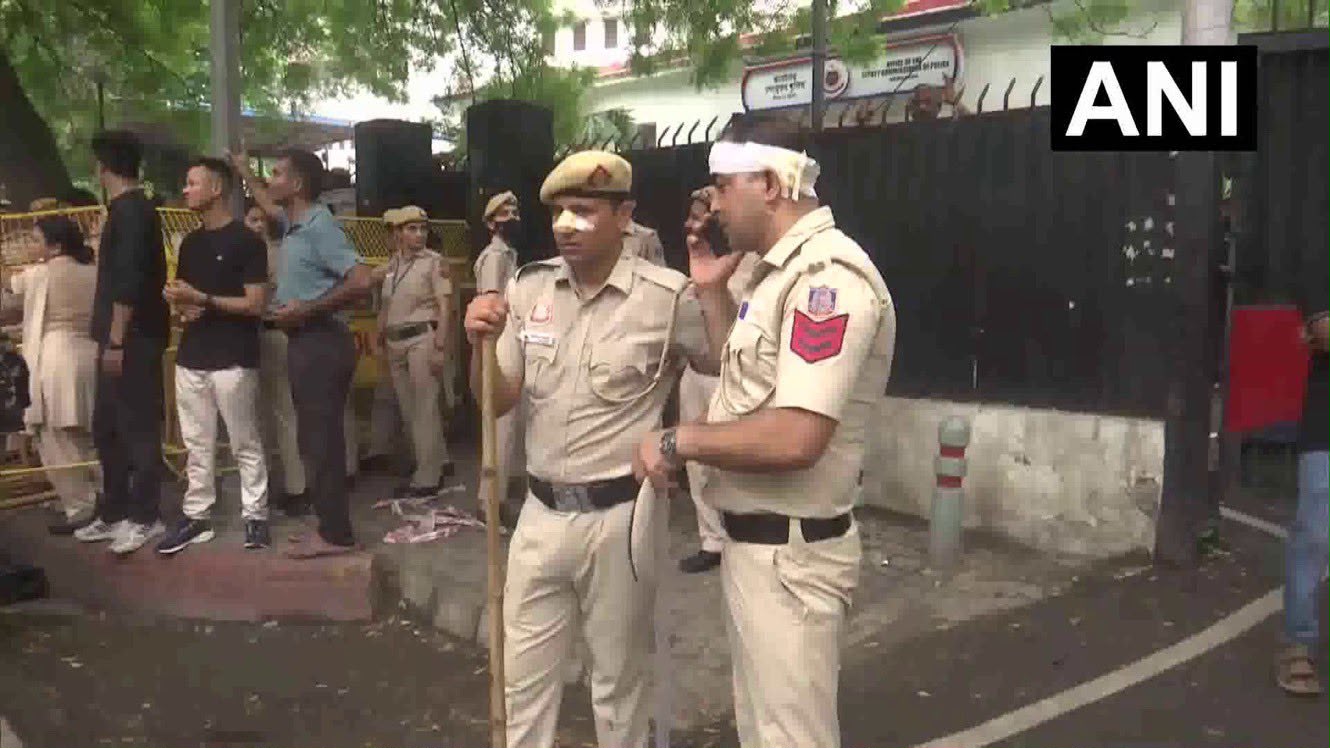
The statistics also tell only part of the story. Among those injured was an Assistant Commissioner of Police whose son, Lakshya, later wrote, "He isn't just a police officer, he's my father too. While briefing his team during duty, stones were thrown at him, leaving him with a serious head injury." Behind every injured officer is a family waiting for them to return home safely, a reality that rarely becomes part of the larger public conversation.
This is not the first time police personnel have found themselves at the receiving end of public anger.
On 26 January 2021, the farmers' tractor rally in Delhi descended into violence after sections of protesters deviated from agreed routes and entered central Delhi. According to Delhi Police, 394 police personnel were injured as barricades were broken, vehicles damaged and officers were attacked while attempting to restore order. Images from the Red Fort dominated headlines for days, but the injuries suffered by hundreds of police personnel received comparatively little attention once the immediate crisis had passed.
The country witnessed a similar reality during the protests that followed the 2012 Delhi gang rape. The demonstrations reflected genuine public grief and anger and eventually led to important legal reforms. However, some protests near India Gate and Raisina Hill also turned violent. Delhi Police Constable Subhash Tomar, who had been deployed on crowd-control duty, later died following the clashes, highlighting the risks faced by officers even during movements driven by legitimate public outrage.
The pattern has repeated itself in other situations as well. During the wrestlers' protest in Delhi in 2023, police personnel and protesters clashed as demonstrators attempted to march towards Parliament. Later that year, during the violence in Nuh, Haryana, a Home Guard lost his life while several police personnel were injured while responding to widespread unrest. The causes of these protests were different, but the risks faced by police personnel remained strikingly similar.
Whether the issue is examinations, agriculture, women's safety or sports governance, the personnel deployed on the streets are rarely participants in the dispute. Yet they become the first representatives of the State that an agitated crowd confronts. They are expected to absorb public anger, prevent violence, protect democratic space and restore order, often all at the same time.
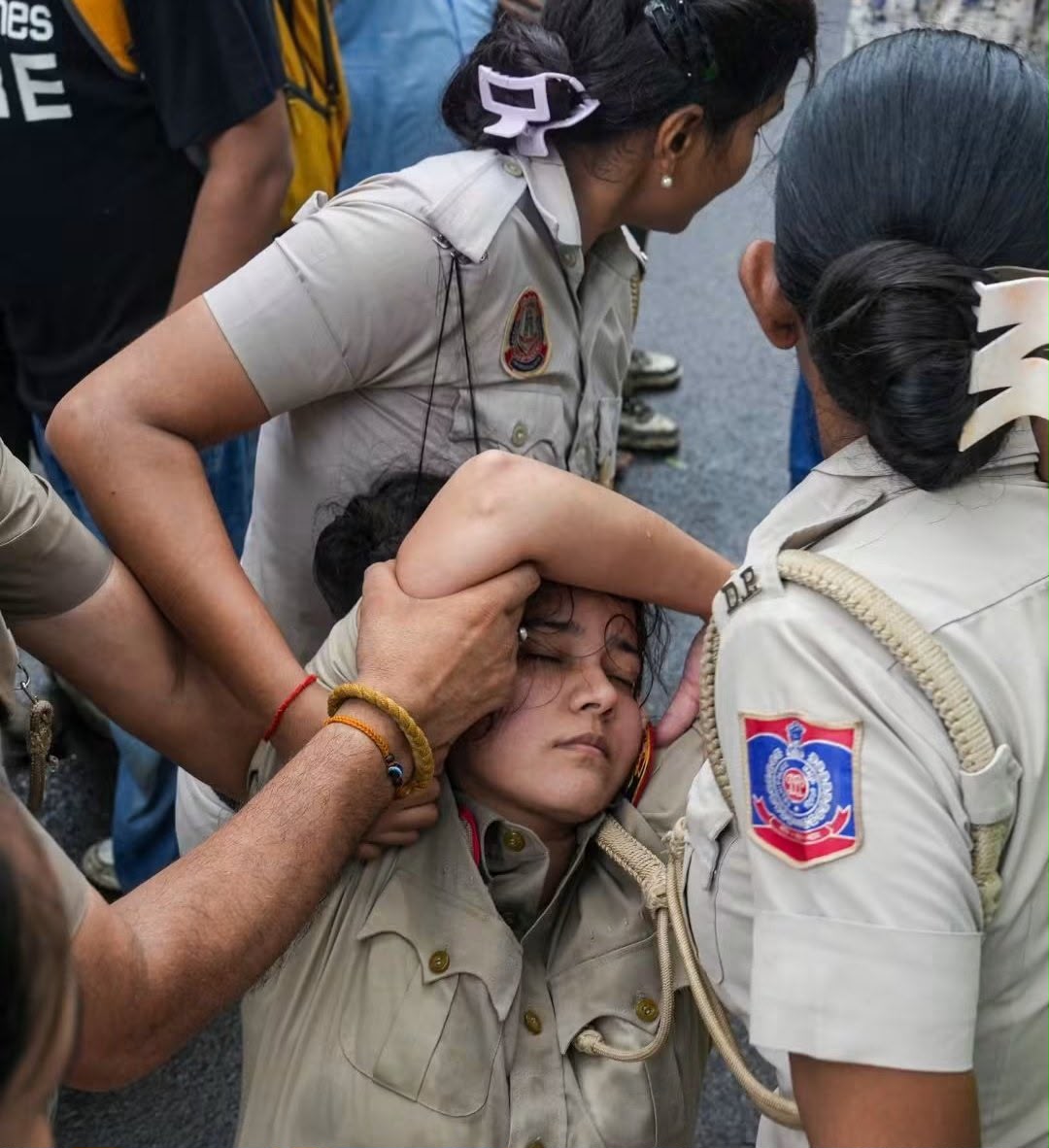
The challenge becomes even greater because Indian policing continues to operate under considerable strain. According to the Bureau of Police Research and Development, several lakh sanctioned posts in the state police forces remain vacant across the country, leaving an already stretched force to investigate crime, combat terrorism, provide election security, manage festivals, protect VIPs and maintain law and order during public demonstrations. The scale of that responsibility is reflected at the National Police Memorial in New Delhi, which commemorates over 35,000 police personnel who have laid down their lives in the line of duty since Independence, a roll of honour that continues to grow each year.
The Constitution guarantees every citizen the right to peaceful protest, and rightly so. The Supreme Court has repeatedly affirmed that peaceful dissent is an essential part of democracy. At the same time, it has consistently held that violence, attacks on public servants and destruction of public property cannot be justified in the name of democratic protest. A healthy democracy therefore demands accountability from governments, restraint from the police and responsibility from those exercising their constitutional rights.
For the police personnel deployed on the ground, maintaining that balance is rarely straightforward. Every major protest requires them to protect the right to peaceful assembly while preventing violence, safeguarding public property and ensuring that ordinary citizens are not caught in the middle. Their actions are scrutinised by the public, the media and the courts, often within minutes of an incident.
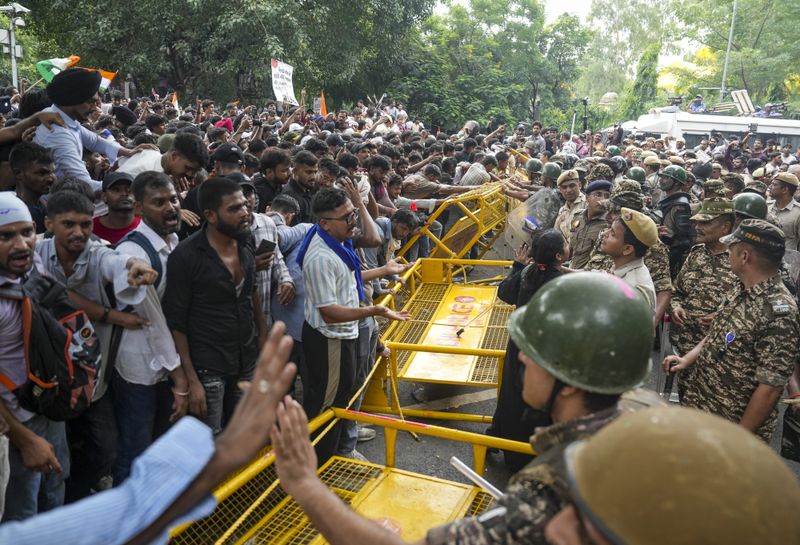
That burden is not always visible. Others who witnessed the recent violence recalled that, even amid the chaos, police personnel continued helping students and members of the public move to safety. Several accounts described officers holding their positions despite injuries, while others spoke of personnel forming a protective barrier to prevent the situation from spiralling further. Some also alleged that anti-social elements had mixed with the crowd, making an already difficult law-and-order situation even more challenging. Such accounts do not settle the debate over police conduct, nor should they. They do, however, illustrate the complexity of situations that are often reduced to a few seconds of viral video.
The recent examination protests deserve careful investigation. Students deserve transparency and justice if wrongdoing has occurred. Governments must answer difficult questions. Police action, wherever challenged, must also remain open to scrutiny. At the same time, any complete assessment of such protests should also acknowledge the risks and responsibilities carried by the personnel deployed on the ground.
Prime Minister Modi's remarks in Guwahati more than a decade ago were a reminder that the sacrifices made by police personnel often receive far less public attention than those made by other uniformed services. The recent protests have once again highlighted the difficult position in which police personnel often find themselves, expected to facilitate peaceful demonstrations while also preventing violence and maintaining public order.
Every major protest generates debate about the issues being raised and the response of the government. It should also leave room for a conversation about the challenges faced by the police personnel deployed on the ground. Their experience may not always dominate the headlines, but it remains an important part of understanding how public protests unfold in India's democracy.
_270_x_189.webp)