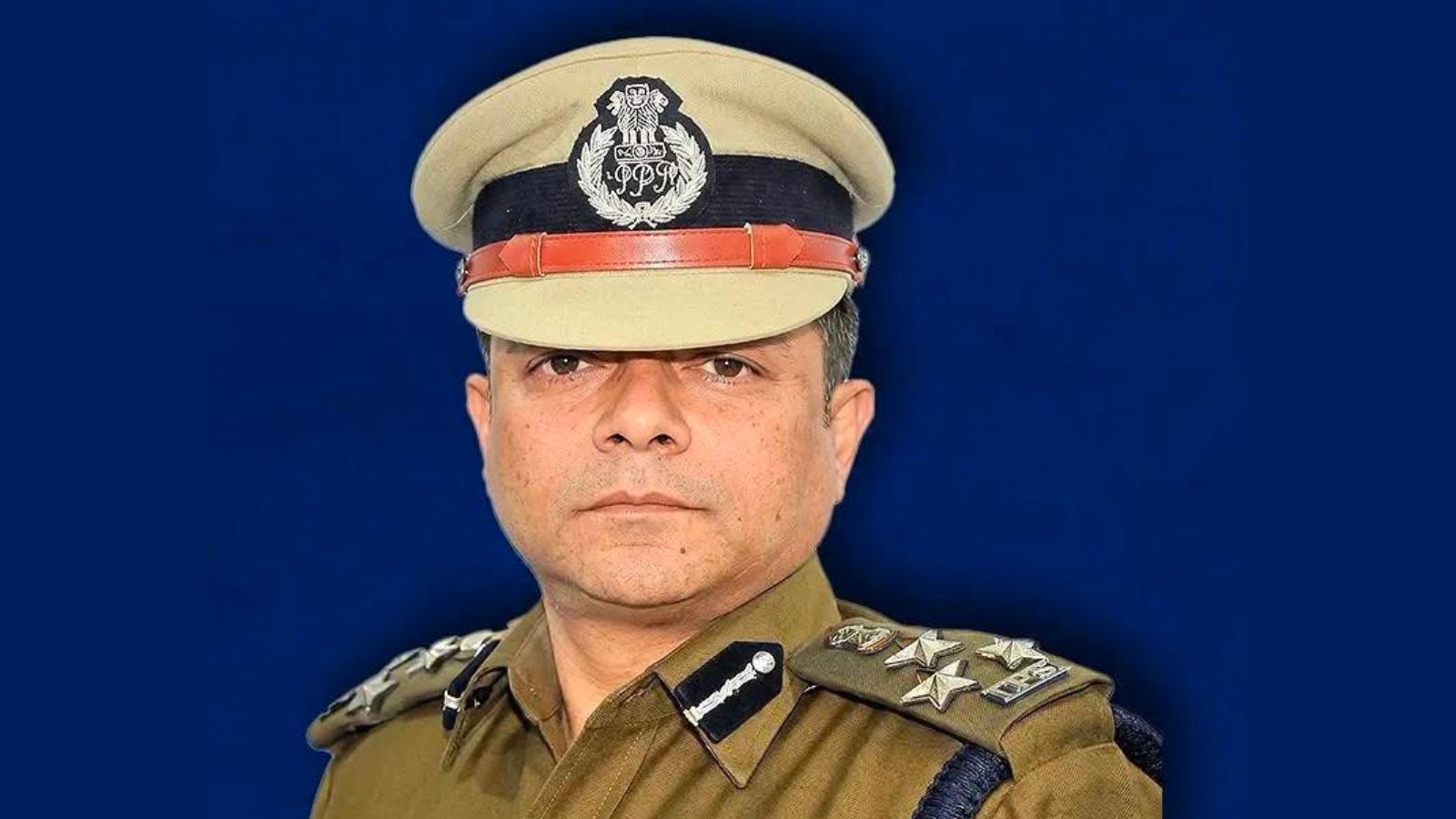
New Delhi: The appointment of 1994-batch AGMUT cadre IPS officer Anurag Kumar as Delhi Police Commissioner, replacing IPS Satish Golcha, has once again revived the debate around fixed tenures for senior police officers. Every time a police chief is moved before completing what is perceived to be a “full term”, questions are raised about stability, continuity and the spirit of the Supreme Court’s landmark Prakash Singh judgment, which recommended a minimum tenure for police leadership.
The principle is undoubtedly sound.
Stable tenures promote institutional continuity, enable long-term reforms and protect professional policing from avoidable disruptions. Continuity remains one of the hallmarks of good administration.
Yet governance, particularly in the domain of internal security, rarely operates in ideal conditions.
Governments are ultimately accountable for public safety and national security. They therefore need the flexibility to deploy the right officer with the right experience to the right assignment at the right time. Leadership decisions are often influenced not merely by tenure but by evolving operational priorities, intelligence assessments and emerging security challenges.
Indian policing offers several examples where administrative discretion has arguably strengthened institutions rather than weakened them.
When IPS officer Alok Verma was serving as Delhi Police Commissioner, he was appointed Director of the CBI before completing what could have been a longer tenure in Delhi Police. The move was not viewed as a disruption but as an elevation that leveraged his investigative experience to head the country’s premier investigative agency.
Similarly, Gujarat cadre 1984-batch IPS officer Rakesh Asthana was brought in as Delhi Police Commissioner in 2021 after serving in several high-profile investigative and border management assignments. His appointment, despite being close to retirement and accompanied by a service extension, reflected the government’s assessment that his experience suited the operational requirements of the national capital at that point in time.
More recently, the appointment of Andhra Pradesh cadre IPS officer Mahesh Dixit’s as Director of the Intelligence Bureau demonstrates the same principle. Having spent crucial years handling intelligence operations in Jammu & Kashmir, including during the period following the abrogation of Article 370, his elevation reflects the premium placed on domain expertise at a time when India’s internal security landscape continues to evolve.
Even at the state level, governments have periodically reshuffled police leadership in response to changing law-and-order priorities, elections, communal tensions, insurgency or administrative restructuring. While such decisions often invite debate, they also illustrate that policing cannot always function within rigid administrative timelines.
Delhi itself presents a unique case.
Unlike most metropolitan police forces, Delhi Police is responsible not only for policing a city of over 23 million people but also for securing Parliament, constitutional authorities, diplomatic missions, visiting heads of state and nationally significant events. The Commissioner works in close coordination with the Ministry of Home Affairs, the Intelligence Bureau, the National Security Council Secretariat and multiple central security agencies. Leadership in such an institution is therefore as much a strategic decision as an administrative one.
This is not to suggest that fixed tenures are unimportant. Arbitrary or frequent transfers can undermine morale, interrupt reforms and create uncertainty within organisations. The spirit of the Prakash Singh judgment continues to serve as an important safeguard against unnecessary political interference.
However, principles are designed to guide governance, not constrain it in extraordinary circumstances.
The real test lies not in whether governments exercise discretion, but how they exercise it. If leadership changes are based on institutional needs, operational imperatives and objective assessments rather than transient considerations, discretionary powers become an instrument of good governance rather than an exception to it.
Perhaps that is the balance Indian policing needs.
Stability should remain the norm. But flexibility should remain available when the demands of national security, public order and institutional effectiveness call for it. After all, effective governance is not measured merely by how long an officer occupies a chair, but by whether the officer occupying that chair is best equipped for the challenges of that moment.
BI Bureau