Chhattisgarh: For the first time, Rowghat in Chhattisgarh’s Bastar region is set to get railway connectivity, marking a significant infrastructure milestone for one of the country’s historically most remote and Left Wing Extremism-affected areas.
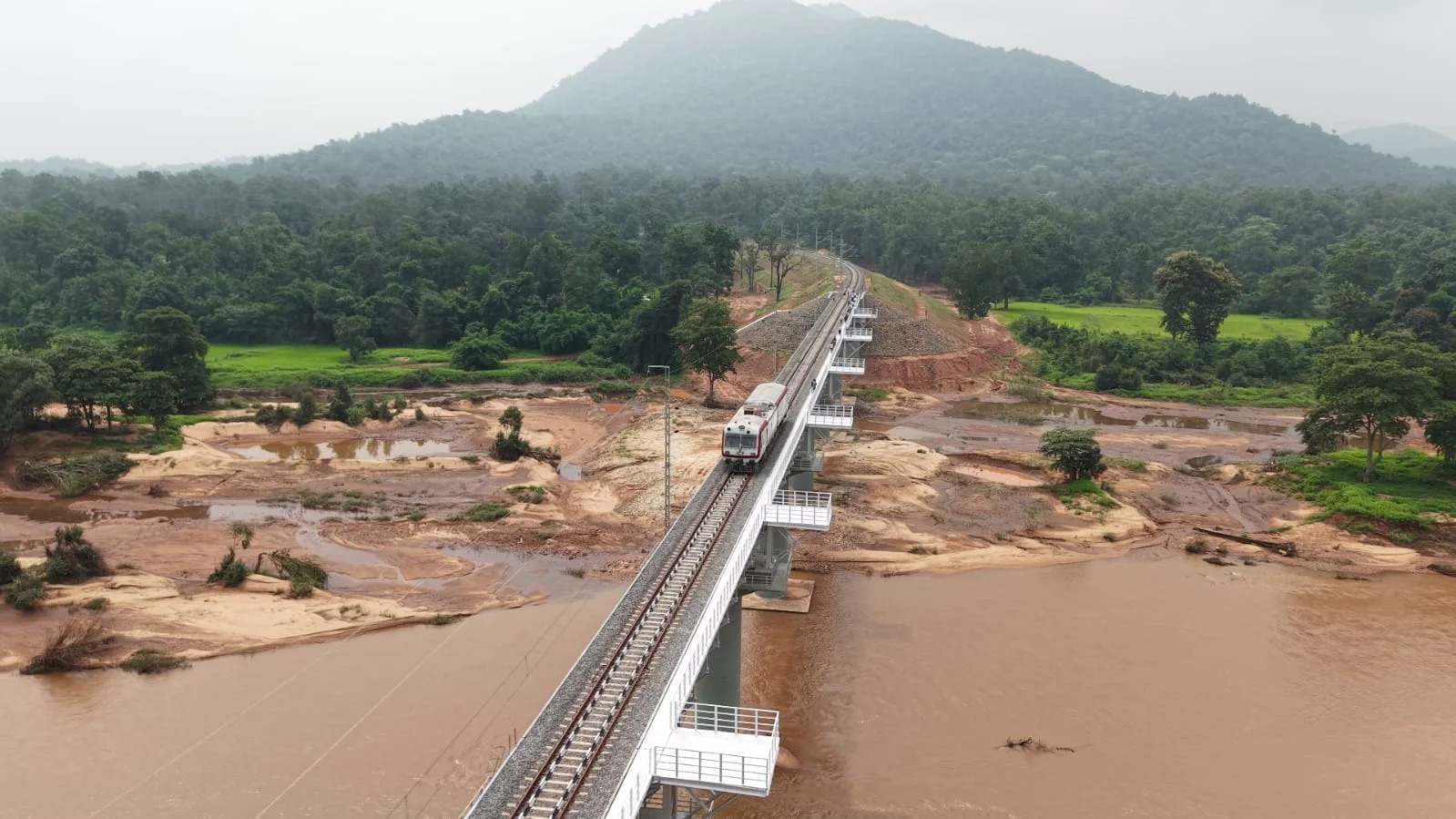
The final 17.5-km Taroki–Rowghat section of the 95-km Dallirajhara–Rowghat railway line has been completed. A Commissioner of Railway Safety inspection and speed trial was conducted on September 22, paving the way for train operations after the remaining statutory formalities are completed.
The development is significant not merely as a railway project, but as part of the gradual transformation of Bastar, where difficult terrain, dense forests and decades of Maoist violence had severely constrained infrastructure development.
The Dallirajhara–Rowghat line was conceived primarily to facilitate the transportation of iron ore from the Rowghat mines to the Bhilai Steel Plant. Dallirajhara, which traditionally supplied ore to Bhilai, has faced declining reserves, making Rowghat strategically important for the steel plant.
The larger project envisages a 235-km Dallirajhara–Rowghat–Jagdalpur corridor, with the 95-km Dallirajhara–Rowghat stretch forming its first phase.
Construction began in 2010-11, but progress was affected by challenging terrain, land and forest-related issues and security concerns. Passenger services were introduced on the Dallirajhara–Taroki section in 2022. With the completion of the final 17.5 km, the first phase has now reached Rowghat.
While freight movement and the steel industry's requirements remain central to the project, the railway is expected to have a wider developmental impact.
For communities along the route, rail connectivity can improve access to healthcare, education, employment and larger markets. It can also facilitate the movement of agricultural produce and reduce logistical barriers for local businesses.
Bastar's tourism potential could benefit as well. The region is known for its forests, waterfalls, tribal traditions and handicrafts, but connectivity has long been a constraint.
The railway also comes at a time when the security environment in Bastar has changed considerably.
Development follows improved security
Chhattisgarh has been at the centre of India's decades-long fight against Left Wing Extremism. Bastar, in particular, witnessed prolonged Maoist violence, which affected not only security but also the pace of roads, railways, telecom infrastructure and other development projects.
The government has increasingly pursued a strategy combining security operations with infrastructure and welfare interventions. Roads, mobile connectivity and government services have expanded across previously inaccessible areas.
The Rowghat railway is a visible example of this shift. infrastructure that was once difficult to build because of security challenges is now becoming a vehicle for deeper economic and social integration.
The immediate milestone is the arrival of the railway at Rowghat. The larger ambition, however, remains the proposed 140-km extension from Rowghat to Jagdalpur, which would connect the mineral-rich northern part of Bastar with its southern and central areas.
For Bastar, therefore, the railway represents more than a new transport link. It is another piece of the infrastructure network that could help move the region from isolation towards greater economic integration, mobility and opportunity.
BI Bureau