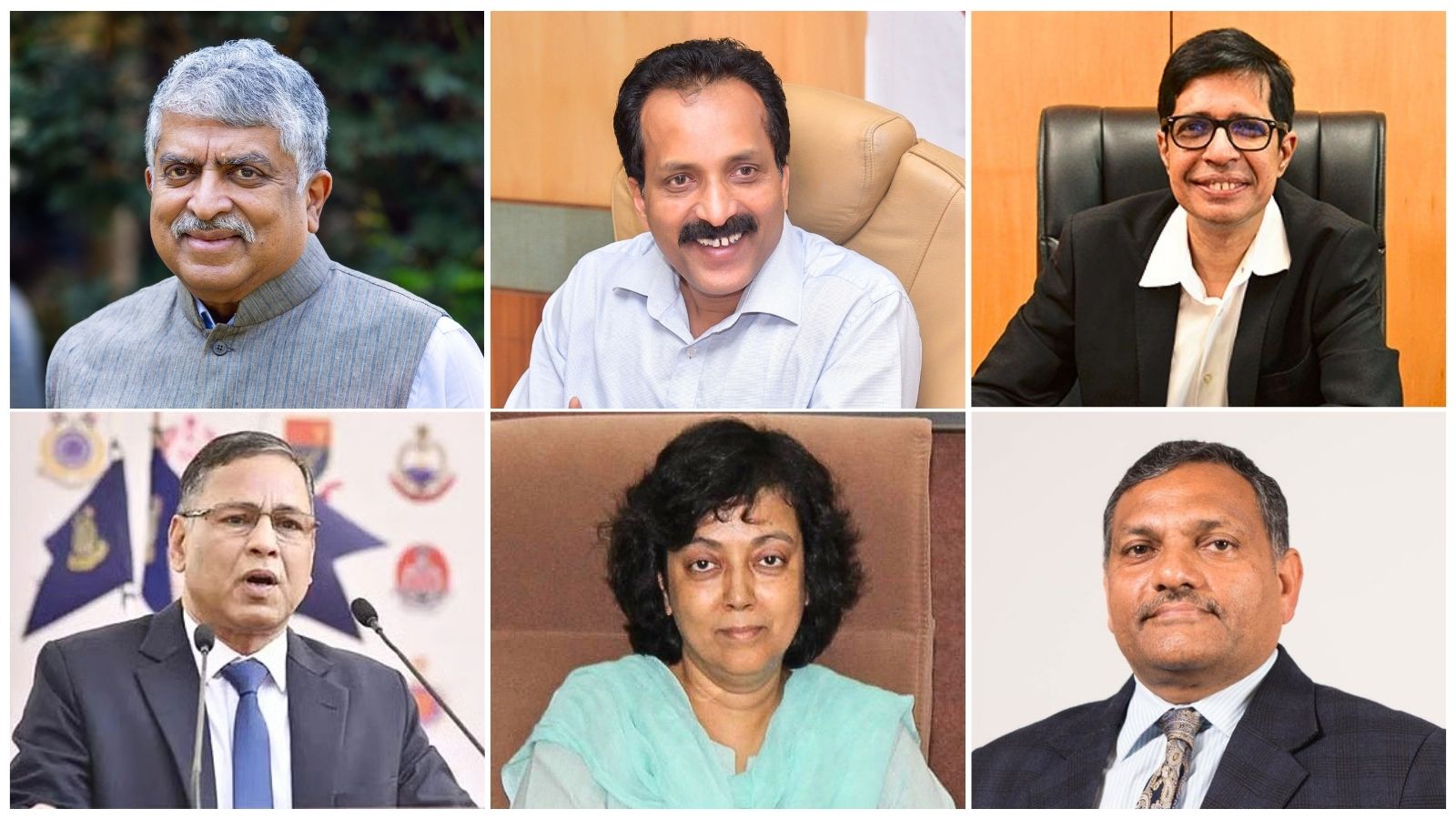
New Delhi: The conversation around examination reforms has gained fresh momentum following concerns over the conduct of several high-stakes tests, including NEET-UG, UGC-NET and other competitive examinations in recent months. With the focus shifting towards making India's examination system more secure, transparent and technology-driven, Prime Minister Narendra Modi has constituted a six-member high-powered task force to recommend the next generation of reforms.
What makes the committee noteworthy is not merely its mandate, but its composition. Rather than relying solely on education administrators, the government has brought together experts from technology, space science, intelligence, academia and public administration. The choice of members reflects an understanding that examination reforms today go beyond academics. They require robust digital infrastructure, stronger security, efficient logistics and institutional experience to work together.
Heading the panel is Nandan Nilekani, the Infosys co-founder who laid the foundation of India's digital public infrastructure through Aadhaar. As the founding Chairman of the Unique Identification Authority of India (UIDAI), he helped build one of the world's largest digital identity programmes and later contributed to several technology-led governance initiatives, including reforms that shaped large-scale public digital systems. His experience in designing secure, scalable platforms is expected to bring a technology-first perspective to examination reforms.
Joining him is Dr S. Somanath, former Chairman of the Indian Space Research Organisation (ISRO), under whose leadership India achieved the historic Chandrayaan-3 landing near the Moon's south pole. A distinguished aerospace engineer with decades of experience in complex mission planning and precision engineering, Somanath brings expertise in building systems where reliability, accuracy and execution are paramount.
The panel also includes Dr V. Kamakoti, Director of IIT Madras and one of India's leading computer scientists. Best known for leading the development of the indigenous 'Shakti' microprocessor, he has worked extensively in artificial intelligence, cybersecurity and computer architecture. His expertise is expected to contribute towards building resilient and secure digital examination systems capable of meeting future challenges.
Adding a security perspective is Tapan Deka, the former Director of the Intelligence Bureau. During his tenure, he played a key role in strengthening intelligence coordination across agencies and modernising intelligence-sharing mechanisms. His experience in risk assessment, security planning and tackling organised networks is expected to help strengthen safeguards around the examination ecosystem.
The education policy perspective comes from Anita Karwal, former Secretary, Department of School Education and Literacy, and former Chairperson of the Central Board of Secondary Education (CBSE). Closely associated with the implementation of the National Education Policy (NEP) 2020, Karwal has extensive experience in school education, examination administration and policy execution, making her one of the committee's most experienced voices on academic reforms.
Completing the task force is retired IAS officer Amrit Lal Meena, former Chief Secretary of Bihar. Having also served in senior positions in the Union government, including the Coal Ministry and the Department for Promotion of Industry and Internal Trade (DPIIT), Meena brings significant expertise in administration, infrastructure and logistics. These are critical elements in the conduct of nationwide examinations involving millions of candidates.
The composition of the task force signals a multidisciplinary approach to one of India's most important public systems. By bringing together leaders in digital governance, science, security, education and administration, the government has sought to combine diverse expertise to recommend reforms that can make examinations more efficient, transparent and future-ready. Whether through technology, stronger institutional mechanisms or improved operational processes, the committee's recommendations are expected to shape the next phase of examination reforms in the country.
BI Bureau