New Delhi: With Parliament passing the Public Examinations (Prevention of Unfair Means) Amendment Bill, 2026, India has taken its toughest legislative step yet against paper leaks and organised examination fraud. The move follows months of public debate, student protests and a wider push to strengthen trust in one of the world's largest examination systems.
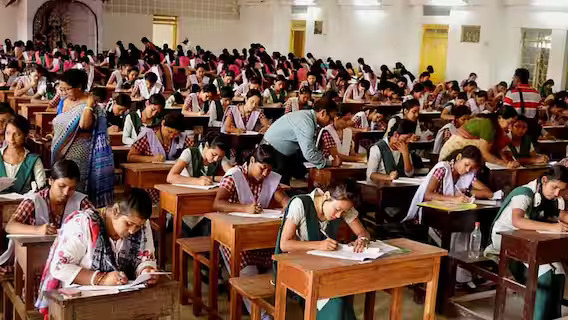
Every year, crores of Indians appear for public examinations that determine admissions to universities, recruitment to government jobs and access to scholarships. From NEET and JEE to UPSC, SSC, banking and railway recruitment examinations, India's testing ecosystem is among the largest in the world. For millions of young people, these examinations are more than academic assessments, they are gateways to opportunity and social mobility.
It is against this backdrop that Parliament has passed the Public Examinations (Prevention of Unfair Means) Amendment Bill, 2026, significantly strengthening the law enacted in 2024. The amendment introduces imprisonment of up to ten years, fines of up to ₹10 crore, attachment of properties of convicted offenders, mandatory Special Fast Track Courts in every State and Union Territory, completion of investigations within two months and disposal of trials within three months after the filing of the chargesheet. The legislation also increases the debarment period for service providers found guilty of unfair practices from four years to eight years, signalling a tougher approach towards organised examination fraud.
The amendment follows a period that placed India's examination system under intense public scrutiny. Allegations of paper leaks in recruitment examinations across different states, followed by the controversy surrounding NEET-UG, sparked widespread concern among students and parents. What began as questions over individual examinations soon evolved into a larger debate about transparency, accountability and the credibility of institutions responsible for conducting high-stakes examinations. Student demonstrations, court proceedings and investigations ensured that examination integrity remained at the centre of the national conversation.
The Centre had already enacted the Public Examinations (Prevention of Unfair Means) Act, 2024, India's first dedicated central law aimed at tackling organised examination fraud. The law criminalised paper leaks, organised cheating, impersonation, tampering with computer systems and collusion by service providers in major public examinations conducted by agencies such as the National Testing Agency, Union Public Service Commission, Staff Selection Commission, Railway Recruitment Boards and the Institute of Banking Personnel Selection. The latest amendment builds on that framework by placing greater emphasis on speedy investigation, faster trials and stronger deterrence.
As concerns over examination integrity grew, the government's response also expanded. Prime Minister Narendra Modi said that those who "play with the future of the youth" would not be spared and stressed the need to restore confidence in public examinations. The Centre subsequently constituted a high-level task force headed by Infosys co-founder Nandan Nilekani to recommend long-term reforms in the examination ecosystem, including improvements in technology, governance, digital security and institutional processes.
Replying to the debate in the Lok Sabha, Minister of State for Personnel, Public Grievances and Pensions Jitendra Singh said the amendment had been brought to make the law more stringent and ensure speedy justice. He described it as a reaffirmation of the government's commitment to safeguarding the interests of students and said incidents of paper leaks had occurred under governments led by different political parties. Opposition members supported stronger safeguards for students but argued that legal provisions must be complemented by better institutional accountability and administrative reforms.
India's challenge is unique because of its scale. Every year, central agencies, state governments, universities and recruitment bodies conduct hundreds of examinations for millions of candidates across different languages and regions. A single compromised examination can affect admissions, recruitment schedules and the careers of thousands of aspirants. Protecting examination integrity, therefore, is not merely an administrative exercise but an essential requirement for maintaining public confidence in merit-based selection.
Countries across the world have also strengthened examination security in recent years. China's Gaokao uses biometric verification, facial recognition and AI-enabled surveillance to prevent cheating. South Korea's College Scholastic Ability Test is conducted under extraordinary security protocols, while examination authorities in the United Kingdom and Singapore rely on secure digital transmission systems, strict custody procedures and robust regulatory oversight. The common lesson is that legal deterrence must be supported by technology and strong institutional systems.
That is equally true for India. While tougher punishment is expected to discourage organised malpractice, experts have consistently argued that lasting reforms will also depend on secure digital infrastructure, encrypted question paper distribution, stronger monitoring systems and better coordination among examination authorities. Many of these issues are expected to be addressed through the recommendations of the Nilekani-led task force.
For students, however, the issue is much simpler. Every cancelled examination, delayed recruitment or compromised question paper represents months, sometimes years, of preparation, financial sacrifice and emotional uncertainty. Public examinations derive their credibility from one fundamental principle: that every candidate competes on equal terms.
With the passage of the Public Examinations (Prevention of Unfair Means) Amendment Bill, 2026, Parliament has sought to reinforce that principle. By strengthening penalties, introducing mandatory fast-track courts and prescribing strict timelines for investigations and trials, the legislation marks a significant step in India's efforts to secure one of the world's largest examination systems. Its success will ultimately be measured not only by the number of offenders it punishes, but by the confidence it gives millions of students that merit alone will determine their future.