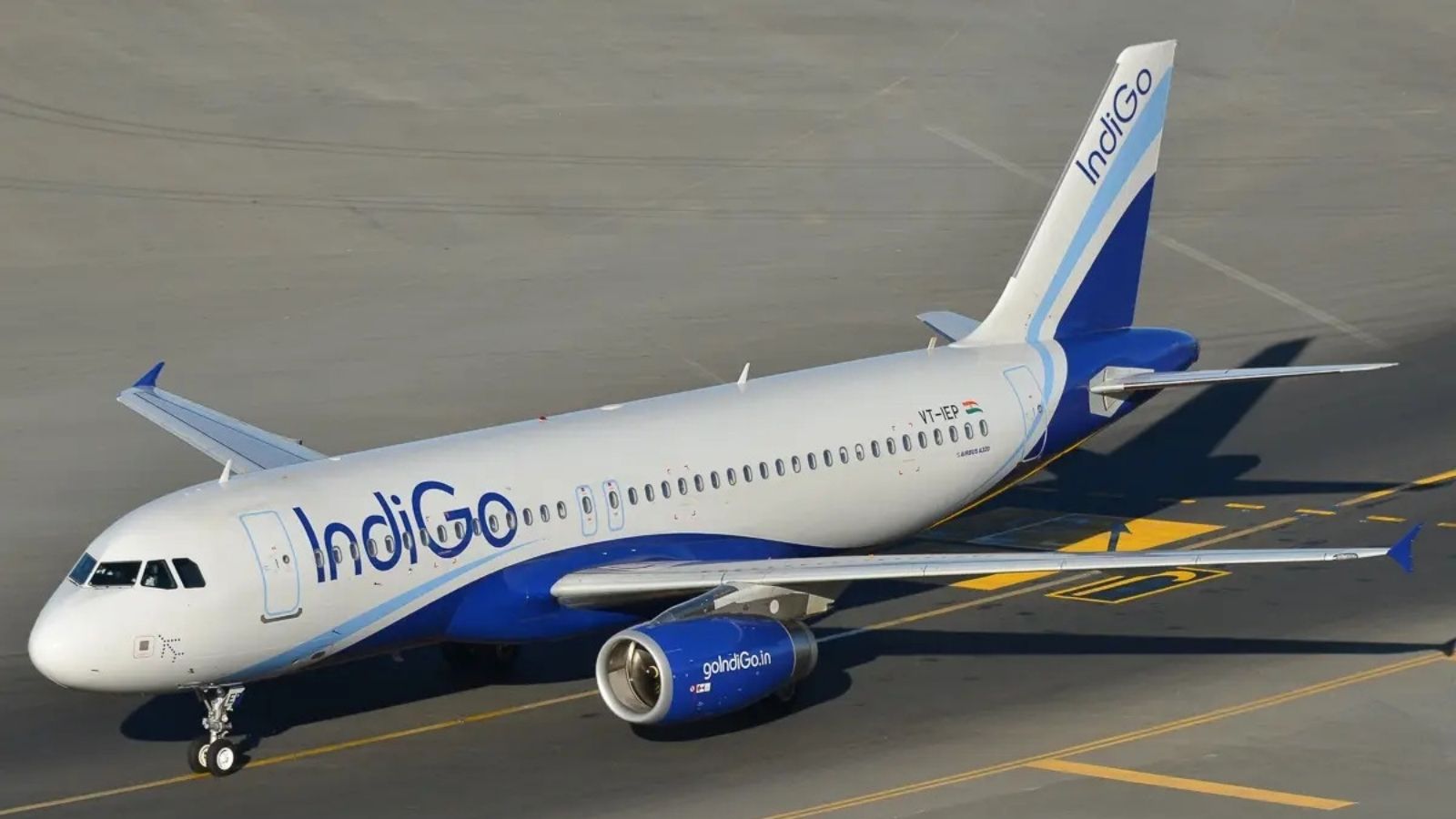
New Delhi: IndiGo has been asked to cut 10 per cent of its domestic flights for the entire winter season, a directive that sharply escalates the government’s response to the airline’s ongoing operational breakdown. Civil Aviation Minister Ram Mohan Naidu summoned IndiGo CEO Pieter Elbers on Tuesday and instructed the airline to scale back more than 200 flights a day, a curtailment twice the reduction ordered by the Directorate General of Civil Aviation on Monday.
The cancellations will affect high-frequency domestic routes but will not touch the roughly 600 routes where IndiGo is the sole operator. The carrier’s approved winter schedule stood at 2,145 flights a day, but its recent meltdown has forced authorities to intervene. Other airlines, already short of spare aircraft, are unlikely to absorb the full gap, except on major metro routes such as Delhi and Mumbai, raising the likelihood of firmer fares through the peak holiday and wedding season.
IndiGo said it ran 1,800 flights on Tuesday across its 138 destinations and plans to operate 1,900 on Wednesday. Until early December, the airline operated nearly 2,300 flights each day, before service reliability collapsed under the new Flight Duty Time Limitation rules introduced last month. The revised cap means IndiGo has been told to remove around 215 daily flights from its winter schedule, bringing operations down to about 1,930 flights until late March.
Naidu wrote on X that he had “summoned” the IndiGo chief for a detailed briefing. “The ministry considers it necessary to curtail the overall Indigo routes, which will help in stabilising the airline’s operations and lead to reduced cancellations. A curtailment of 10 per cent has been ordered. While abiding with it, Indigo will continue to cover all its destinations as before,” he said.
Following the meeting, the minister added that Elbers confirmed the completion of all refunds for flights affected up to December 6. “A strict instruction to expedite the completion of the remaining refunds and baggage handover was given,” he stated. He also noted that passengers faced “severe inconvenience” due to IndiGo’s “internal mismanagement” of rosters, flight schedules and “inadequate” communication. Another round of meetings with senior IndiGo leadership was held to assess stabilisation steps already taken.
IndiGo has been directed to comply fully with all ministry instructions, including fare caps and passenger care measures. In its formal order, the DGCA said, “The airline has not demonstrated an ability to operate these (winter) schedules efficiently. Therefore, it is directed to reduce the schedule by 10 per cent across sectors, especially on high-demand high-frequency flights, and to avoid single-flight operations on a sector by IndiGo.” The regulator has asked the airline to submit its revised schedule by Wednesday evening.
Elbers issued a video message telling customers, “Earlier, we had indicated that we would normalise our operations between December 10 and 15. I can confirm now that today, as of December 9, our operations are fully stabilised, which means flights reflecting on our website are scheduled to operate with an adjusted network.” He added that the airline is now examining what caused the disruption, saying, “We continue to work with the government. Now, as the immediate crisis has been dealt with, we have started to focus internally on what has led to this, lessons learned to be drawn, and how to emerge stronger from this.”
In its written statement, IndiGo said it has “optimised its operations” and restored its on-time performance to normal levels. “IndiGo can confirm that after days of significant and steady improvement across the network, we have reinstated our operations across our network. This means all flights published on our website are scheduled to operate with an adjusted network. Also, nearly all bags that were stuck at airports have been delivered to our customers and the teams are working on delivering the remaining at the earliest,” it stated.
Rival airlines remain cautious. Most lack spare aircraft because new deliveries from Airbus and Boeing have slowed. One airline executive said capacity may be shifted from less profitable sectors if IndiGo vacates slots on top metro routes. SpiceJet, which has inducted several wet-leased aircraft, is the only carrier positioned to move quickly onto any high-demand routes IndiGo temporarily abandons.
Meanwhile, IATA Director General Willie Walsh said the revised flight duty norms appear to have contributed to the crisis. He noted that IndiGo seems to be making progress in restoring operations. The DGCA’s Phase-II FDTL rules, implemented on November 1, tightened duty limits during the early-morning circadian low period. Para 3.11 defines night duty as any period overlapping 0000–0600 hrs, while Para 6.1.4 caps flying during such duty at 8 hours and total duty at 10 hours, generally permitting no more than two landings.
With winter fog approaching and peak travel underway, the impact of IndiGo’s reduced schedule is expected to be felt across the network in the coming weeks.
BI Bureau