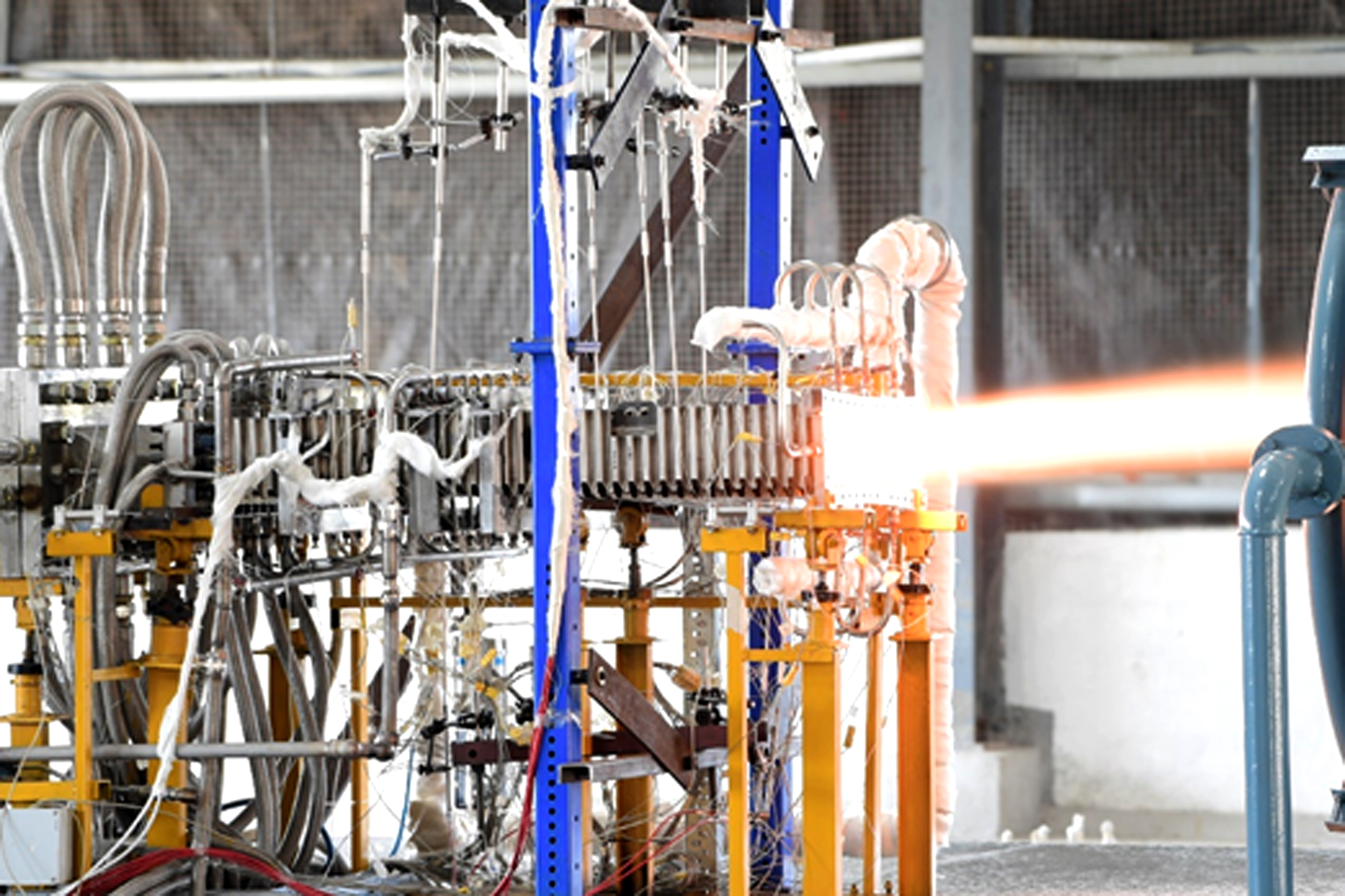
New Delhi: Defence Research and Development Organisation has marked a major step in hypersonic missile development after the Defence Research and Development Laboratory, Hyderabad, successfully completed a long-duration ground test of a full-scale, actively cooled scramjet combustor.
The test was conducted on January 9, 2026, at the Scramjet Connect Pipe Test facility, where the engine ran continuously for more than 12 minutes. It is the first time India has demonstrated sustained performance of a full-scale scramjet combustor under realistic operating conditions.
This milestone follows an earlier subscale long-duration test carried out in April 2025 and reflects steady progress in the development of hypersonic cruise missile technology. The combustor and the test facility were designed and developed by DRDL and realised with support from industry partners.
Hypersonic cruise missiles are designed to travel at speeds exceeding Mach 5, over 6,100 km per hour, for extended durations. This capability is made possible by air-breathing engines that use supersonic combustion, allowing continuous thrust without carrying onboard oxidisers. The latest ground tests have validated both the advanced combustor design and the performance of the specialised test infrastructure.
Raksha Mantri Rajnath Singh complimented DRDO, industry partners and academia on the successful ground test of Full Scale Actively Cooled Long Duration Scramjet Engine. He stated that the achievement is a solid foundation for the nation’s Hypersonic Cruise Missile Development Program.
Secretary, Department of Defence R&D and Chairman DRDO Dr Samir V Kamat congratulated the teams associated with the test for the commendable achievement.
With this achievement, India strengthens its position among a small group of nations working on operational hypersonic weapon systems, an area seen as critical to future aerospace and defence capabilities.
BI Bureau