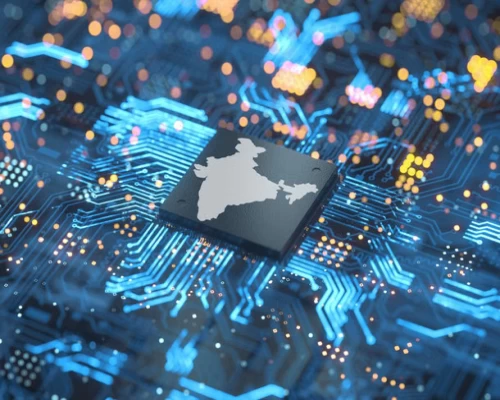
New Delhi: India has reached a key milestone in its energy transition, with non-fossil sources now accounting for over 50% of its total installed electricity capacity. As of 30 June 2025, the country’s non-fossil power capacity stands at 242.78 GW out of a total 484.82 GW, surpassing the target set for 2030 under the Nationally Determined Contributions (NDCs) to the Paris Agreement.
Union Minister for New and Renewable Energy Pralhad Joshi called the achievement a proud moment for the nation. “In a world seeking climate solutions, India is showing the way. Achieving this milestone ahead of schedule is a proud moment for every Indian,” he said.
The clean energy growth is attributed to strong policy interventions and focused programmes. Schemes like PM-KUSUM and PM Surya Ghar: Muft Bijli Yojana have driven the adoption of solar energy in rural households and agriculture. PM-KUSUM has brought solar irrigation systems to lakhs of farmers, while PM Surya Ghar has enabled rooftop solar installations in over 10 million homes.
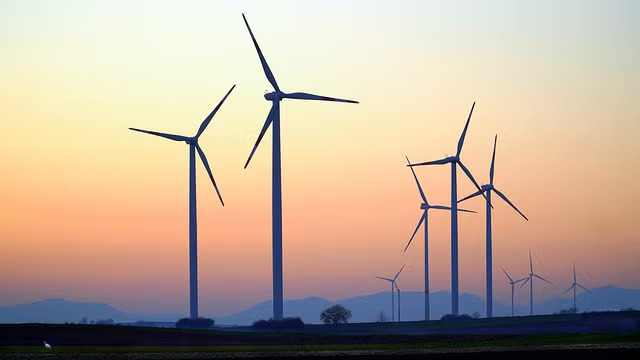
Policies promoting wind-solar hybrid parks, coupled with falling tariffs and investor interest, have helped scale up capacity across states. Wind energy continues to support peak demand in Gujarat and Tamil Nadu, while bioenergy projects have improved employment and waste management in rural areas.
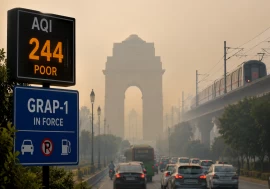
The benefits of this transition extend beyond energy access. Cleaner air, improved public health, rural job creation, and reduced fossil fuel dependence have marked this shift as a path to inclusive growth. Despite having low per capita emissions, India is among the few G20 countries expected to exceed its climate targets.
India now looks ahead to building energy resilience and storage capacity. Plans include scaling up Battery Energy Storage Systems (BESS), pumped hydro, smart grids, and cybersecurity measures in the power sector. Artificial Intelligence is also being tapped for demand forecasting, automated grid operations and enabling greater consumer participation. Circular economy models for solar panels, turbines and battery waste are expected to gain traction in the coming years.
As of June 2025, thermal power accounts for 242.04 GW or 49.92% of India’s capacity. Renewable energy (excluding large hydro) makes up 184.62 GW or 38.08%, while large hydro contributes 49.38 GW and nuclear adds 8.78 GW. With this, non-fossil sources now account for 50.08% of the total installed capacity.
India has now set its sights on the next clean energy targets—achieving 500 GW of non-fossil capacity by 2030 and reaching net-zero emissions by 2070.
BI Bureau