New Delhi: In May 2025, India’s Operation Sindoor stunned the world, not just for its military precision and fierceness but also for its robust demonstration of how our homegrown defence technology capabilities have skyrocketed under PM Narendra Modi. Launched in response to a terrorist attack in Pahalgam that had claimed 26 innocent lives, the operation saw Indian forces strike nine terrorist camps and eight Pakistani airbases with pinpoint accuracy, using indigenous systems like the BrahMos missile, Akash surface-to-air missile, and AI-powered drones. The Integrated Air Command and Control System (IACCS) and Akashteer neutralized Pakistan’s Chinese-supplied drones and missiles, proving India’s technological edge without crossing the Line of Control. The operation, hailed by Prime Minister Narendra Modi as a milestone for Atmanirbhar Bharat, demonstrated India’s shift from a defence importer to a self-reliant powerhouse, setting the stage for a broader revolution in its defence sector.
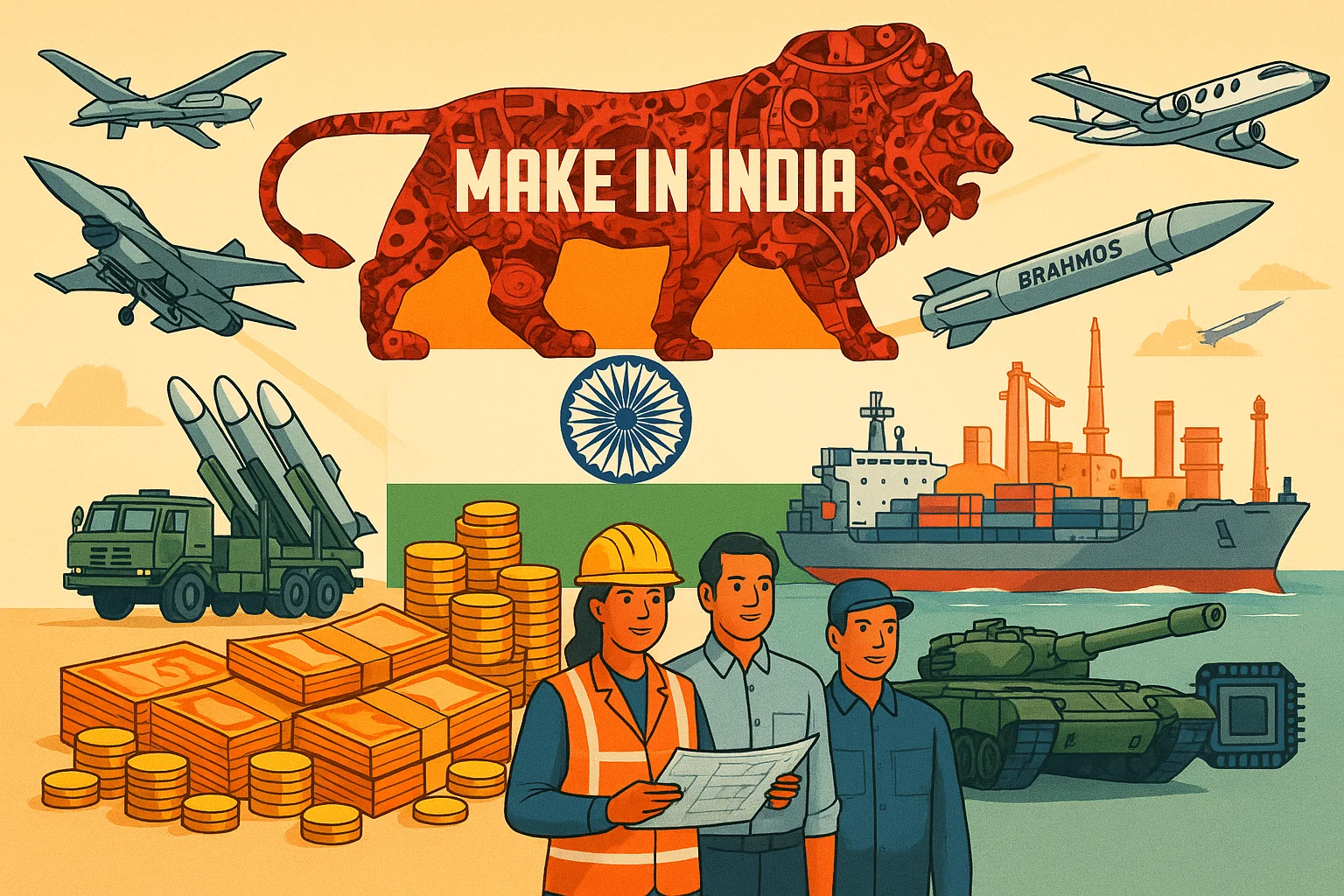
This transformation, driven by the Make in India and Atmanirbhar Bharat initiatives, has reshaped India’s defence landscape. Once reliant on foreign suppliers for 70% of its military needs, India now produces 65% of its equipment domestically, with production reaching Rs. 1.46 lakh crore in 2024-25, up from Rs. 1.27 lakh crore the previous year. Defence exports have surged 34-fold since 2013-14, hitting Rs. 24,000 crore in 2024-25, with systems like BrahMos and Dornier-228 aircraft reaching over 100 countries, including the Philippines, USA, and African nations. The private sector, contributing 64% of exports, and over 16,000 Micro, Small, and Medium Enterprises (MSMEs) have been pivotal, producing Rs. 32,000 crore worth of equipment in 2024-25. The goal is ambitious: Rs. 3 lakh crore in production and Rs. 50,000 crore in exports by 2029.
Strategic policies have been the cornerstone of this revolution. The Defence Acquisition Procedure (DAP) 2020 mandates a minimum of 50% indigenous content in procurement contracts, driving domestic procurement to Rs. 99,223 crore, or 75% of the defence budget, in 2023-24. Positive Indigenisation Lists, covering over 5,000 items, have banned imports, saving Rs. 1,048 crore annually and fostering local innovation. Defence Industrial Corridors in Uttar Pradesh and Tamil Nadu have transformed rural areas into manufacturing hubs, creating thousands of jobs and boosting regional economies. Foreign direct investment (FDI) reforms, allowing up to 74% automatic investment, have attracted global players like Saab to produce weapons in India, blending international expertise with local capabilities. The Green Channel Status (GCS) Policy has streamlined procurement, further encouraging private investment.
Innovation is at the heart of this transformation. The Innovations for Defence Excellence (iDEX) program has invested Rs. 449.62 crore in startups, resulting in 430 contracts for technologies like AI-powered drones and cyber defence systems, as seen in Operation Sindoor. The Technology Development Fund (TDF) supports advanced projects with grants up to Rs. 50 crore, driving breakthroughs in unmanned systems. These efforts have positioned India as a leader in next-generation warfare, with indigenous platforms proving their reliability in real-world scenarios.
The 16 Defence Public Sector Undertakings (DPSUs) remain critical drivers. Hindustan Aeronautics Limited (HAL) produces the Light Combat Aircraft (LCA) Tejas, reducing reliance on foreign fighter jets. Bharat Electronics Limited (BEL) develops advanced radars and electronic systems, investing 8% of its turnover in research and development. Bharat Dynamics Limited (BDL) manufactures missiles like BrahMos, which shone in Operation Sindoor. Mazagon Dock Shipbuilders Limited (MDL) and Garden Reach Shipbuilders and Engineers (GRSE) deliver stealth frigates and warships, enhancing maritime capabilities and exports. Armoured Vehicles Nigam Limited (AVNL) and Mishra Dhatu Nigam Limited (MIDHANI) provide tanks and specialized alloys, strengthening ground and aerospace sectors.
The economic and strategic impacts are profound. The defence sector has saved billions in foreign exchange, boosted GDP, and created thousands of jobs, from engineers in Bengaluru to welders in Tamil Nadu. Operation Sindoor’s success, using systems like Akash and kamikaze drones, underscored India’s strategic autonomy, neutralizing threats with minimal collateral damage. The defence budget for 2025-26, at Rs. 6.81 lakh crore, allocates 75% to domestic procurement, reflecting strong commitment. Indian defence stocks, including Paras Defence and MTAR Technologies, surged up to 49% post-Sindoor, signaling market confidence.
Challenges remain, notably the low R&D budget, at 3.9% of the defence budget and less than 0.7% of GDP, compared to global leaders. Increasing this to align with global averages is critical to sustain innovation. Looking ahead, India aims for 70% self-reliance by 2027, with a robust ecosystem of public-private collaboration, policy support, and technological advancement. Operation Sindoor has shown the world that India’s defence revolution is not just about building weapons but about forging a self-reliant, innovative, and globally competitive nation, ready to lead in the 21st century.
BI Bureau