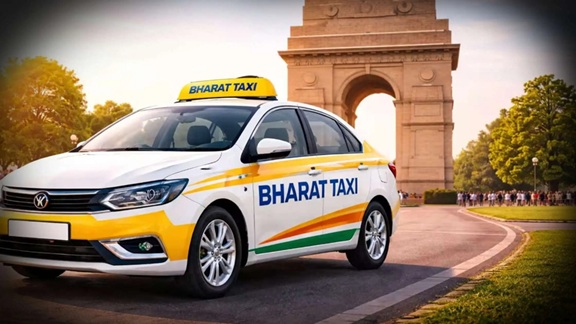
New Delhi: Union Home and Cooperation Minister Amit Shah on Wednesday launched Bharat Taxi, India’s first cooperative-based ride-hailing platform, pitching it as a people-centric alternative to private aggregators and a key step in Prime Minister Narendra Modi’s vision of ‘Sahakar se Samriddhi’ - Prosperity through Cooperation. The service, registered under the Multi-State Cooperative Societies Act, aims to redefine digital mobility by empowering drivers with ownership and fair earnings while offering affordable, surge-free rides across the country.
Bharat Taxi has been introduced by the Sahakar Taxi Cooperative Limited with support from major cooperatives such as AMUL, IFFCO, NABARD, NAFED, NDDB and NCDC. Under its zero-commission, surge-free model, drivers, known as Sarathis, keep the entirety of their fare earnings and are enrolled as shareholders in the cooperative, encapsulating the ethos “Sarathi Hi Malik”. At the launch event Shah distributed share certificates to drivers, emphasising the shift from gig-worker models to a driver-owned ecosystem that also provides social security benefits and welfare cover.
The unveiling of Bharat Taxi comes in the broader backdrop of the National Cooperative Policy 2025, championed by Amit Shah and Prime Minister Modi as a transformative roadmap for the cooperative movement in India. The policy - the first major revision in over two decades - seeks to strengthen cooperatives at the grassroots by developing model cooperative villages, boosting participation of rural women, Dalits and tribals, and expanding cooperative activity into sectors from tourism to insurance and taxi services.
The Ministry of Cooperation has made clear that the initiative is a cornerstone of inclusive growth, aiming to triple the sector’s GDP contribution by 2034, bring 50 crore active members into the cooperative fold, and create widespread employment opportunities for youth across rural and urban India.
Shah has described the National Cooperative Policy as a “historic step” toward fulfilling PM Modi’s vision of Sahakar se Samriddhi, underlining the role of cooperatives in building a Viksit Bharat by 2047. The policy emphasises transparency, professionalism and technology adoption in cooperatives while reinforcing their capacity to pool community capital for large-scale, member-driven enterprises. Modi’s overarching mission is to weave cooperative principles into India’s development fabric, making collective ownership and shared prosperity central to the economy’s future.
Positioned as a homegrown counter to global giants like Ola and Uber, Bharat Taxi has already completed pilot runs in several regions and is expected to roll out broadly across states. More than just another cab service, it embodies a bold experiment in whether cooperative ownership can thrive in India’s fast-evolving digital economy - with prosperity shared, not extracted.
BI Bureau