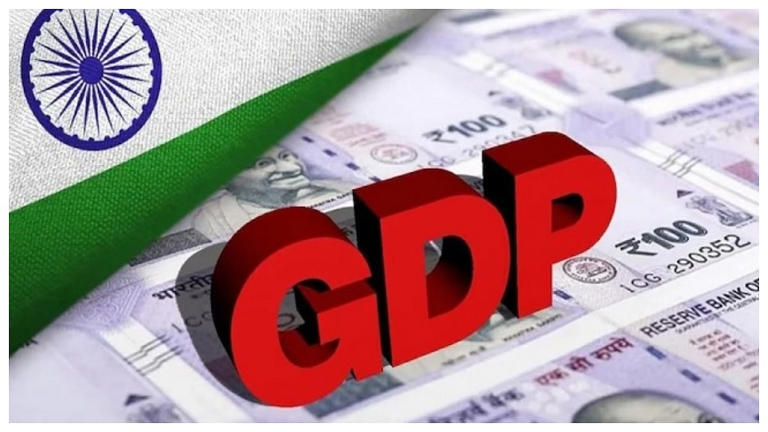
New Delhi: At a time when much of the world is grappling with slowing growth and geopolitical uncertainty, India’s economic engine appears firmly in the fast lane. The government’s first advance estimates peg real GDP growth at 7.4% in FY26, signalling a sharp acceleration from the 6.5% growth recorded in FY25 and reinforcing India’s position as the world’s fastest-growing major economy.
The projection comes after what policymakers describe as a “turbulent” global year, marked by trade tensions, higher interest rates in advanced economies and geopolitical flashpoints. Yet, India’s domestic fundamentals - strong consumption, sustained public capex and resilient services - have helped cushion external shocks and keep growth momentum intact.
Data released by the National Statistics Office (NSO) suggests that the expansion is broad-based, with services, manufacturing and construction continuing to lead the charge. Investment activity remains a key driver, with gross fixed capital formation expected to grow close to 8%, reflecting continued spending on infrastructure, roads, railways, energy and urban development. Private consumption, especially in urban India, has also remained robust, aided by stable inflation and improving income prospects.
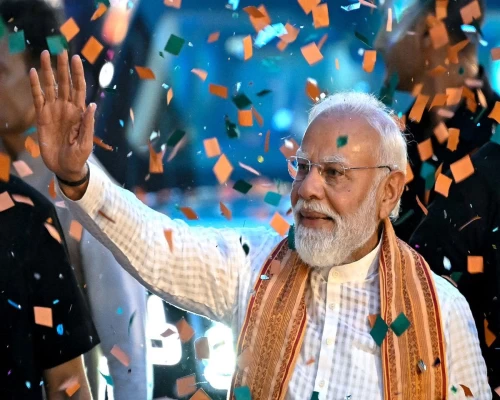
Prime Minister Narendra Modi welcomed the estimate, calling it further evidence of India’s “Reform Express” staying on track. In a post, he said the growth numbers reflect the impact of sustained reforms, infrastructure push and a focus on long-term economic capacity rather than short-term fixes.
For policymakers, the timing of the estimate is crucial. The growth outlook will serve as a key input for the upcoming Union Budget, where the government is expected to double down on capital expenditure while balancing fiscal consolidation. Officials indicate that the budget will “build on data”, with a focus on sustaining growth without overheating the economy.
Economists note that while agriculture growth remains relatively modest due to uneven monsoons in parts of the country, the strength of non-farm sectors has more than compensated. Manufacturing has benefited from production-linked incentives, while financial services, trade, transport and real estate have shown steady expansion.
Nominal GDP growth is estimated at around 8%, offering comfort on the revenue front for both the Centre and states. This provides fiscal space to continue welfare spending alongside infrastructure investment - a combination that has underpinned growth over the past few years.
The advance estimates will be revised as more comprehensive data becomes available in the coming months, but the headline number already sets an optimistic tone. In a slowing global economy, India’s ability to push close to mid-7% growth underscores a shift from being merely a high-potential market to a more structurally resilient economy.
As global investors and domestic industry watch the budget and policy signals closely, one message from the data is clear: for now, India’s growth story remains firmly intact - and still gathering speed.
BI Bureau