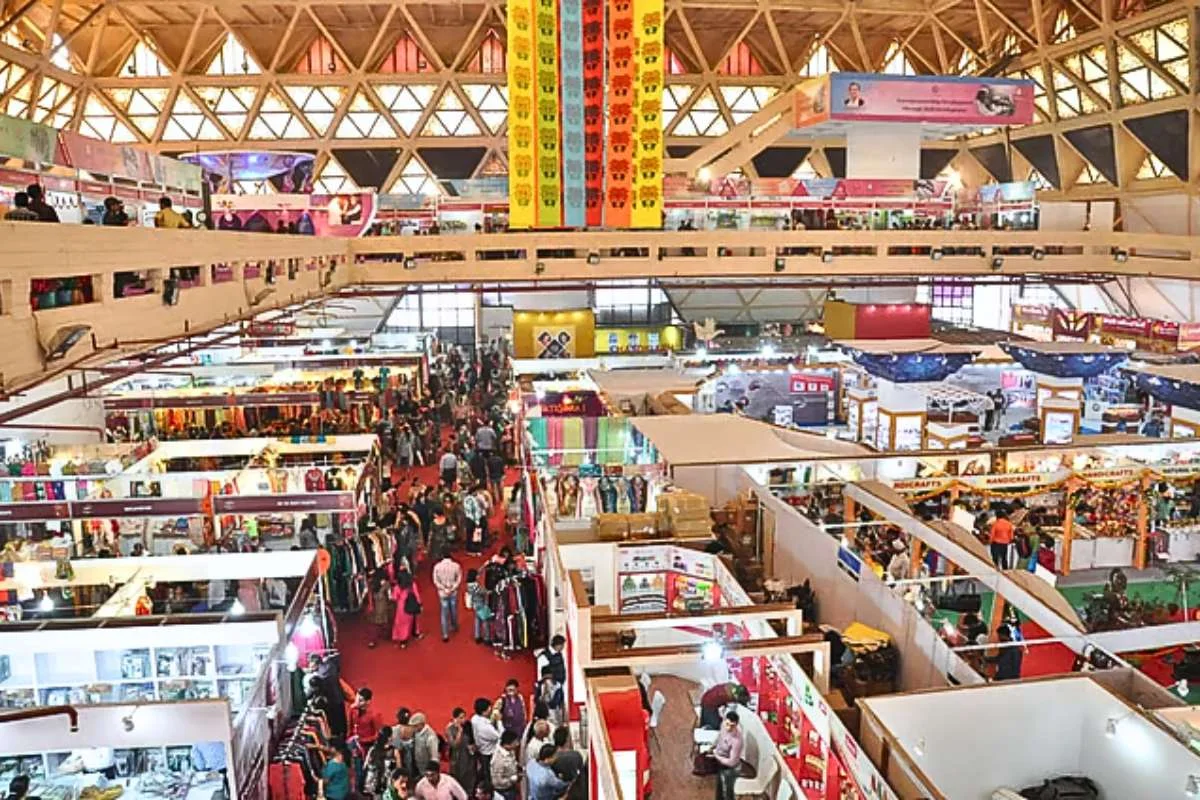
New Delhi: The India International Trade Fair’s 44th edition has turned Bharat Mandapam into a meeting ground for businesses, cultures and long-standing trading relationships. With more than 3,500 participants, 31 States and Union Territories, and exhibitors from 11 countries, the fair reflects the theme “Ek Bharat Shreshtha Bharat” through stories of enterprise and opportunity. Partner States including Bihar, Maharashtra, Rajasthan and Uttar Pradesh, along with Jharkhand as the Focus State, are using the platform to showcase both products and regional ambitions.
Government departments, PSUs, MSMEs, start-ups, international exhibitors and artisan groups share space at the venue. Over the years, the fair has grown into one of the strongest stages for traditional crafts, small manufacturers and emerging entrepreneurs.
At a stall of marble handicrafts, the crowd rarely thins. Eslam Kamal from Egypt, whose family has been exhibiting for 25 years, watches visitors interact with pieces that have become familiar to the fair. “There has been a steady growth in this space,” he says. “We always receive a good response, and the demand has increased.” For him, Bharat Mandapam remains “the largest trade fair he’s ever seen”, a place with steady support and expanding visitors.
For Ulas from Turkey, the fair has become almost a second home. “We’ve been coming to India for almost 24-25 years now,” he says. “Earlier we used to go to other trade fairs, but now we exhibit only in India.” Half the year is spent here, building customer relationships that have grown alongside his business. “Our customers return every year,” he says. “This is what keeps us motivated.”
In another aisle, Kolhapuri chappals are attracting a constant stream of buyers. For stall owner Sachin Satpute, the fair offers something more than sales. “Events like this really help us in marketing and branding,” he says. His figures speak for themselves, with nearly six months of income earned in just 15 days.
For some, demand is so strong that stock runs out before the fair closes. “This is our second time at the Trade Fair,” says Shobha from Maharashtra, who sells chutneys, pickles and ghee. She recalls that during her previous visit, “We sold almost 2-3 quintals of products, and our stock got over 2-3 days before the fair ended.” She calls the response “very good”, a reassuring sign for small producers working to reach wider audiences.
For exporters, the fair opens the door to a different market altogether. Mohammed Fazil from Moradabad, Uttar Pradesh, normally sends his metal handicrafts to Europe and America. This year, he is exploring opportunities closer to home. “We are looking for more exposure in the domestic market,” he says, using the fair as a place to test demand and build brand visibility.
Some exhibitors speak of experiences that reshape their professional journey. “This is my second time at the Trade Fair, and it has been very advantageous for me,” says Ikram Hussain from Uttar Pradesh, a National Awardee. He earned three months of income in just 15 days. “The opportunities here have helped me expand my business significantly,” he says, summing up how such events can open up new paths for artisans.
Kim from Thailand has been a regular visitor for about 12 years. “The customers I meet here usually come back next year,” she says. She often receives wholesale orders after the fair ends, suggesting that the connections made here continue long after the stalls are packed up.
Across the venue, the pattern remains consistent. Whether it is marble from Egypt, jewellery from Thailand, leather from Maharashtra or metalwork from Uttar Pradesh, exhibitors point to growth, visibility, recurring customers and income that stretches well beyond the fair’s two-week duration.
More than a commercial event, the India International Trade Fair has become a space where businesses build communities, artisans find recognition and new markets open up for those willing to explore them.
BI Bureau